4 Easy Ways to Prevent Birds From Hitting Your Windows
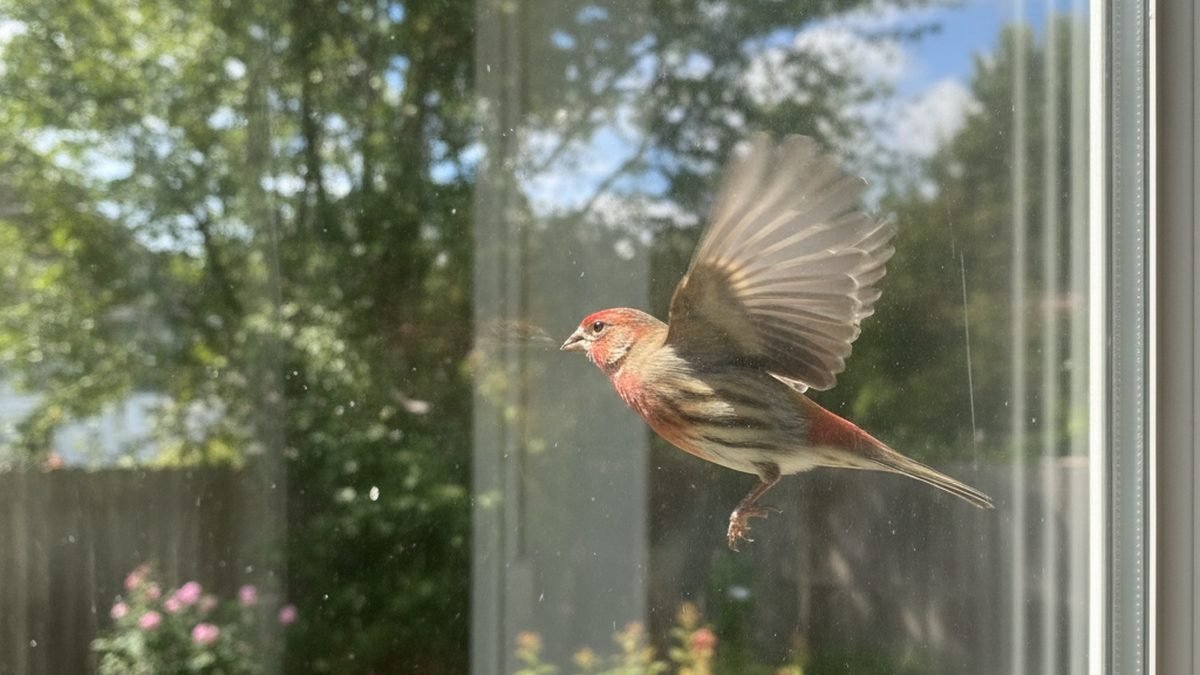
If you want to know how to stop birds flying into windows, the short answer is this: you need to break up the reflection on the glass. Birds see a mirror image of sky or trees and fly straight at it, full speed, because their brains tell them it’s open space.
I’ve had a Mourning Dove smack into my kitchen window hard enough to leave a dusty imprint of its whole body. It’s an awful sound. That bird flew off after a minute, but plenty aren’t so lucky.
This happens way more than most people realize. The Cornell Lab of Ornithology estimates that up to 1 billion birds die from window collisions in the United States every year. The good news is that the fixes are simple, cheap, and you can do most of them in an afternoon.
1. Break Up Reflections With Window Decals or Film
This is the most common cause of window strikes, so it’s the first fix to try. Birds don’t understand glass. They just see a reflected tree or open sky and aim for it.
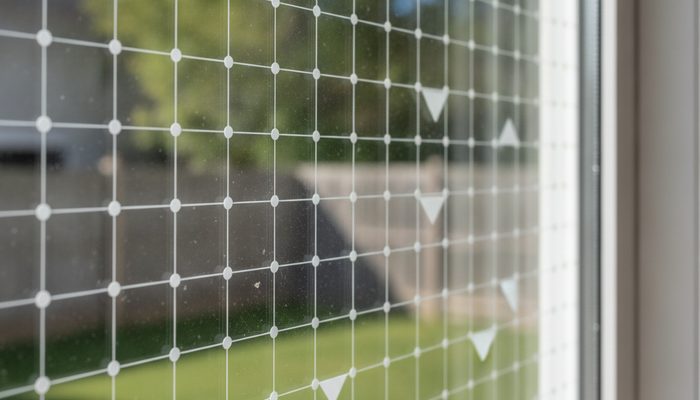
Window decals, static clings, or one-way film work by breaking up that reflection. The key detail most people get wrong is spacing. Decals need to be placed no more than 2 to 4 inches apart across the whole window, in a grid pattern. One hawk sticker in the corner does almost nothing, even though that’s the classic advice people default to.
The American Bird Conservancy has tested this spacing rule and it holds up. I’ve used simple dot decals on my own patio door in this tight grid pattern, and strikes there dropped to almost zero.
2. Install Screens or Netting on the Outside
This is the single most effective fix, and it works even if you skip everything else on this list. A taut mesh screen or netting mounted a few inches outside the glass acts like a cushion. The bird hits the screen, bounces off, and flies away unharmed instead of hitting hard glass.
You can buy purpose-made bird screens or build one cheaply with insect screening and a simple frame. The screen needs to sit a couple inches off the glass, with a little give in it, not stretched drum-tight.
This is a great option for a problem window you already know is bad news, like a picture window facing your feeders. If you’re still working out where your feeders should even go, it’s worth reading where to place a bird feeder before you commit to a permanent screen setup.
3. Move Feeders to the Right Distance (Follow the 3/30 Rule)
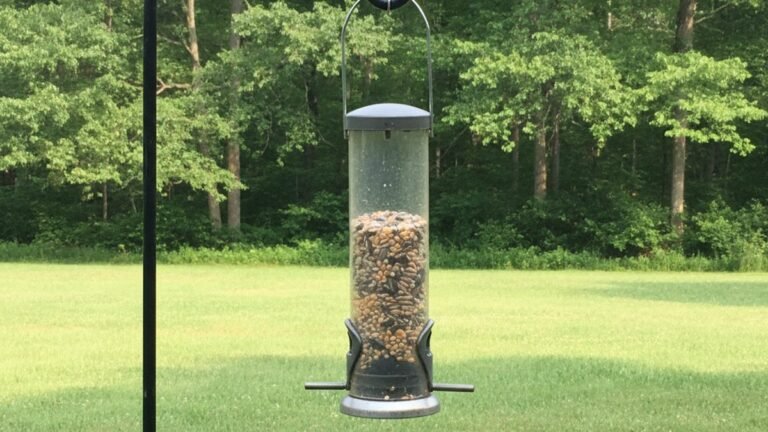
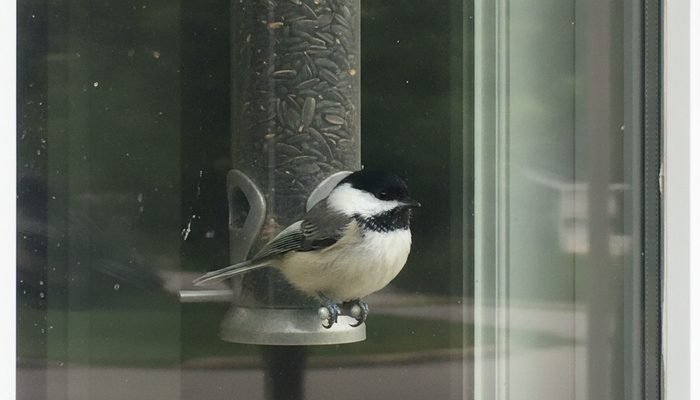
Feeder placement matters more than most folks think. Audubon Society and Cornell Lab both recommend what’s known as the 3/30 rule. Feeders should be within 3 feet of a window, or more than 30 feet away.
Here’s why that odd range works. Within 3 feet, a bird that takes off from the feeder doesn’t have enough distance to build up dangerous speed before hitting the glass, so a collision is usually a soft bump, not a full-speed crash. Past 30 feet, the bird sees the window as separate from its flight path and doesn’t mistake it for open sky.
The danger zone is that middle range, roughly 5 to 20 feet out, where birds get going fast enough to hurt themselves. My own feeders hang more than 30 feet from any window, near a maple tree in the yard, and I watch the action from my kitchen window across the way. If your feeders are sitting in that middle danger zone right now, that’s worth fixing before anything else.
4. Turn Off Interior Lights or Close Blinds at Night
This cause gets overlooked because it’s not about daytime reflections at all. At night, especially during spring and fall migration, lit-up windows can disorient birds flying overhead. City buildings with lots of glass are the worst offenders, but home windows add up too.
Closing blinds or curtains after dark, or turning off unnecessary lights, cuts down on this risk. This matters most during migration season. Project FeederWatch and other citizen science programs have tracked spikes in collisions tied to nighttime light pollution during these periods.
This one is basically free and takes ten seconds. If you’re already dealing with birds that seem confused or are showing up in odd numbers at your feeders, it might be worth reading why birds aren’t coming to your feeder to rule out other causes too.
What NOT to Do
Don’t rely on a single hawk silhouette sticker in one corner of the glass. It looks like it should work, but research from the American Bird Conservancy shows isolated decals barely reduce strikes. The whole window needs coverage.
Don’t put decals or film only on the inside of the glass if you can help it. Exterior application works better because it interrupts the reflection before light even hits the glass surface.
Don’t assume a bird that flew away after a hit is fine. Birds can have internal injuries or brain swelling even if they fly off. If you find a stunned bird, the Cornell Lab recommends placing it in a small, dark, ventilated box and leaving it somewhere quiet for an hour before releasing it, away from cats and traffic.
Don’t skip this stuff just because your feeders are a good distance from the house. Bathroom windows, patio doors, and picture windows on the far side of the house all count too.
Wrapping Up
Window strikes feel awful when you hear that thump, but most of them are preventable with a little effort. Start with the decal grid or screening since those tackle the root cause directly. Check your feeder distance while you’re at it, and you’ll cut your yard’s risk way down. None of this costs much, and it’s honestly satisfying to watch a bird bank away from a window instead of hitting it.
Frequently Asked Questions
Why do birds keep flying into the same window?
Birds don’t learn that glass is solid the way we do. Each time, they see the same reflection of sky or trees and react the same way. That’s why a window with repeated strikes needs a physical fix like decals, film, or screening, not just time.
Does one hawk decal on a window actually work?
Not really. A single sticker leaves too much reflective glass uncovered. Research from the American Bird Conservancy shows decals need to be spaced 2 to 4 inches apart across the entire window to meaningfully cut down on strikes.
What time of year are window strikes most common?
Spring and fall migration see the highest numbers, since more birds are moving through unfamiliar territory, often at night. Breeding season in early summer can also bring a spike, since birds are more active and territorial near windows.
Is it better to move my bird feeder closer to the house or farther away?
Either extreme works better than the middle. Follow the 3/30 rule: keep feeders within 3 feet of the window or more than 30 feet away. The danger zone is anywhere in between, where birds gain enough speed to injure themselves on impact.