22 Cardinal Facts Most People Don’t Know
If you want cardinal facts that actually go beyond “the male is red,” you’re in the right place. I’ve had Northern Cardinals in my yard for over a decade, and they still surprise me.
Below are 22 cardinal facts covering their color, their songs, their odd habits, and a few things that might change how you feed them. I checked every fact against sources like Cornell Lab of Ornithology and the Audubon Society, so you can trust what’s here.
Color and Appearance Facts
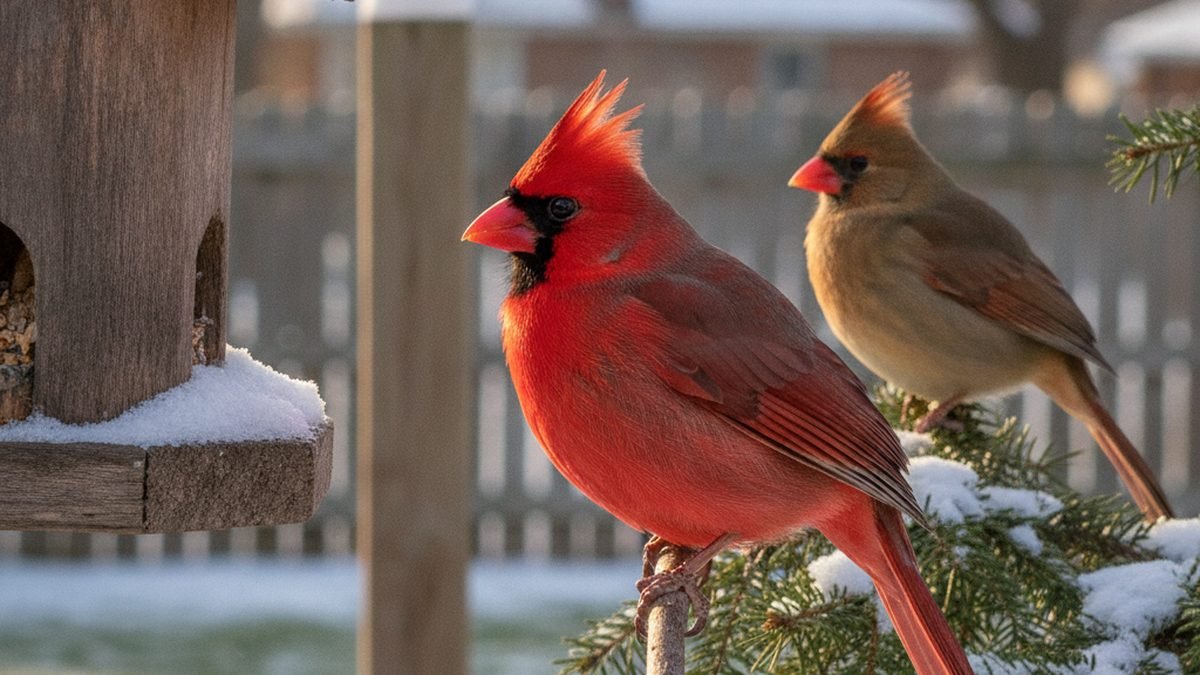
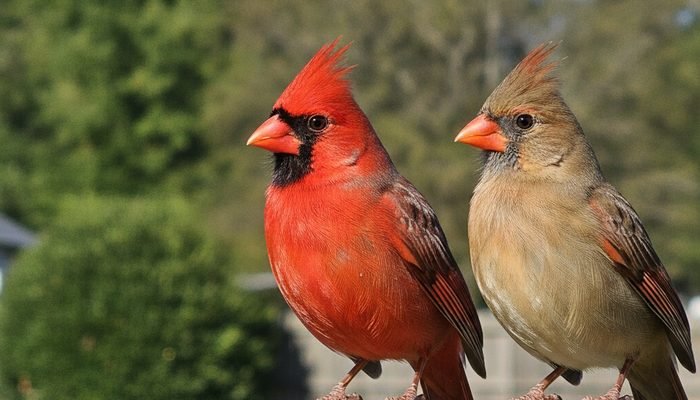
1. Only the males are bright red. Female cardinals are a warm brown with reddish tinges on the wings, tail, and crest. This helps her stay hidden while sitting on the nest.
2. Their red color comes from food, not genetics alone. Cardinals get their color from carotenoid pigments in the fruits and berries they eat. A poor diet can actually make a male look duller and less red.
3. Young males look patchy for months. A juvenile male cardinal is mostly brown with a dark beak. It takes until the following fall for him to grow his full red feathers.
4. The beak turns orange-red in adulthood. Young cardinals have a dark grayish beak. As they mature, it shifts to the bright orange-red color most people picture.
5. Cardinals molt their crest feathers too. During late summer molt, some cardinals go almost bald-headed for a short time. I’ve seen a few in my own yard looking a little rough around late August, and it always throws people off. It grows back within a few weeks.
Behavior Facts That Surprise People
6. Cardinals mate for life, usually. Pairs often stay together through the year, though some do switch partners between breeding seasons if one bird doesn’t survive.
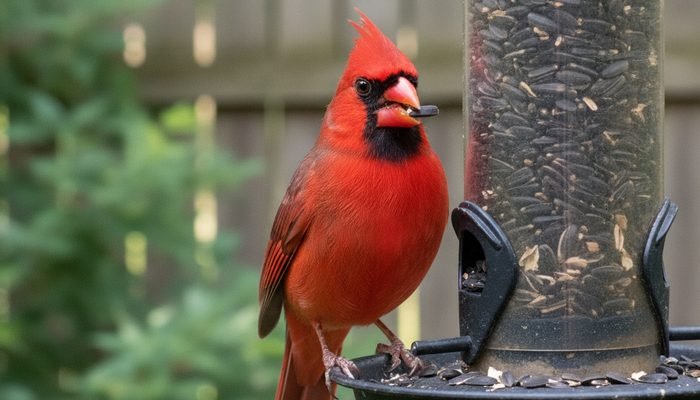
7. Males feed females during courtship. You may see a male cardinal pass a seed directly to a female beak to beak. It’s part of their bonding behavior before nesting.
8. They don’t migrate. Northern Cardinals are year round residents across their range. The cardinals in your yard in January are likely the same ones from July.
9. Both sexes sing. This is rare among North American songbirds. Most female birds don’t sing much, but female cardinals sing full songs, sometimes from the nest.
10. They can have over two dozen song variations. Cornell Lab notes cardinals have a large repertoire, and pairs sometimes use matching phrases to communicate with each other.
11. Cardinals are aggressive about territory in spring. Males will fight rivals and sometimes attack their own reflection in windows or car mirrors, mistaking it for a competitor.
12. They rarely travel far from where they hatched. Cardinals tend to stay within a few miles of their birthplace for life, which is part of why they feel like such loyal yard residents.
Diet and Feeding Facts
13. Their beak is built for cracking seeds. That thick, cone-shaped beak is designed to crush tough shells, especially sunflower seeds. If you want tips on what to offer, my guide on birds that eat sunflower seeds covers this well.
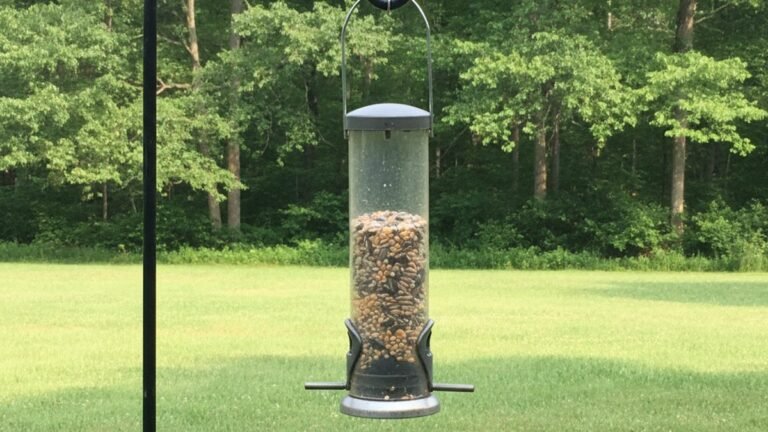
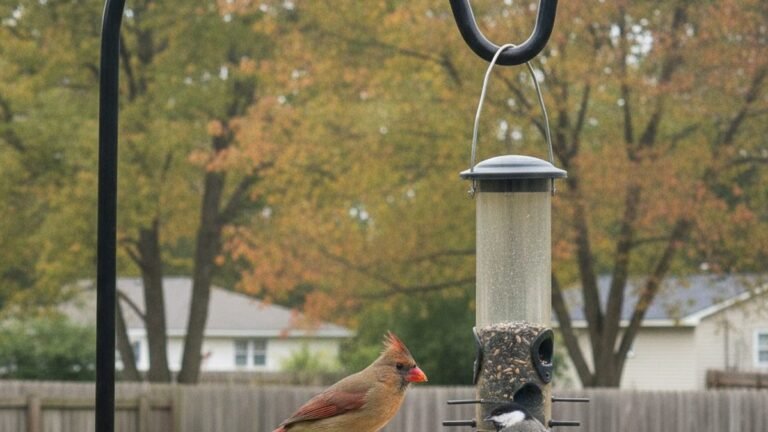
14. Cardinals prefer platform and hopper feeders. They’re a bit large and ground-loving for tube feeders. In my yard, they show up at the hopper feeder and the platform feeder far more than the tube feeder near the maple tree.
15. They eat more insects than people expect. Cardinals feed heavily on insects and caterpillars in summer, especially when raising chicks. Seeds and fruit become more important in fall and winter.
16. Cardinals often feed at dawn and dusk. If your feeder seems quiet midday but busy early morning and just before sunset, that’s normal cardinal behavior, not a sign something’s wrong.
17. They rarely use nyjer feeders. My tube feeder holds nyjer for the goldfinches, and cardinals pretty much ignore it. Their beak isn’t suited for those tiny seeds anyway.
Nesting and Family Facts
18. Females build the nest almost entirely alone. The male may bring materials, but the female does the weaving, usually low in a shrub or dense tangle of branches.
19. A pair can raise two to four broods a year. Cardinals nest repeatedly through the warm months, which is one reason their population has stayed strong even in suburban areas.
20. Cardinal chicks leave the nest before they can fly well. Fledglings hop and flutter on the ground for several days while parents keep feeding them. This is normal, so resist the urge to “rescue” a grounded fledgling.
Fun and Lesser-Known Cardinal Facts
21. The Northern Cardinal is the state bird of seven states. That’s more than any other bird species in the United States, including Ohio, Illinois, and Virginia among others.
22. Cardinals were once caged pets. Before the Migratory Bird Treaty Act of 1918 made it illegal, cardinals were commonly trapped and sold as cage birds because of their color and song. Now they’re protected, and the only place to enjoy one is in the wild, which honestly is a better view anyway.
If you’re trying to bring more of them around, attracting bigger backyard birds like blue jays uses some similar tactics, since both species like platform feeding. And if cardinals aren’t showing up at all yet, check why birds aren’t coming to your feeder for common fixes.
Wrapping Up
Cardinals are one of those birds you can watch for years and still learn something new about. I still catch myself surprised every late summer when a molting male looks a little scruffy at my feeder. Keep a platform or hopper feeder stocked with sunflower seed, watch for that early morning and dusk activity, and you’ll likely have a pair sticking around for good.
Frequently Asked Questions
Do cardinals stay in the same area all year?
Yes. Northern Cardinals don’t migrate. They typically stay within a few miles of their home range year round, which is why the same pair often becomes a familiar sight at one feeder through every season.
Why are some male cardinals more orange than red?
Color intensity depends on diet. Cardinals get their red pigment from carotenoids in berries and fruit. A male with limited access to these foods may look duller or more orange instead of bright red.
Do female cardinals sing like males?
Yes, and this is unusual. Female cardinals sing full, complex songs, sometimes while sitting on the nest. Most female songbirds in North America don’t sing nearly as much.
What is the best food to attract cardinals?
Sunflower seeds, both black oil and striped, are the top choice. Safflower seed is another favorite that squirrels tend to avoid. A platform or hopper feeder works better than a tube feeder for their larger beak and body size.