How to Keep Bird Seed Dry in the Rain
Wet bird seed is more than a mess. It clumps, molds, and can actually make birds sick if it sits too long. The good news is that keeping bird seed dry in the rain usually comes down to a few fixes with the feeder itself and how you store your seed bags.
I’ve had my share of soggy hopper feeders and mushy platform trays over the years. My feeders hang near a maple tree in the yard, and even with some tree cover, a hard rain still finds its way in. Here’s what actually works, starting with the most common problems first.
1. Your Feeder Doesn’t Have Enough Weather Protection
This is the number one reason seed gets wet. A lot of budget feeders have a small roof or none at all. Rain blows in sideways more often than people think, especially with wind.
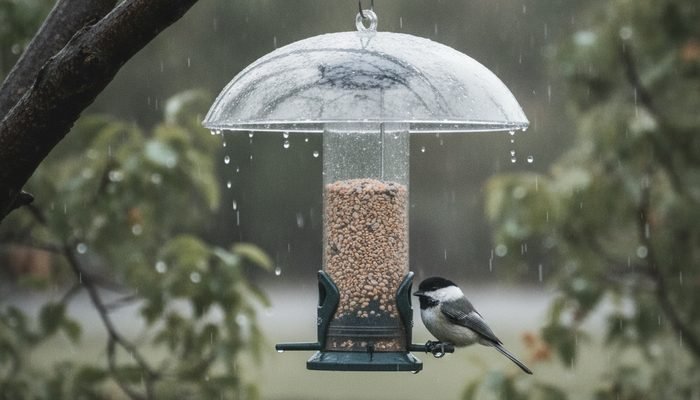
Look for a feeder with a wide, overhanging roof. The roof should stick out well past the edges of the seed tray or ports. If you’re shopping for a new feeder, check out this guide on different types of bird feeders to see which styles handle weather best.
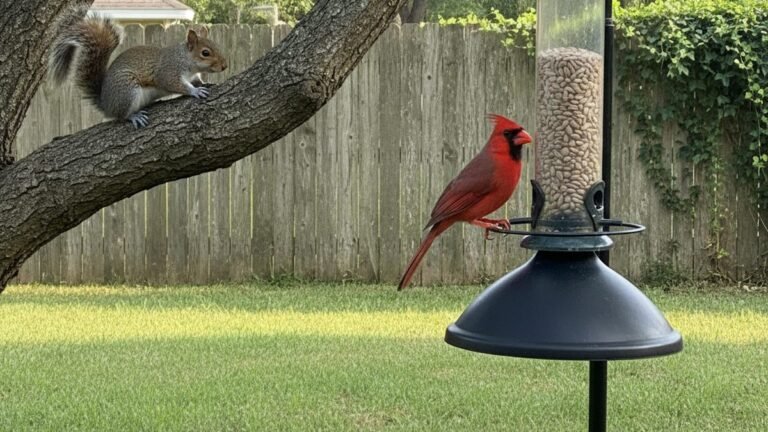
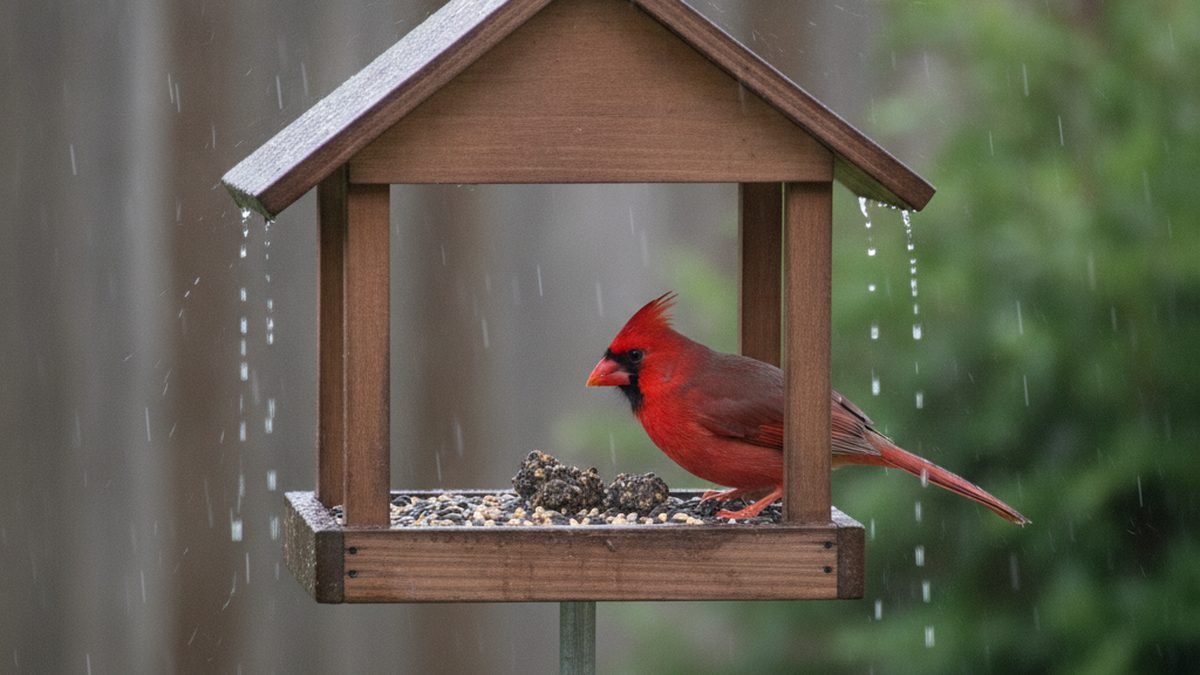
Tube feeders and hopper feeders with deep roofs usually do better in rain than open platform feeders. My platform feeder is the one I watch closest during storms. It’s great for Mourning Doves and Blue Jays, but it has zero natural rain protection since it’s just a flat tray.
2. Drainage Holes Are Clogged or Missing
Seed trays need small holes in the bottom so water can drain out. If those holes get clogged with old seed hulls or debris, water pools right at the bottom of your feeder.
Check your feeder’s tray every couple weeks. Poke out any clogged holes with a toothpick or a thin stick. If your feeder has no drainage holes at all, you can carefully drill a few small ones yourself. Just make sure they’re small enough that seed won’t spill through.
3. You’re Filling the Feeder Too Full
This one surprised me when I first started feeding birds. A feeder packed to the top holds moisture longer because there’s less air movement through the seed.
Fill your feeder about three-quarters full instead of all the way. This lets air circulate and helps any small amount of moisture dry out faster. It also means less seed goes to waste if a storm does get in, since you’re not tossing a full feeder’s worth of soggy seed.
4. Seed Is Sitting Out Too Long Between Refills
Seed that sits in a feeder for weeks without birds eating it through is more likely to get rained on repeatedly and start to mold. This happens a lot at feeders that aren’t in a busy spot.
If your feeder isn’t getting much traffic, check out why birds aren’t coming to your feeder and where to place a bird feeder for better results. A feeder that empties every few days almost never has time to go bad, rain or not.
The Cornell Lab of Ornithology recommends checking feeders regularly and tossing out any seed that looks clumped, discolored, or smells musty. Moldy seed can carry aflatoxin, which is harmful to birds.
5. Your Seed Storage Container Isn’t Sealed
Keeping seed dry isn’t just about the feeder. It’s also about how you store the bag before it ever gets there. A paper bag of seed left in a garage or shed can pull in humidity from the air, even without direct rain.
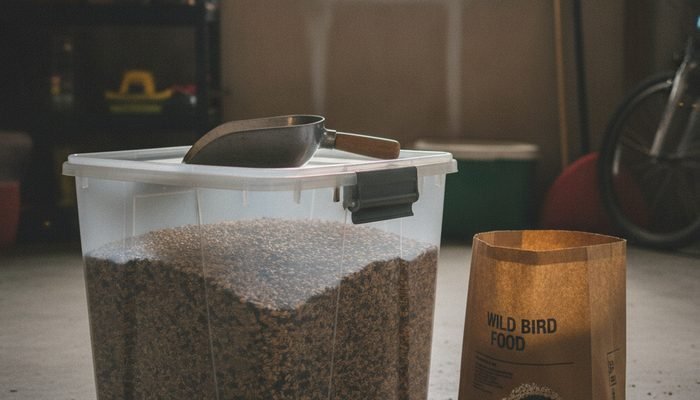
Store seed in a metal or heavy plastic container with a tight lid. A galvanized trash can with a locking lid works well and also keeps mice out. I keep my seed in a sealed bin, which has saved me from more than one clumpy, smelly surprise after a humid week.
6. You’re Using a Feeder Style That’s Just Prone to Wet Seed
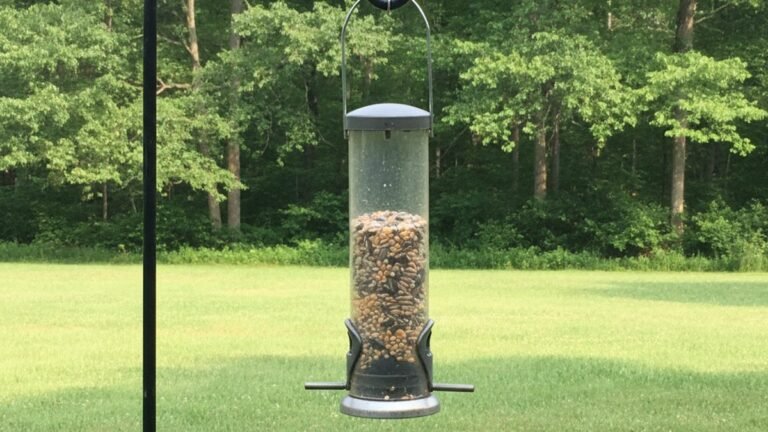
Some feeder designs are simply harder to keep dry no matter what you do. Open platform feeders and ground feeding trays are the worst offenders. Tube feeders with tight ports handle rain the best, since seed is mostly enclosed.
If you love feeding on a platform (great for Northern Cardinals and Mourning Doves), consider only filling it with a small amount of seed at a time, or adding a simple clip-on roof. Suet cages handle rain fine since suet itself resists water pretty well, though a soaked cage can still drip and stay damp longer than you’d like.
What NOT to Do
Don’t cover your feeder tightly in plastic wrap or a plastic bag to “waterproof” it. This traps humidity inside and actually makes mold worse, not better.
Don’t ignore clumped or moldy seed because “the birds will pick out the good parts.” Toss it. It’s not worth the risk to your visitors.
Don’t store seed bags directly on a concrete floor in a garage or shed. Concrete holds moisture and can wick it right up into the bag from underneath. Set bags or bins on a shelf or pallet instead.
Wrapping Up
Keeping bird seed dry really comes down to a decent roof, good drainage, and not letting seed sit too long. A little bit of regular checking goes a long way, especially during a rainy stretch. Your feeder visitors will keep coming back as long as the seed stays fresh, and you’ll waste a lot less seed in the process.
Frequently Asked Questions
Can birds get sick from wet bird seed?
Yes. Wet seed that sits too long can grow mold, and some molds produce aflatoxin, which is toxic to birds. The Cornell Lab of Ornithology recommends removing any seed that looks clumped or smells off right away and cleaning the feeder before refilling.
Does sunflower seed mold faster than other seed?
Sunflower seed can mold quickly once it’s wet because of its oil content. Nyjer and millet also mold, but oily seeds like black oil sunflower tend to clump and spoil faster in damp weather, so check them often during rainy stretches.
Should I take my feeder down during heavy rain?
You don’t have to take it down every time it rains, but it helps during major storms or multi-day downpours. Bringing the feeder in, or at least emptying wet seed after a big storm, keeps birds from eating spoiled food and saves you from cleaning a moldy mess later.
What’s the best feeder for rainy climates?
Tube feeders with a wide roof and tight seed ports handle rain the best, since seed stays mostly enclosed. Hopper feeders with deep, overhanging roofs are a close second. Open platform feeders are the hardest to keep dry in wet climates.