How to Keep Bully Birds (Grackles & Starlings) Off Your Feeder
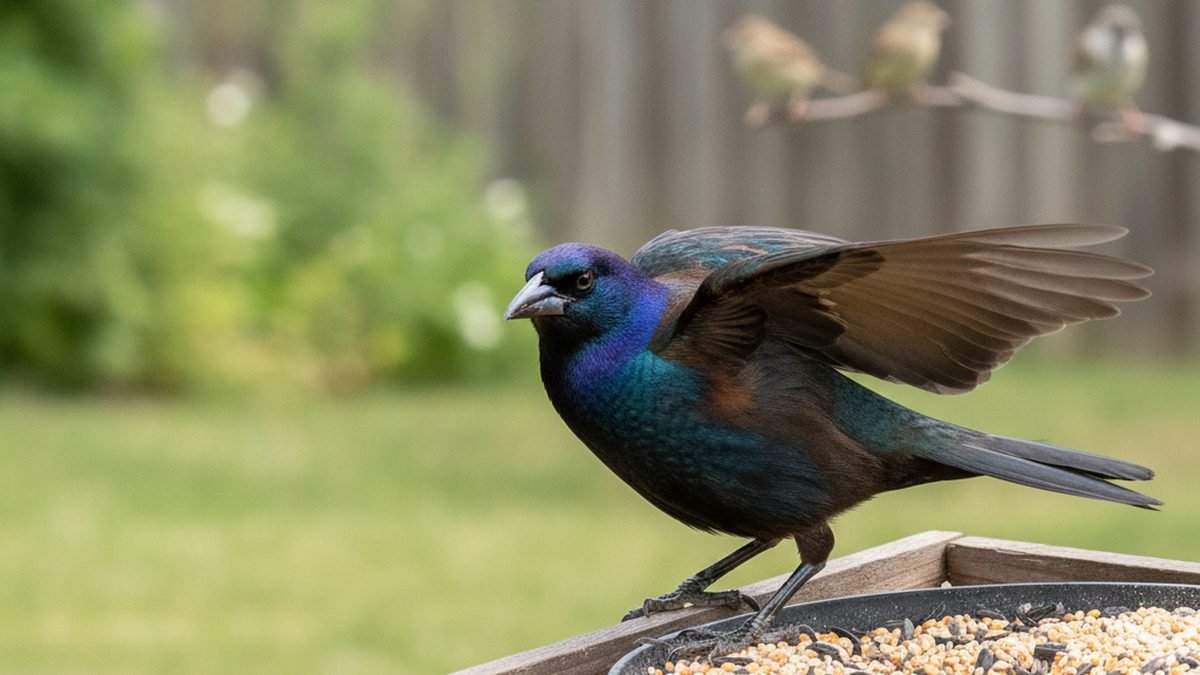
If grackles and starlings are cleaning out your feeder in minutes, the fix starts with your feeder style and seed choice, not with chasing birds off your patio. Learning how to keep grackles away from feeders means making your setup less convenient for them while staying easy for cardinals, chickadees, and finches to use.
I’ve had flocks of grackles show up in my own yard some summers and empty a hopper feeder before lunch. It’s frustrating, but there are real fixes that work without hurting any birds.
This guide walks through the most common reasons bully birds take over, starting with the biggest one, and what to do about each.
1. Your Feeder Type Is Too Easy for Them
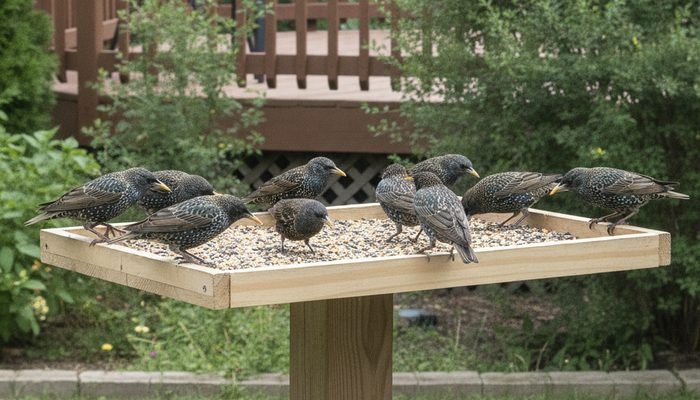
Grackles and starlings are bigger and bulkier than most songbirds. They do best on flat, open feeding spots like platform feeders, hopper feeders, and large trays. If that’s what you’re offering, you’re basically rolling out a welcome mat.
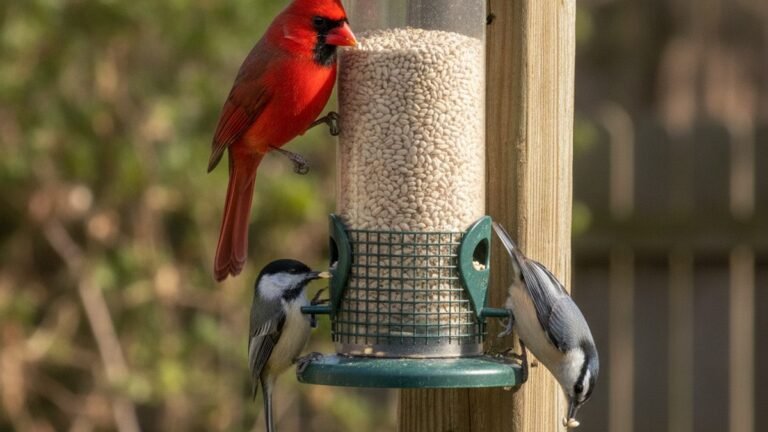
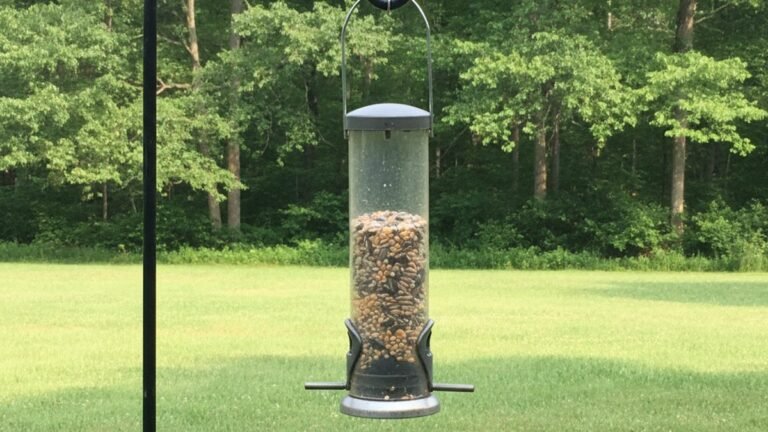
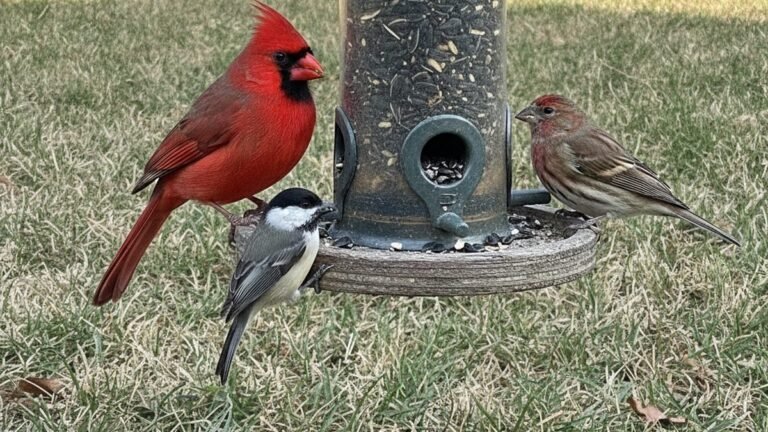
Switch to feeders with weight-sensitive perches or feeders that require clinging, like a caged tube feeder. Cardinals, finches, and chickadees can still get in and out easily. Grackles and starlings struggle to perch on small rings or cling to the sides for long.
If you want a full rundown of feeder styles and which birds prefer each one, check out this guide to bird feeder types. I run a hopper, a tube, a suet cage, and a platform feeder in my own yard, and the tube feeder is the one bully birds visit least.
2. You’re Offering Seed They Love
Grackles and starlings are not picky, but they do have favorites. Cracked corn, milo, and mixed seed with a lot of filler are big draws. So are sunflower seeds if there’s nothing else around.
Cornell Lab of Ornithology notes that safflower seed is one of the few common feeder foods that most blackbirds and starlings tend to avoid, while cardinals, chickadees, and house finches will still eat it. Switching your hopper or platform feeder to straight safflower can cut bully bird visits a lot within a week or two.
Nyjer seed is another one they skip. My tube feeder holds nyjer for the goldfinches, and I’ve never once seen a grackle bother with it. If you want more detail on which seeds pull in which birds, my seed guide breaks it down species by species.
3. Suet Is an Easy Target Too
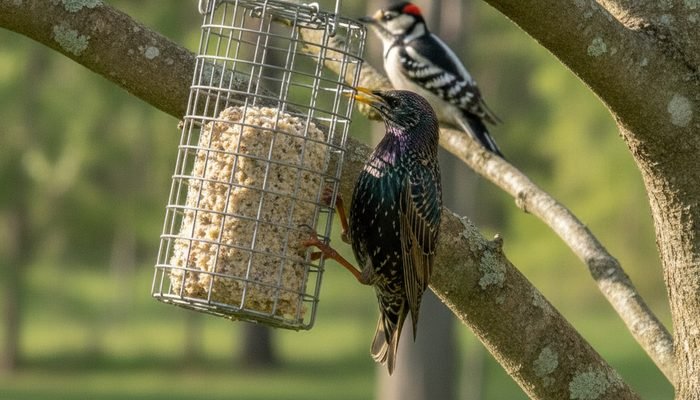
Starlings in particular are famous for hogging suet cages. They’re aggressive at suet and can chase off woodpeckers and nuthatches without much effort.
An upside-down suet feeder, where the cage opens at the bottom, works well here. Woodpeckers and nuthatches feed upside down naturally and don’t mind it. Starlings are much less comfortable hanging upside down for long, so they tend to give up and move on.
You can also switch to suet with more hot pepper or plain rendered fat and less filler. Cheaper suet cakes packed with corn and wheat are exactly what starlings key in on.
4. Ground Feeding Is Feeding Them Too
If you scatter seed on the ground for doves and juncos, you’re also feeding grackles and starlings. Both species are comfortable foraging on open ground in groups.
Cut back on ground feeding, or limit it to a small amount right after your other feeders are refilled instead of leaving it out all day. Cleaning up spilled seed under your feeders daily also removes an easy buffet.
5. There’s Nowhere for Them to Land and Wait
Grackles and starlings often perch nearby and wait for a turn, especially on open branches or fence tops close to the feeder. Trimming back bare perching spots near your setup makes the area less appealing to a whole flock at once.
This is also a good reason to think about where you place your feeder in the first place. A feeder tucked closer to shrubs or small trees, rather than wide open lawn, tends to draw more of the shy feeder birds and fewer flocking bully birds.
6. Feeding Times Matter
Grackles and starlings tend to move through in flocks at somewhat predictable times, often mid-morning. Some backyard birders reduce bully bird numbers by only filling feeders in late afternoon, after the flocks have already moved on for the day.
This takes some observation on your part. Watch your yard for a week and note when the flocks show up. Adjust your filling schedule around that pattern.
What NOT to Do
Don’t use sticky repellent gels or spikes meant for pest birds on feeders that songbirds also use. These can trap or injure any bird that lands there, not just the ones you’re trying to discourage.
Don’t try to trap or harm grackles or starlings. Starlings and House Sparrows are not native and not protected by the Migratory Bird Treaty Act, but grackles are native and protected, so it’s illegal to harm or trap them. Audubon Society recommends habitat and feeder management instead, which is also just simpler and safer for everyone in the yard.
Don’t switch every feeder to safflower overnight. Some of your regulars, like Blue Jays, may need a few days to accept it. A gradual mix-in works better than a cold swap. For more general setup mistakes, my article on common bird feeding mistakes covers a few other habits worth avoiding.
Wrapping Up
Bully birds are a normal part of backyard feeding, especially in late summer when flocks are on the move. A few small changes, like switching seed or feeder style, usually make a real difference within a week or two. Give one change time to work before stacking on another, so you can actually tell what helped. Your regulars will still show up either way, just with a little less competition for the feeder.
Frequently Asked Questions
Will safflower seed keep grackles away completely?
Not completely, but it helps a lot. Most grackles and starlings dislike the taste and will look elsewhere after a few tries. Cardinals, chickadees, and house finches usually keep eating it without issue, so it’s a solid swap if bully birds are a problem at your hopper or platform feeder.
Are grackles protected birds?
Yes. Common Grackles are native to North America and protected under the Migratory Bird Treaty Act. You cannot legally trap or harm them. Starlings and House Sparrows are non-native and not protected, but habitat and feeder changes are still the safest and most effective way to manage all of them.
Why do grackles travel in such large groups?
Grackles are highly social birds, especially outside breeding season. Large flocks help them find food faster and offer some safety from predators. That same group behavior is why they can overwhelm a feeder so quickly once they find one.
Does a caged feeder really stop starlings?
A caged or weight-sensitive tube feeder makes it much harder for starlings and grackles to feed. Their size and perching style don’t work well with small rings or narrow perches. Smaller birds like chickadees and finches can still slip through with no trouble.