Peanuts for Birds: In-Shell vs Shelled vs Peanut Butter
Feeding peanuts to birds works great as long as you know which form to use and how to offer it. In-shell peanuts, shelled peanuts, and peanut butter all attract different birds and come with different risks.
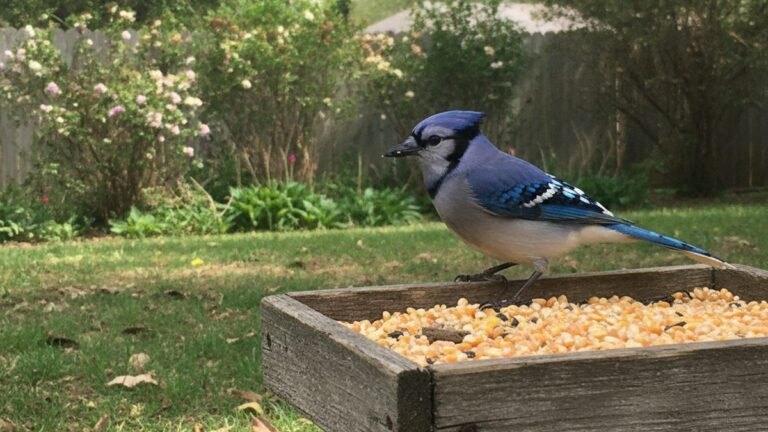
I started offering peanuts a few years ago after noticing how much my Blue Jays wanted something more substantial than sunflower seeds. It didn’t take long to figure out which form worked and which one just sat there getting soggy in the rain.
This guide breaks down the three main ways to feed peanuts, which birds actually eat them, and a few mistakes that can do more harm than good.
What Are Peanuts, Nutritionally Speaking, for Birds
Peanuts are technically a legume, not a true nut, but birds don’t care about that distinction. What they care about is the fat and protein.
Raw or roasted (unsalted) peanuts are high in fat, similar to suet in that regard. That makes them a good energy source in cold weather when birds need extra calories to stay warm. The Cornell Lab of Ornithology lists peanuts as a solid supplemental food, especially for species that also eat insects and grubs.
The catch is that peanuts can develop a mold called aflatoxin if they get wet and sit too long. That mold is toxic to birds. This is the single biggest reason people run into trouble feeding peanuts, and I’ll cover how to avoid it below.
Which Birds Eat Peanuts
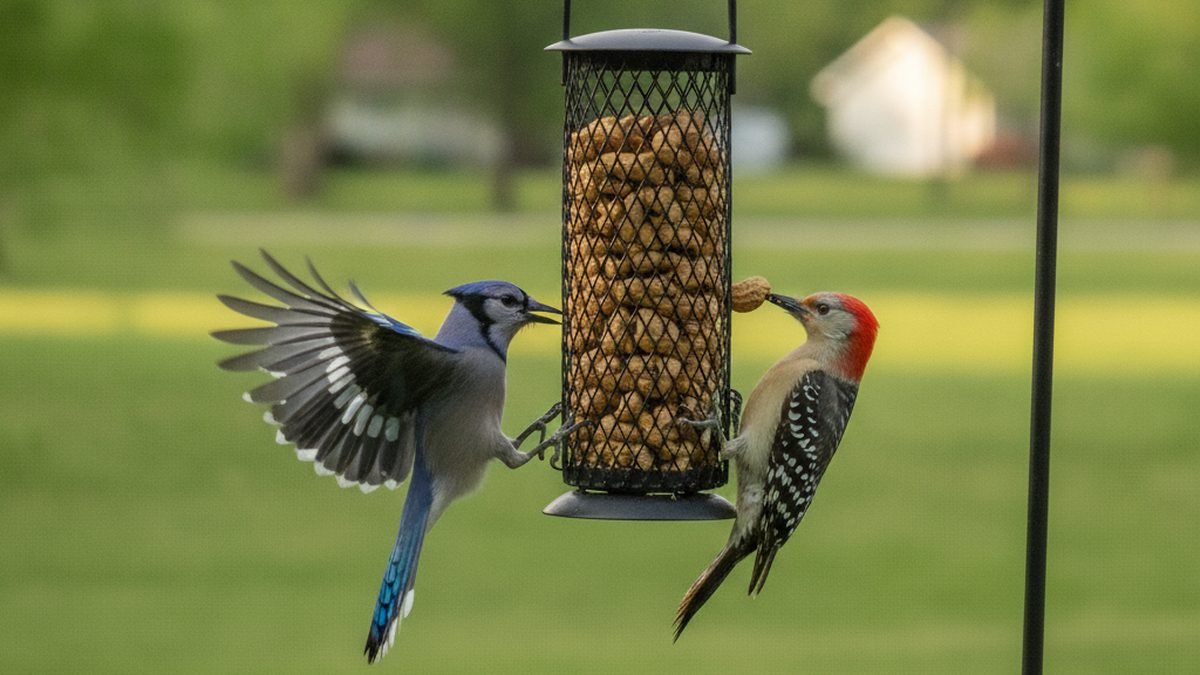
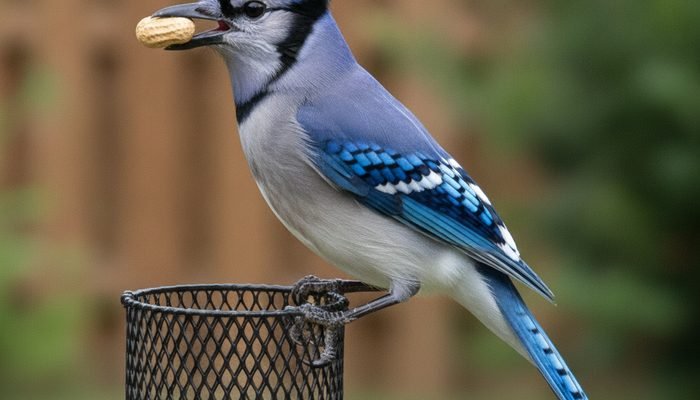
Peanuts pull in some of the bigger, bolder birds in the yard. In my own yard, Blue Jays are the main peanut customers. They’ll grab a whole peanut and fly off to cache it, which is classic Jay behavior.
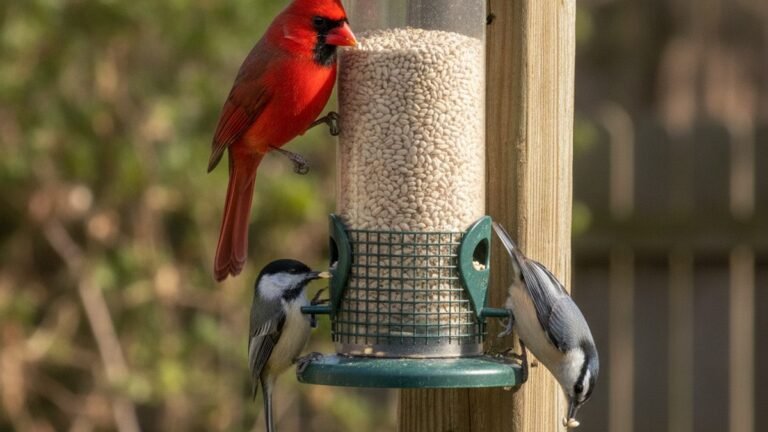
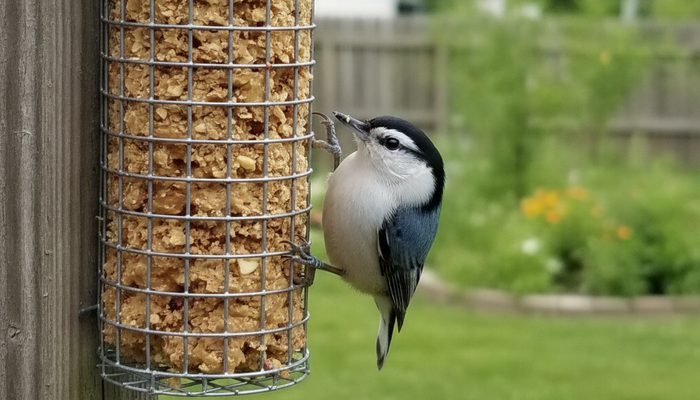
Woodpeckers go for peanuts too. Downy Woodpeckers will work at shelled pieces in a mesh feeder, and larger woodpeckers like Red-bellied Woodpeckers (common across much of the eastern and central U.S.) are frequent peanut visitors where they occur. Nuthatches, including White-breasted Nuthatches, will also stop by for peanut bits, often wedging a piece into bark to hammer it open, the same trick they use with sunflower seeds.
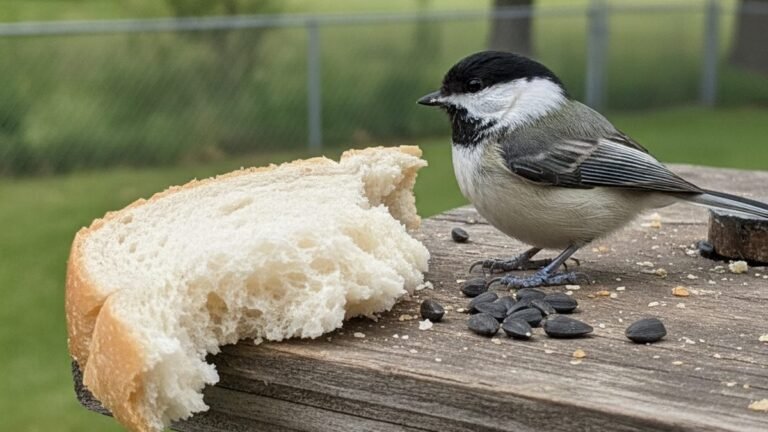
Chickadees will take small peanut pieces from a mesh feeder, though they usually prefer sunflower seed first. Titmice, wrens, and even some woodpecker species outside my region, like Red-headed Woodpeckers, are known to take peanuts readily according to Project FeederWatch data.
Birds That Mostly Ignore Peanuts
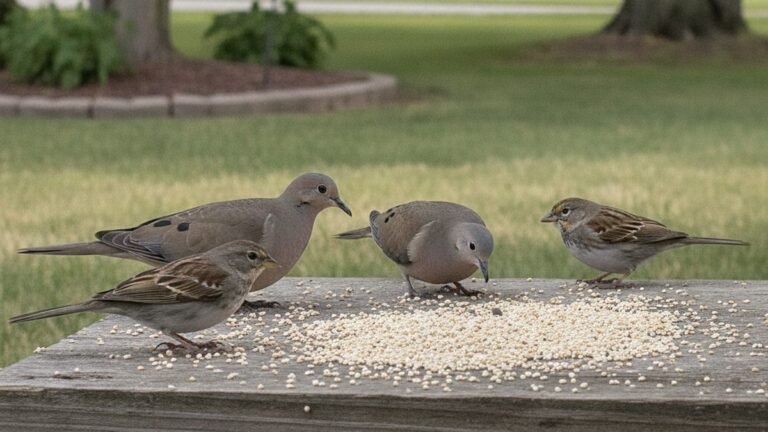
Goldfinches are not peanut birds. Mine stick to the nyjer in my tube feeder and rarely bother with anything else. Mourning Doves and House Finches will occasionally peck at crumbs on a platform, but peanuts aren’t a draw for either species. If you’re only getting finches or doves at your feeders, peanuts probably won’t change that.
In-Shell vs Shelled vs Peanut Butter: How to Offer Each
In-Shell Peanuts
Whole peanuts in the shell are great for Blue Jays and sometimes woodpeckers, since they enjoy the work of cracking them open. Offer these on a sturdy platform feeder or a wire basket feeder made for whole peanuts. Never use a standard tube or hopper feeder, the shells are too big and will jam the ports.
The downside is that in-shell peanuts are the most likely to sit around and absorb moisture, especially during humid summer stretches. Only put out what birds will clear in a day or two.
Shelled Peanuts
Shelled peanuts (whole or in pieces) are more versatile. Small woodpeckers, nuthatches, and chickadees can handle these more easily than whole in-shell nuts. A mesh or wire peanut feeder works well here because it lets birds pick at pieces without letting the whole nut fall out.
Shelled peanuts spoil faster than in-shell because there’s no shell protecting the meat from humidity. In my experience watching feeder conditions through Midwest summers, anything shelled needs to be checked more often, especially after rain.
Peanut Butter
Plain, unsalted peanut butter can be smeared into bark crevices, pinecones, or specialty peanut butter feeder logs. It’s popular with woodpeckers and nuthatches in winter because of the fat content. Avoid peanut butter with added sugar, salt, or xylitol (a sweetener that is toxic to many animals).
A common tip from Audubon Society feeding guides is to mix peanut butter with cornmeal to make it easier for birds to eat without it clumping in their mouths or on their bills the way pure peanut butter can. This is more of a winter food since it can turn runny in summer heat.
Is Feeding Peanuts to Birds Worth It
My honest take: peanuts are worth adding if you already have jays, woodpeckers, or nuthatches visiting. They’re not a replacement for black oil sunflower seed as a daily staple, but they’re a good high-fat supplement, especially heading into fall and winter.
If your yard is mostly finches and doves, I wouldn’t bother. You’ll just end up with peanuts going stale on the platform. For more on getting the right food to the right birds in the first place, see which birds eat sunflower seeds and why birds aren’t coming to your feeder.
One caution before you start: only buy peanuts labeled for bird feeding or plain unsalted peanuts meant for human consumption. Skip flavored, salted, or honey-roasted varieties. The added salt and sugar aren’t good for birds in any quantity.
If you’re setting up a new feeding station and want to add peanuts into the mix, my guide on starting a backyard bird feeding setup walks through the basics of feeder types and placement.
Wrapping Up
Peanuts are a nice addition once you know which form fits your yard. I’d start small, maybe a mesh feeder with shelled peanuts, and watch who shows up before committing to a whole peanut station. Keep them dry, keep portions small, and skip anything salted or sweetened. Your jays and woodpeckers will thank you, even if the goldfinches never notice.
Frequently Asked Questions
Can birds eat raw peanuts?
Yes, but roasted, unsalted peanuts are generally the safer choice. Raw peanuts carry a slightly higher risk of mold, and roasting reduces that risk somewhat. Either way, only put out small amounts at a time so they don’t sit and absorb moisture.
Do peanuts attract squirrels?
Yes, peanuts are one of the top squirrel magnets you can put out. If squirrels are already a problem at your feeders, expect peanuts to draw even more attention. A weight-activated feeder or squirrel baffle helps limit how much they can steal.
Are peanuts safe for birds year-round?
Peanuts are safe year-round if kept fresh and dry, but they’re most useful in fall and winter when birds need extra fat for energy. In hot, humid summer months, check them more often since heat speeds up spoilage and mold growth.
Should I remove peanut shells before feeding birds?
It depends on the bird. Blue Jays and larger woodpeckers can crack shells themselves, so in-shell is fine for them. Smaller birds like chickadees and nuthatches do better with shelled pieces from a mesh feeder.