12 Birds That Eat Mealworms (From Bluebirds to Chickadees)
Birds that eat mealworms include bluebirds, wrens, chickadees, robins, and about a dozen other backyard species. Mealworms are packed with protein and fat, which makes them one of the best treats you can offer, especially during nesting season.
I started offering mealworms a few years ago after reading how much bluebirds love them. I don’t get bluebirds every year, but when I do, the mealworm dish empties fast. Even my regular chickadees and nuthatches figured out the tray within a couple days.
This list covers 12 birds that eat mealworms, from the classic bluebird crowd to a couple of surprise visitors like wrens and catbirds. I’ll also cover how to serve them so you’re not wasting money or attracting the wrong critters.
1. Eastern Bluebird
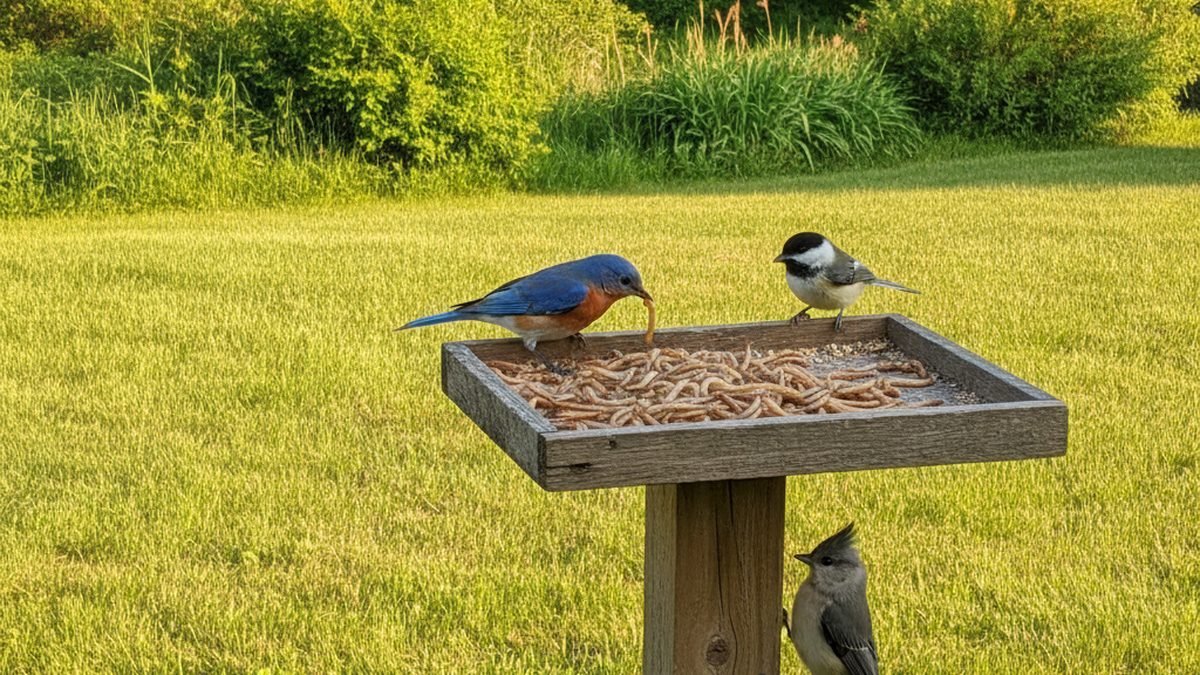
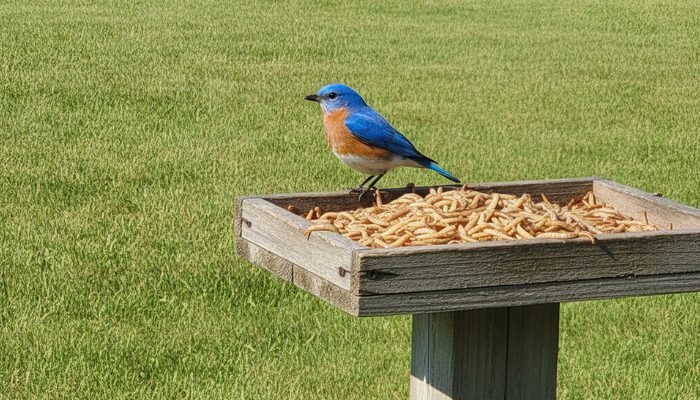
Bluebirds are the poster bird for mealworm feeding. Cornell Lab of Ornithology notes that insects make up a big share of their natural diet, so mealworms are an easy sell.
They prefer open platform feeders or special bluebird mealworm dishes placed in the open, away from thick brush. If you live where bluebirds nest nearby, offering live mealworms in spring can help them feed hungry chicks.
2. Western Bluebird
Western Bluebirds behave a lot like their Eastern cousins. Feeder watchers in the western states report good luck with the same shallow dish setup, placed in open lawns or fields.
They’re cavity nesters, so if you have a bluebird box nearby, you may see adults hauling mealworms straight to their young in early summer.
3. Carolina Wren
Carolina Wrens are bold little birds that will check out almost any food offering, mealworms included. They tend to forage low, near shrubs or brush piles, so a platform feeder close to cover works well.
I don’t get Carolina Wrens up here in the Upper Midwest, but readers further south tell me this species can become a regular once it finds a mealworm dish.
4. House Wren
House Wrens are common across most of the U.S. in summer. They’re mostly insect eaters, so mealworms fit right into their natural diet.
These birds are quick and a little jumpy at feeders. Offer mealworms in a spot with a nearby perch or branch, since House Wrens like to scope things out before committing.
5. American Robin
Robins are ground foragers that hunt worms and insects most of the year. Mealworms are a natural match for their diet.
They usually won’t use a hanging feeder, but a platform feeder or a low dish on the ground works well. I’ve watched robins in my own yard pull earthworms from the lawn after rain, so mealworms are really just a dry-weather substitute for what they already eat.
6. Black-capped Chickadee
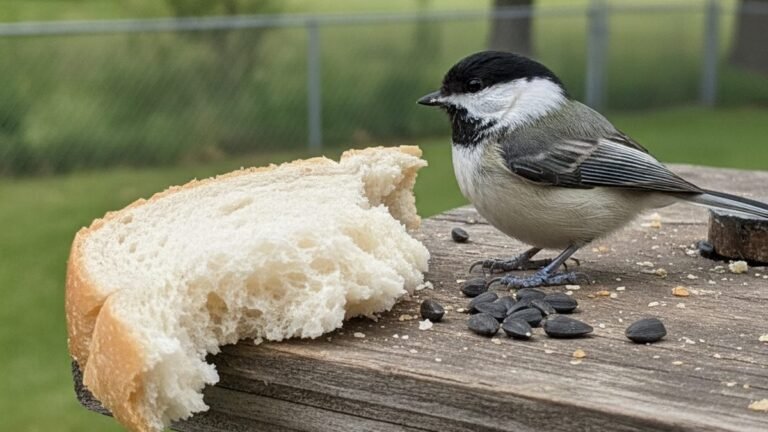
Chickadees are one of the easiest birds to convert to mealworms. Mine found the tray within two or three days of me setting it out, which was faster than I expected.
They’ll grab a mealworm and fly off to a branch to eat it, then come right back for another. It’s a fun species to watch up close if you’re patient with a hand feeder.
7. Tufted Titmouse
Titmice are close relatives of chickadees and share a lot of the same habits. They eat insects readily in the wild, so mealworms are an easy addition to their diet.
If you already get titmice at suet or sunflower seed, there’s a good chance they’ll try mealworms too, especially in a mixed feeding station.
8. White-breasted Nuthatch
Nuthatches are regulars at my suet cage, and they show real interest in mealworms too. They like to grab one worm at a time and wedge it into bark to peck apart, the same way they handle sunflower seeds and nuts.
If you want tips on feeders that hold a variety of foods, this guide to feeder types covers the options that work well for nuthatches and other clingy foragers.
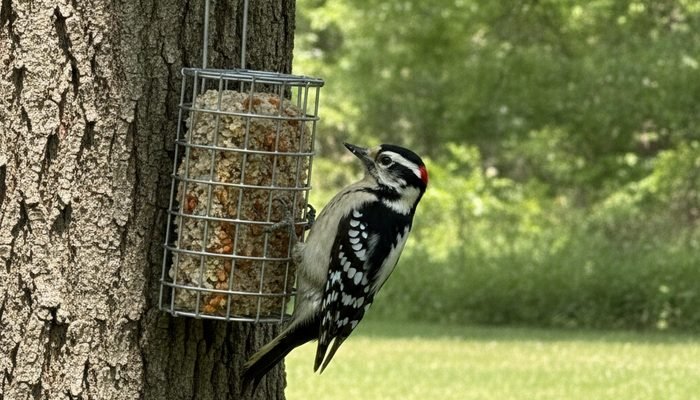
9. Downy Woodpecker
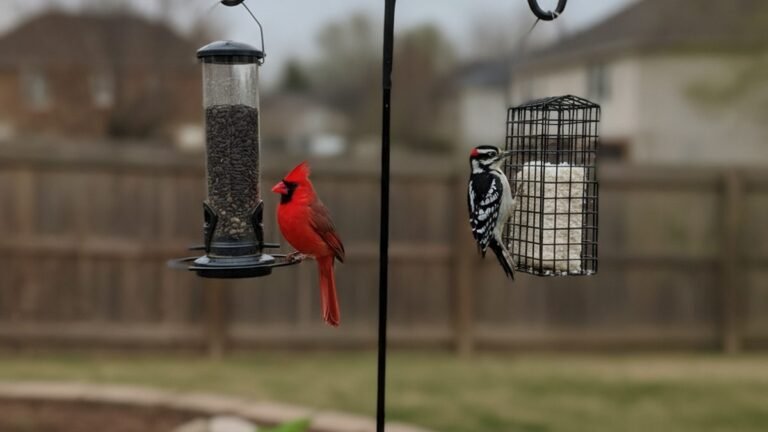
Downy Woodpeckers eat a lot of insects and larvae under tree bark, so mealworms are a natural fit. I see mine at the suet cage near the maple tree almost daily, and dried mealworms mixed into suet blends disappear just as fast as the fat itself.
Offering mealworms alongside suet gives this species two protein sources instead of one.
10. Northern Cardinal
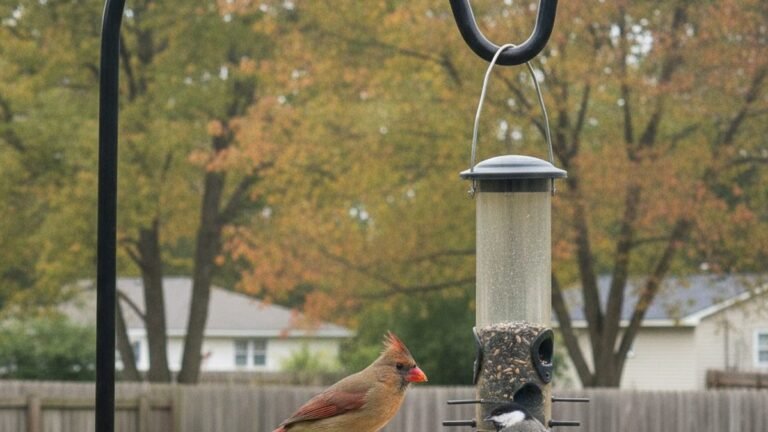
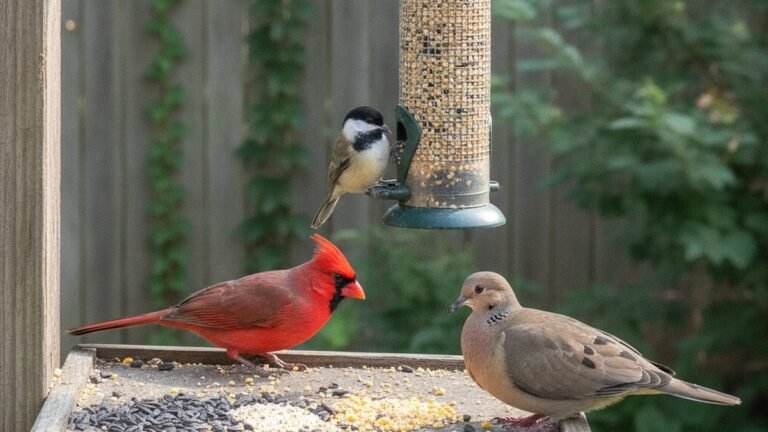
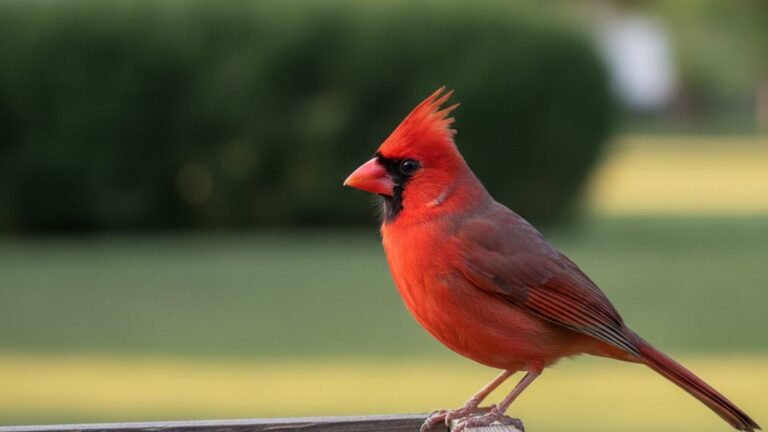
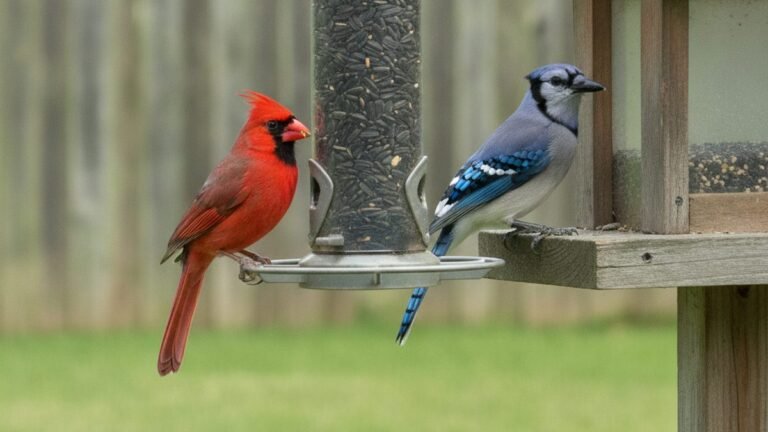
Cardinals eat mostly seeds and fruit, but they’ll take mealworms during breeding season when they need extra protein for their chicks. I’ve seen my backyard cardinals pick through the platform feeder tray, and every so often they grab a mealworm if one’s mixed in with the seed.
They’re not big mealworm specialists, but they won’t turn one down either.
11. Gray Catbird
Catbirds are shy, brush-loving birds that eat a lot of insects and berries. They’re not common feeder visitors, but mealworms placed near dense shrubs can tempt one out into the open.
If you have a catbird pair nesting nearby, you may notice them getting bolder around a mealworm dish as the season goes on.
12. European Starling
Starlings will eat almost anything, and mealworms are no exception. They tend to show up in groups and can clear out a mealworm dish fast, which is worth knowing before you set one out.
If starlings become a nuisance, switching to a caged mealworm feeder that only lets smaller birds through can help control who gets the goods.
How to Offer Mealworms Without Wasting Money
Live mealworms are the biggest draw for birds, but they cost more and need refrigeration. Dried mealworms are cheaper and easier to store, though some birds are pickier about them.
A shallow dish or platform feeder works better than a hanging tube feeder, since most mealworm-eating birds prefer to perch and pick rather than cling. If squirrels or starlings are cleaning you out before your target birds get a turn, a caged mealworm feeder limits access to smaller species.
For general feeder placement advice, including how far feeders should sit from windows, check out my guide on where to place a bird feeder. And if squirrels keep raiding your mealworm dish along with everything else, this squirrel-proofing guide has practical fixes.
Only put out as many mealworms as birds will eat in a day or two. Leftover mealworms can dry out, mold in humid weather, or just wander off if they’re still alive.
Wrapping Up
Mealworms are one of the easiest ways to bring in protein-hungry birds, especially in spring. Start small, watch who shows up, and adjust your feeder setup based on what you see. It might take a few days like it did with my chickadees, but once word gets out in the bird world, you won’t have trouble keeping visitors interested.
Frequently Asked Questions
Do birds prefer live or dried mealworms?
Most birds prefer live mealworms because the movement catches their eye and mimics natural prey. Dried mealworms still work, especially if soaked in water first to soften them, but expect a slower response from some species.
What time of year should I offer mealworms?
Spring and early summer are the best times, since many birds need extra protein to raise chicks. You can offer mealworms year-round, but demand usually drops in fall and winter when insects are scarce anyway.
Will mealworms attract unwanted pests?
Mealworms themselves won’t attract pests, but leftover worms can draw ants or attract rodents if left out overnight. Only put out small amounts and bring in the dish after dusk.
Can I mix mealworms with birdseed?
Yes, many people scatter a handful of dried mealworms into a platform feeder full of seed. This works well for cardinals, chickadees, and nuthatches that already visit for seed and will happily grab a mealworm too.