How to Attract Blue Jays to Your Bird Feeder
If you want to know how to attract blue jays, the short answer is peanuts, a sturdy platform or hopper feeder, and a little patience. Blue jays are loud, bold, and easy to spot once they find a reliable food source in your yard.
I’ve had blue jays show up at my platform feeder for years, usually announcing themselves before I even see them. They’re not shy birds, but they do have preferences, and if you skip those, you might end up with an empty feeder and a confused look on your face (I’ve been there).
This guide covers what blue jays actually eat, which feeder works best, where to put it, and how long you can expect to wait before they show up.
What Blue Jays Eat
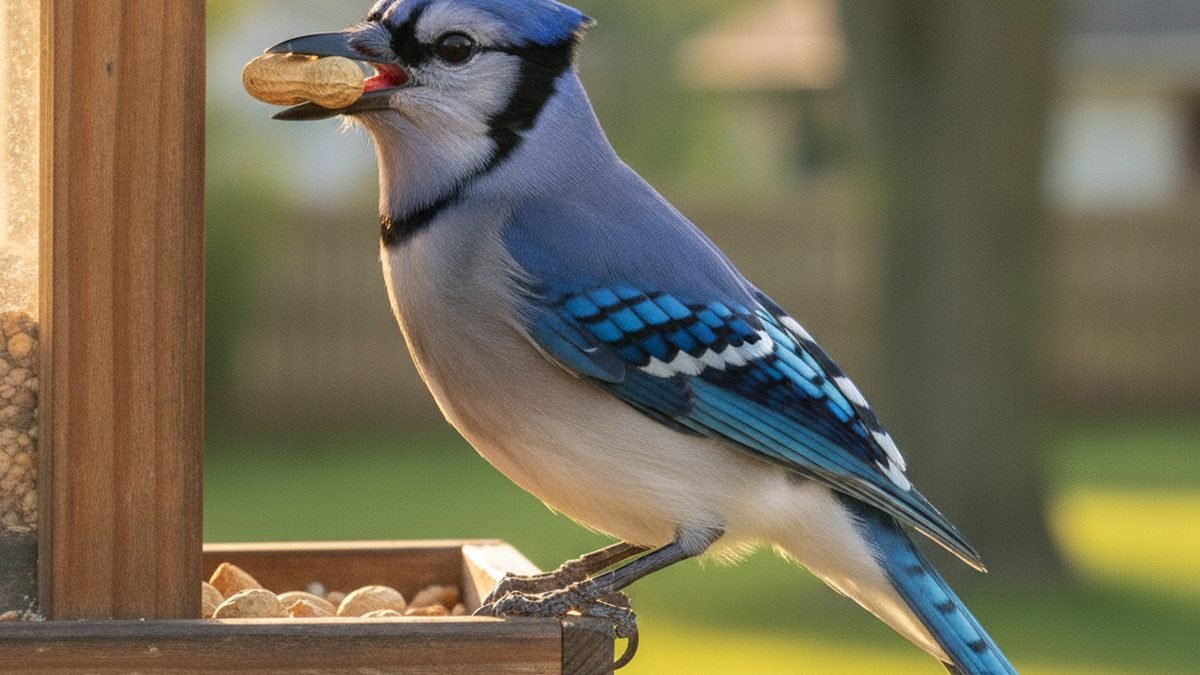
Blue jays are omnivores. In the wild they eat acorns, nuts, seeds, insects, and sometimes eggs or nestlings of other birds. At a feeder, they go straight for the bigger, richer foods.
Here’s what tends to work best:
- Peanuts (in the shell or shelled, both get attention)
- Black oil sunflower seed
- Suet, especially in colder months
- Cracked corn
- Whole kernel corn on a platform tray
Blue jays are not big fans of nyjer seed. That one’s better left for finches. According to Cornell Lab of Ornithology, jays have strong, thick bills built for cracking hard shells, which is why peanuts and acorns are such a good match for them.
If you’re not sure which seed mixes make sense for your whole yard, my guide to bird seed and what it attracts breaks it down by species.
Best Feeder Type for Blue Jays
Blue jays are big birds, close to the size of a robin, and they need room to land and balance. Small tube feeders with short perches don’t work well for them.
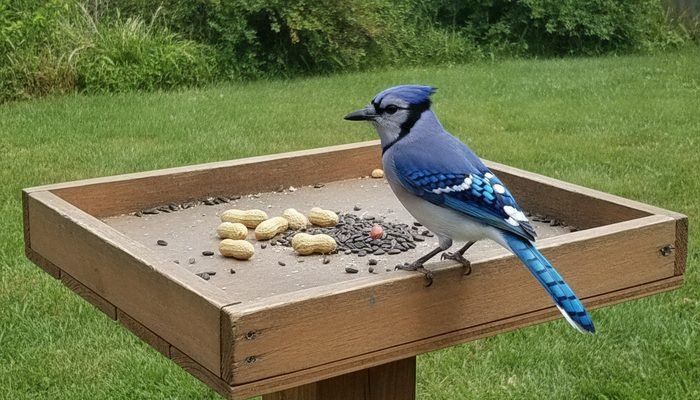
A platform feeder is your best bet. It gives jays flat, open space to land and pick through seed or peanuts. A hopper feeder with a wide tray can also work, especially if it’s on the larger side.
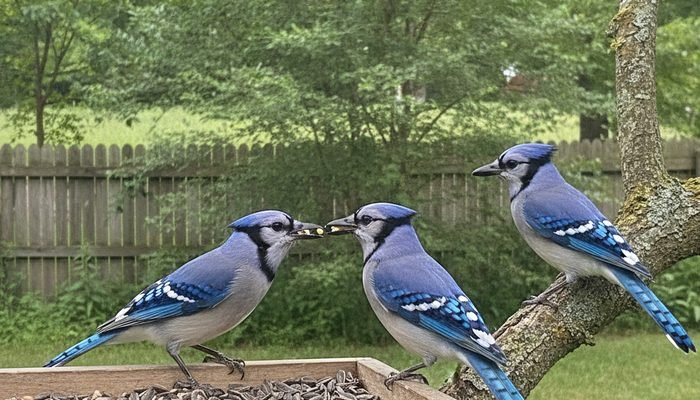
I run a platform feeder in my own yard, and it’s the one that pulls in blue jays most reliably. They’ll grab a peanut and fly off to crack it open somewhere else, then come right back for more.
If squirrels are raiding your platform before the jays get a turn, that’s a separate battle worth reading up on in how to keep squirrels away from bird feeders.
Where to Place the Feeder
Blue jays like some cover nearby. In the wild, they nest and forage near trees, so a feeder within sight of tall trees or shrubs feels safer to them than one out in the open.
My feeders hang near a mature maple tree, about 10 feet from the trunk. That mix of open landing space and nearby cover seems to be exactly what jays are looking for.
Keep the feeder more than 30 feet from windows, or closer than 3 feet, to lower the risk of collisions. This is sometimes called the 3/30 rule by groups like the Audubon Society. A jay flying fast between trees can misjudge a window at a mid-range distance, so those two zones are the safer choices. If you’ve had birds hit windows before, my post on how to stop birds flying into windows has more on preventing that.
Blue Jay Behavior You Should Know
Blue jays are smart and a little bossy. They’ll often show up in small family groups, especially in late summer when young jays are still learning the ropes from their parents.
They also cache food. Don’t be surprised if you see a jay grab several peanuts in a row and fly off each time instead of eating on the spot. They’re stashing food for later, which is normal behavior, not greed (though it can look that way).
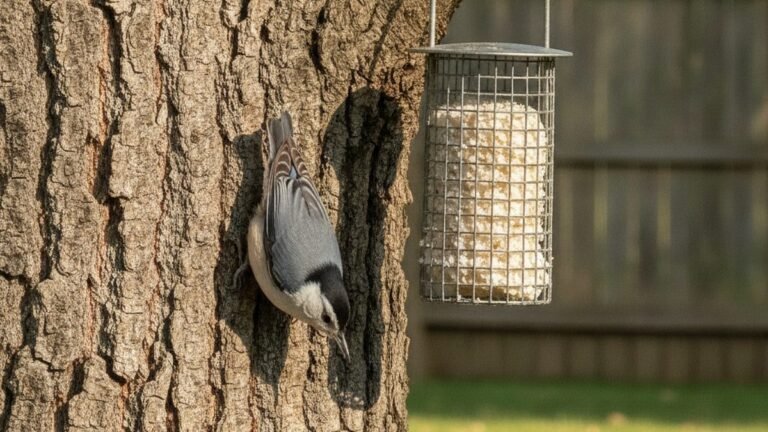
One thing to expect: blue jays can be loud and a bit pushy at a shared feeder. Smaller birds like chickadees and nuthatches will usually wait their turn or use a different feeder while jays are around. That’s just part of having jays as regular visitors.
How Long It Takes to Attract Blue Jays
In my experience, once peanuts or sunflower seed go out on a platform feeder, jays tend to find it within a week or two, sometimes faster if there’s already a jay pair nesting nearby.
If it’s been a month with no jays, check your feeder type and food first. A tube feeder full of nyjer is never going to bring them in, no matter how long you wait.
Data from Project FeederWatch shows blue jays are common feeder visitors across most of the eastern and central United States, so if you’re in their range, it’s usually a matter of the right setup rather than the birds simply not being around.
If your feeders sit empty no matter what you offer, my article on why birds aren’t coming to your feeder covers other common culprits worth ruling out.
Wrapping Up
Attracting blue jays really comes down to giving them what they need: peanuts or sunflower seed, a feeder with room to land, and some tree cover nearby. Once a pair or family group finds your yard, they tend to stick around and check back often. Give it a couple of weeks before changing anything, and don’t be surprised if they show up loud and proud, that’s just how jays make an entrance.
Frequently Asked Questions
What food attracts blue jays the fastest?
Peanuts, either shelled or in the shell, tend to work fastest. Blue jays have strong bills built for cracking hard shells, and peanuts are one of their favorite feeder foods. Black oil sunflower seed and suet are good backups if peanuts aren’t available.
Do blue jays scare away other birds?
They can seem bossy at a feeder, and smaller birds often wait their turn or move to a different feeder when jays show up. Blue jays are not typically aggressive toward other species, though. They mostly just take up space and make noise.
Why don’t I see blue jays at my feeder?
The most common reasons are the wrong feeder type (too small for a bird their size) or the wrong food (like nyjer seed, which jays ignore). Try a platform feeder with peanuts or sunflower seed and give it a couple of weeks.
Do blue jays use bird baths?
Yes, blue jays regularly use bird baths for drinking and bathing. A pedestal birdbath placed within view of feeders and trees can bring jays in even on days when they’re not hungry.