Where to Place a Bird Feeder: Location Guide for Beginners
Where to place a bird feeder comes down to three things: safety from window strikes, cover from predators, and a spot you can actually see. Get those three right and the birds will find the rest on their own.
I’ve moved my feeders around my yard more times than I’d like to admit over the past 12 years. Some spots brought in cardinals and chickadees within days. Other spots sat empty for weeks, or worse, led to a bird hitting a window. Location really does matter that much.
In this guide, I’ll walk through exactly where to hang or mount a feeder, how far from your house it should be, and what to avoid. I’ll also cover the placement mistakes I see most often from beginners.
The Window Distance Rule (Get This Right First)
Before you think about squirrels or shade or anything else, think about windows. Bird-window collisions kill an estimated hundreds of millions of birds a year in the United States, according to the Cornell Lab of Ornithology.
The fix is called the 3/30 rule, and it’s simple. Place a feeder within 3 feet of a window, or more than 30 feet away. Anything in between is the danger zone.
Here’s why. If a feeder is right against the glass, a startled bird can’t build up enough speed to hurt itself before hitting the window. If it’s more than 30 feet out, birds have enough distance to see the window and steer around it. It’s that middle range, say 10 to 20 feet, where birds get going fast and don’t register the glass in time.
My own feeders hang near a mature maple tree in the yard, well past that 30 foot mark from any window. I watch them from my kitchen window across the yard with a cup of coffee most mornings. If you’re dealing with a bird that’s already hitting your glass, my article on stopping birds from flying into windows covers window treatments that help.
How Close to the House Is Too Close (or Too Far)?
Beyond the window rule, think about how far you personally want to walk to refill and clean the feeder. A feeder you can’t see well from inside is a feeder you’ll forget about.
Most feeder watchers do well somewhere between 10 and 15 feet from a porch, patio, or window that follows the 3/30 rule. That’s close enough to enjoy the show, far enough to give birds a buffer from human foot traffic and pets.
If you have a cat that spends time outdoors, add more distance or elevation. Cats are one of the biggest threats to feeder birds, according to the American Bird Conservancy.
Give Birds Cover, But Not Ambush Cover
Birds want to feel safe, but not trapped. That’s a balance.
A feeder near a tree or shrub, roughly 10 to 12 feet away, gives birds a launch pad and a quick escape route if a hawk shows up. My feeders sit about 10 feet from the trunk of the maple in my yard, which works well for chickadees and nuthatches darting in and out.
What you don’t want is a feeder tucked directly inside dense bushes. That gives cover to the wrong animal. Cats and even snakes can hide in thick shrubs right next to a feeder and ambush birds at close range. Keep some open space between the feeder and the densest cover.
Height Matters More Than You’d Think
Different feeder types call for different heights, and this trips up a lot of beginners.
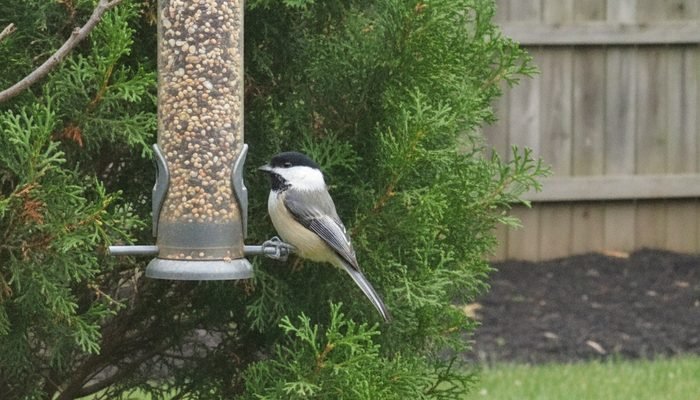
Hanging feeders (tube, hopper)
Aim for 5 to 6 feet off the ground. That’s above easy reach for most dogs and many cats, but still low enough for you to fill without a stepladder.
Platform feeders
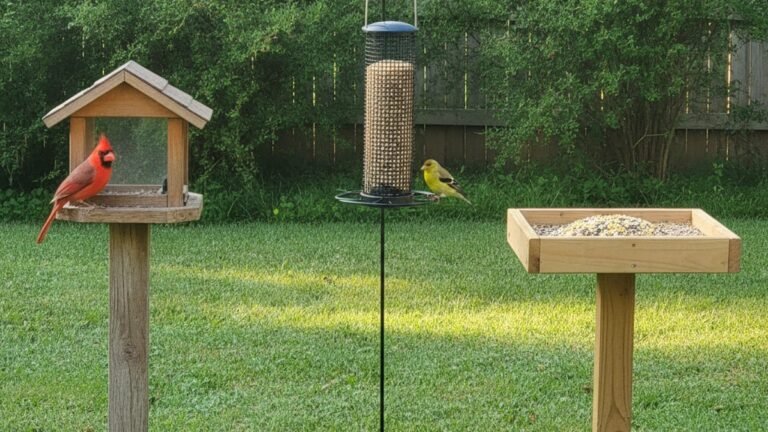
These can go a bit lower, 3 to 4 feet, since they’re meant to mimic open ground feeding for birds like Mourning Doves and juncos. Just know that ground-level platforms are easier pickings for squirrels and chipmunks.
Suet feeders
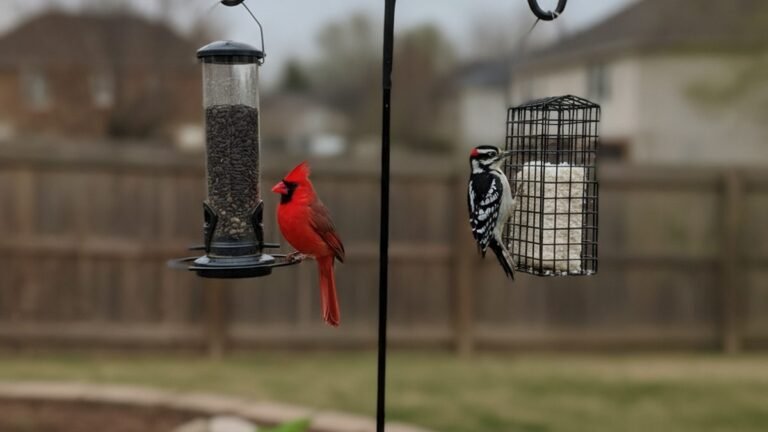
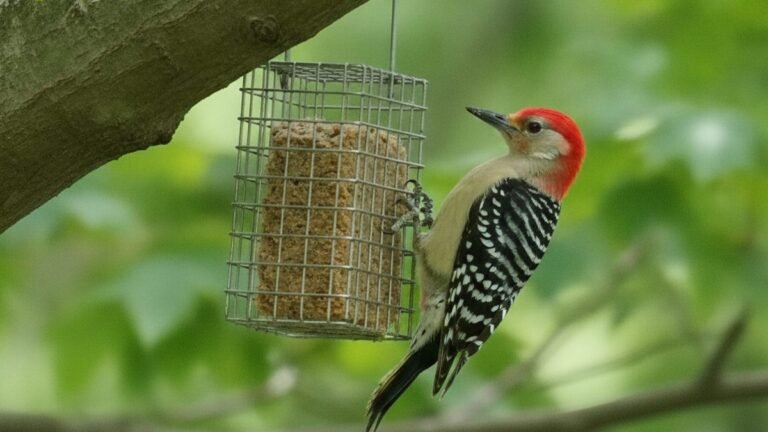
Woodpeckers and nuthatches are used to feeding on tree trunks, so a suet cage mounted around 5 feet up on a pole or hung near a tree trunk feels natural to them.
If squirrels are raiding your feeder no matter where you hang it, check out my tips on stopping squirrels from raiding bird feeders for pole and baffle setups that actually slow them down.
Sun, Wind, and Weather Exposure
A little morning sun is fine and even helpful, since birds are most active early. But a feeder that bakes in full afternoon sun all day can spoil seed faster, especially in summer heat.
Some light afternoon shade helps keep seed fresh longer. It also gives birds a break from direct sun while they eat.
Wind matters too. A feeder in a wide-open, wind-whipped spot swings around and dumps seed on the ground faster than it should. A little wind break from a tree or fence cuts down on wasted seed and spilled mess.
Match Placement to the Bird You Want to Attract
Placement isn’t one-size-fits-all. Different species have different comfort zones.
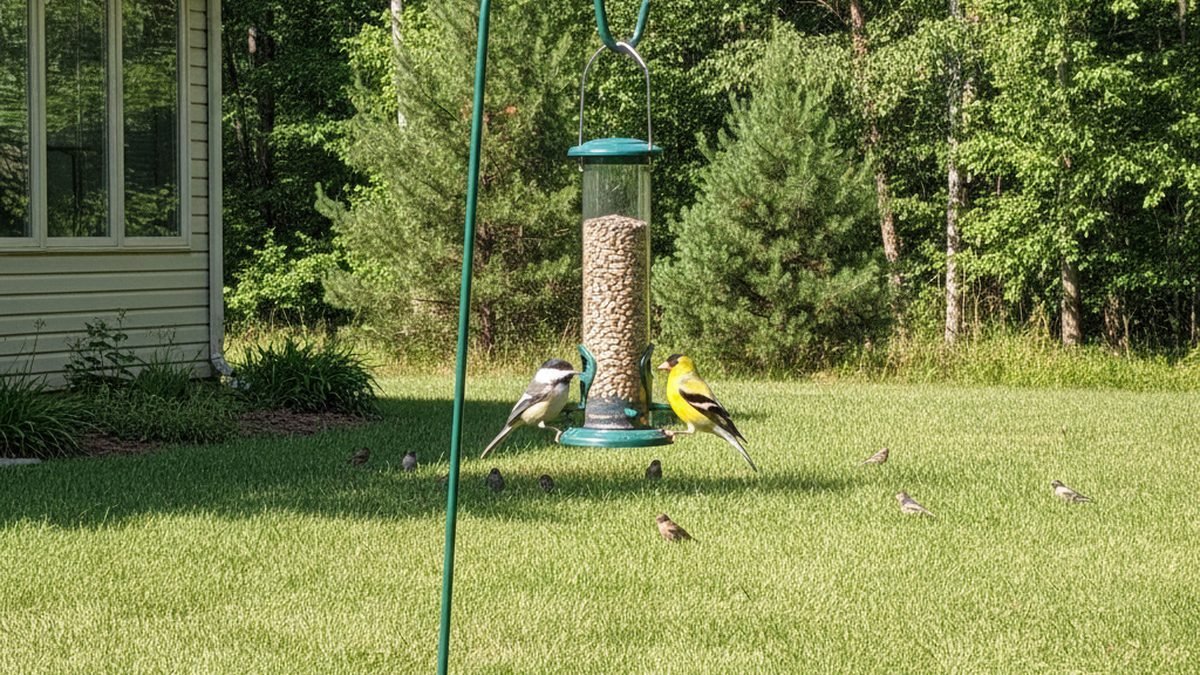
Goldfinches, for example, are drawn to nyjer feeders placed in open, sunny areas rather than deep shade. I keep my tube feeder with nyjer seed out where the goldfinches can see it clearly, and they show up reliably through summer. My guide on how to attract goldfinches goes into more detail on their preferences.
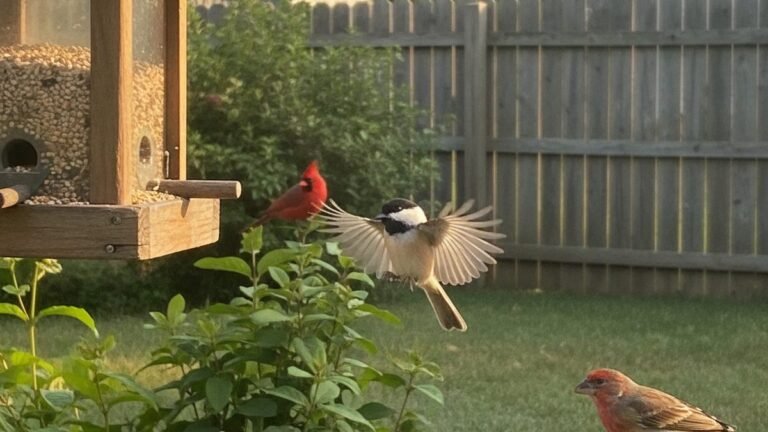
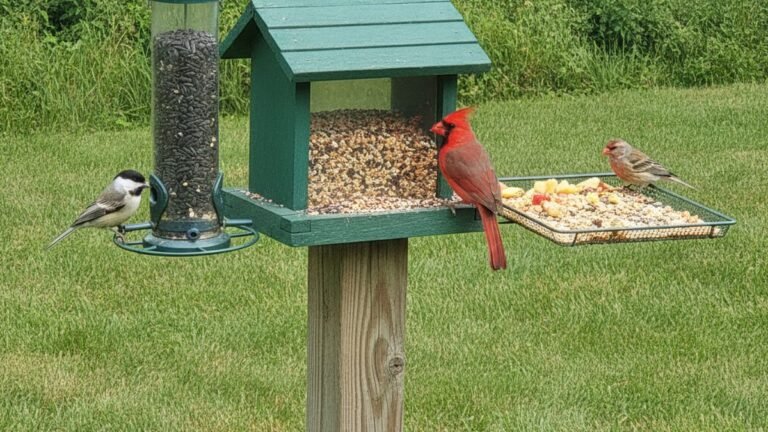
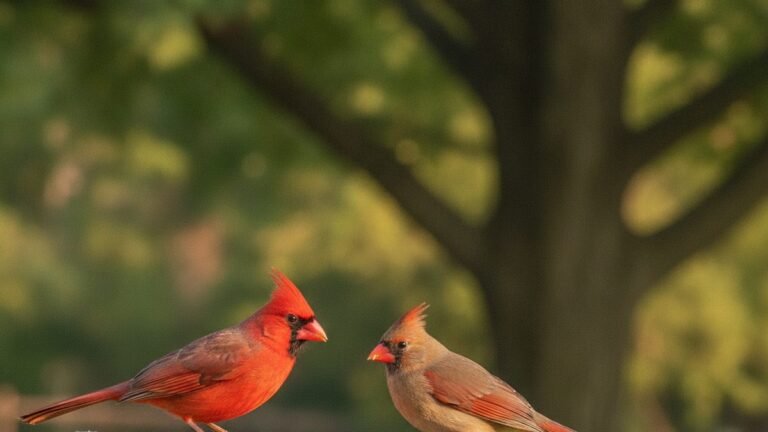
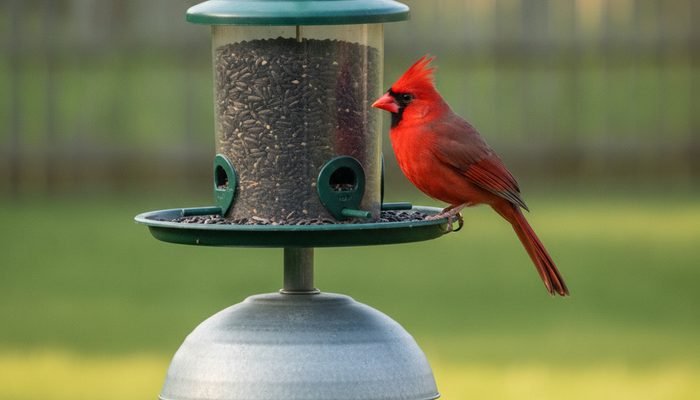
Cardinals and Blue Jays tend to like feeders near cover, since they’re a bit more cautious approaching open ground. Chickadees and nuthatches will use almost any placement as long as there’s a tree nearby for quick escapes.
If you’re just getting your first feeder up and want the full setup rundown, my article on how to start bird feeding walks through the basics beyond just location.
Common Placement Mistakes I See (and Made Myself)
Too close to a busy walkway or driveway. Birds spook easily and won’t settle in if there’s constant foot traffic or car noise right next to the feeder.
Hanging it where you can’t see it. If the feeder is tucked around the side of the house, you’ll miss most of the action and probably forget to refill it. Half the fun of feeding birds is watching them.
Ignoring the window rule. I’ve talked to plenty of beginners who put a feeder 15 feet from a big picture window because it looked like a nice spot. That’s exactly the danger zone. Move it closer or farther, not in between.
Putting it right under a bird bath’s splash zone or a gutter downspout. Wet seed molds fast and nobody wants that, birds included.
Wrapping Up
Placement is one of those things beginners overthink and then never revisit. Pick a spot that follows the window rule, gives birds some nearby cover, and is easy for you to see and refill. Watch how the birds respond for a week or two, and don’t be afraid to move things a few feet if it’s not working. Small adjustments make a bigger difference than most people expect.
Frequently Asked Questions
How far should a bird feeder be from my house?
There’s no strict rule for house distance itself, but windows matter. Keep feeders within 3 feet of a window or more than 30 feet away. Between 10 and 20 feet from your house works well for viewing, as long as it clears that window rule.
Should a bird feeder be in sun or shade?
A mix works best. Morning sun encourages early activity, while some afternoon shade helps keep seed fresh and gives birds relief from heat. Avoid full, all-day sun exposure if you can help it, especially in summer.
Can I hang a bird feeder from a tree?
Yes, and it’s a great option. A feeder near a tree gives birds a nearby perch to watch from and a fast escape route from predators. Just keep the feeder a few feet from the trunk rather than buried in dense branches.
Does bird feeder height matter?
Yes. Hanging feeders do best around 5 to 6 feet up, platform feeders around 3 to 4 feet, and suet feeders around 5 feet near a tree trunk or pole. Height affects which predators can reach the feeder and which birds feel comfortable using it.