How to Attract Indigo Buntings to Your Yard
To attract Indigo Buntings, offer nyjer seed or small white millet in an open feeder near brushy edges or tall grass, and keep some weedy, unmowed cover in your yard. These small blue songbirds like a mix of seed and natural habitat, so feeders alone usually won’t do the trick.
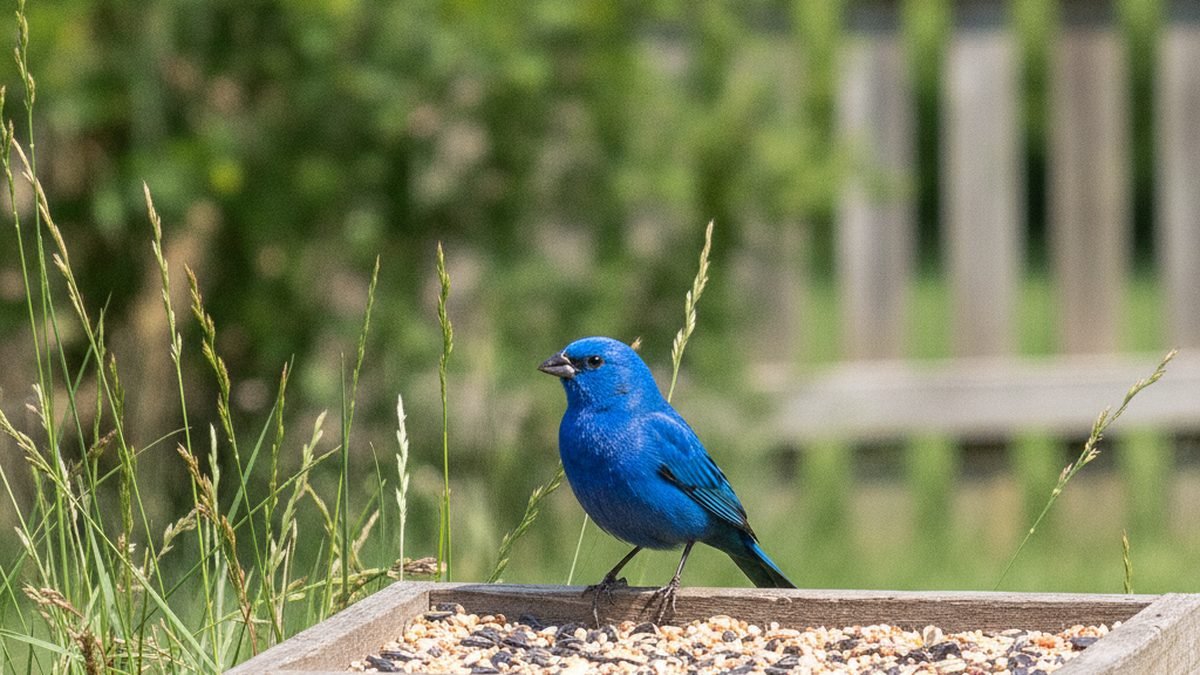
I don’t get Indigo Buntings at my feeders every summer, but a few seasons back a male showed up at my platform feeder for almost two weeks straight. He looked like a scrap of sky with wings. If you want to raise your odds of seeing one, here’s what actually works based on what Cornell Lab of Ornithology and Audubon Society say about their habits, plus what I’ve learned watching my own yard.
What Indigo Buntings Eat
Indigo Buntings eat mostly insects in the breeding season. Caterpillars, beetles, and spiders make up a big part of their diet, especially when they’re feeding young.
Later in summer and during migration, they shift toward seeds. Grass seeds, weed seeds, and small seeds like nyjer (thistle) and white proso millet are all good bets. They’ll also take mealworms if you offer them, live or dried.
This is different from a lot of common feeder birds. My American Goldfinches will eat nyjer all year long. Indigo Buntings are more seasonal and more particular about when they show interest in feeders at all.
Best Feeder Type for Indigo Buntings
A low platform feeder or a ground tray works best. Indigo Buntings feed low, often close to the ground or in thick, brushy cover. They’re not big fans of hanging tube feeders swinging in the wind.
Fill it with nyjer seed, white millet, or a no-mess blend that includes small seeds. I keep my platform feeder stocked with a mixed blend, and it pulls in a wider variety of birds than my tube feeder does, everything from Mourning Doves to the occasional surprise visitor.
If you already run a tube feeder for finches, a bunting might check it out, but don’t count on it. For more on which feeder styles suit which birds, I go through the options in this guide to feeder types.
Where to Place the Feeder
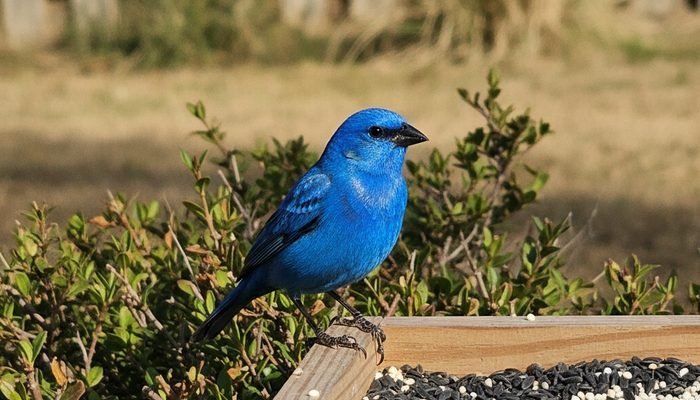
Indigo Buntings like edge habitat. Think overgrown field borders, brushy fence lines, or the transition zone between woods and open space. A feeder tucked near that kind of cover has a much better shot than one sitting in the middle of a mowed lawn.
Keep feeders more than 30 feet from windows, or closer than 3 feet, to cut down on collision risk. This is the standard 3/30 rule from Cornell Lab and Audubon. My own feeders sit well past that 30 foot mark near a mature maple, which also gives skittish birds a quick escape route if a hawk shows up.
If buntings just aren’t finding your feeders at all, my article on why birds aren’t coming to your feeder covers the basics worth double checking first.
Habitat Matters More Than the Feeder
This is the part most people skip. Indigo Buntings are not a bird you attract with seed alone. They need shrubby, semi-open habitat to even consider your yard.
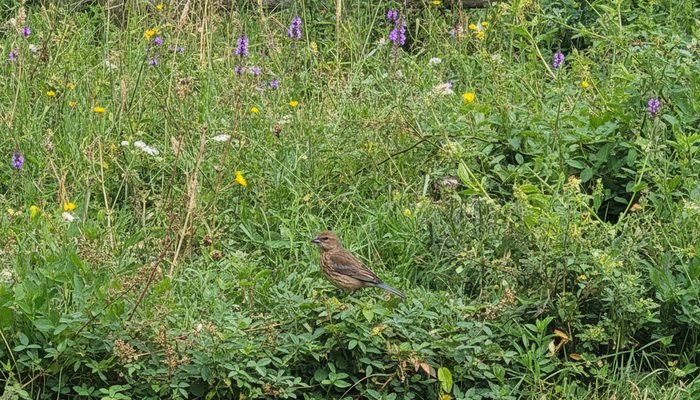
Letting a corner of your yard grow a little wild helps a lot. Tall grass, brambles, and low shrubs give them cover and bugs to eat. A mowed, tidy yard with nothing but a feeder is much less appealing to them than it is to a Northern Cardinal or House Finch.
If you live near a field edge, woodland border, or overgrown ditch, you’re already ahead. Suburban yards with a wilder patch have a real shot too. Dense, formal landscaping is the toughest sell.
How Long It Takes
Be patient. Indigo Buntings are migratory and only in the Upper Midwest and much of the eastern and central United States from about May through September. Outside that window, you won’t see them no matter what you offer.
Even during the season, they’re less predictable at feeders than chickadees or nuthatches. Project FeederWatch data shows they’re reported far less often than common feeder visitors. It might take a full season of having the right habitat and food in place before one turns up.
Don’t get discouraged if nothing happens the first few weeks. I’ve had platform feeders sit for a month with nothing new before a bunting finally dropped in.
Wrapping Up
Indigo Buntings take more patience than your average feeder bird, but that’s part of what makes seeing one so satisfying. Give them some brushy cover, keep nyjer or millet on a low platform feeder, and let part of your yard grow a little wild. If one shows up, you’ll know it right away. That blue is hard to miss.
Frequently Asked Questions
What food attracts Indigo Buntings the fastest?
Nyjer seed and white proso millet tend to work best, especially offered on a low platform feeder. Mealworms can help too, since buntings eat a lot of insects during breeding season. Keep in mind they’re seasonal visitors, so timing matters as much as the food you offer.
Do Indigo Buntings use bird feeders often?
Not as often as species like House Finches or chickadees. They’re more insect focused during summer and prefer feeding in brushy, low cover. A feeder near good habitat gives you a much better chance than a feeder alone in an open lawn.
What time of year do Indigo Buntings show up?
In most of the United States, including the Upper Midwest, they arrive in late spring, around May, and stick around through September before migrating to Central America and northern South America for winter. You won’t see them outside that window.
Why do Indigo Buntings look black sometimes?
Their blue color comes from light refraction in their feathers, not pigment. In low light or shade, they can look dull gray or even black. That’s normal and doesn’t mean anything is wrong with the bird.