How to Attract Dark-Eyed Juncos to Your Feeder
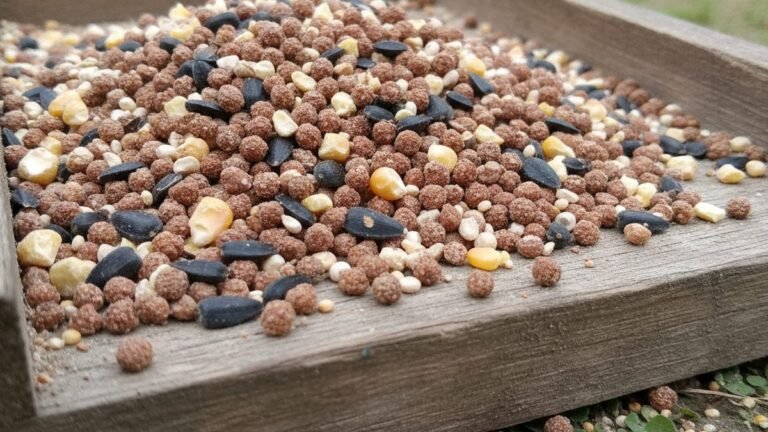
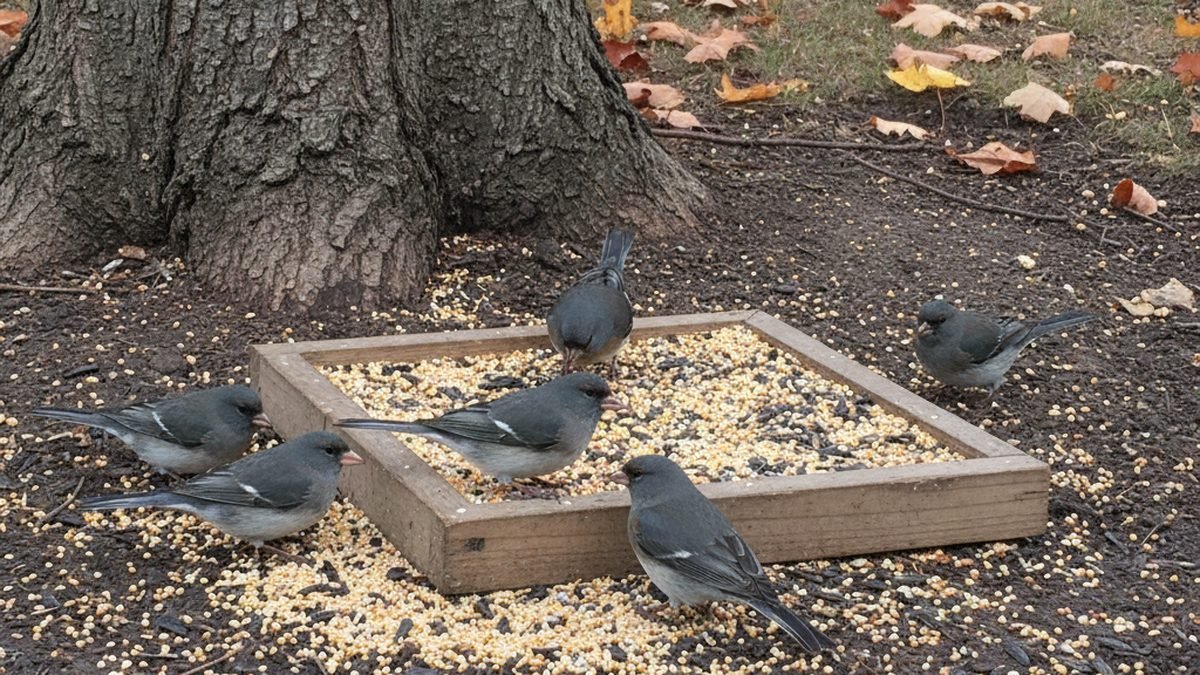
The best way to attract juncos is to feed them where they already like to eat: on the ground. Scatter mixed seed with millet under your feeders, keep the area open and low to the ground, and juncos will find it fast once cold weather sets in.
I start seeing Dark-eyed Juncos in my yard every fall, right around the time the maple tree above my feeders drops its last leaves. They show up in little flocks, hopping around under my platform feeder like a cleanup crew. If you want more of them this winter, there are a few simple things that make a real difference.
What Juncos Eat
Juncos are seed eaters, mostly. Cornell Lab of Ornithology lists their diet as heavy on small seeds like millet, along with some insects in warmer months. At feeders, they go for millet, cracked corn, and smaller bits of sunflower seed that fall from other feeders.
They are not big fans of whole black oil sunflower in the shell. Their beaks are small and built more for tiny seeds. A basic mixed seed blend with millet works better for juncos than a pure sunflower offering. If you want to understand how different seed types attract different birds, my seed guide breaks it down further.
Best Feeder Type for Juncos
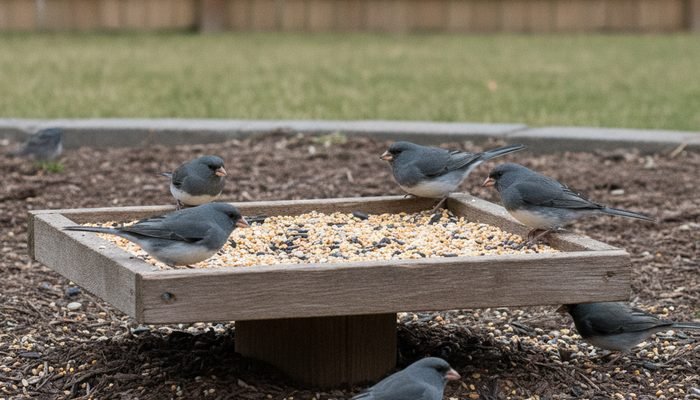
Juncos are ground foragers. In the wild, they walk along the forest floor and fields, picking up fallen seed. At home, that means a platform feeder or a low hopper feeder with a wide tray works best.
Honestly, the feeder matters less than the ground beneath it. I get more junco activity from seed that spills out of my platform feeder onto the grass than from the feeder itself. If you do not have a ground-friendly feeder yet, my feeder types guide covers which styles work well for ground feeders like juncos.
Where to Place Your Feeding Area
Juncos like a bit of cover nearby. In my yard, they stick close to the base of the maple tree, about 10 feet from the trunk, where my feeders hang. That spot gives them a quick escape route if a hawk shows up or the neighbor’s cat wanders through.
Keep feeders at least 3 feet from windows or more than 30 feet away. This is the standard 3/30 rule from Cornell Lab and the Audubon Society, and it matters even more for ground feeders since they are often looking down and not paying attention to glass. For more on setup, check out where to place your feeder for the best results.
A Junco-Specific Tip: Keep Snow Cleared
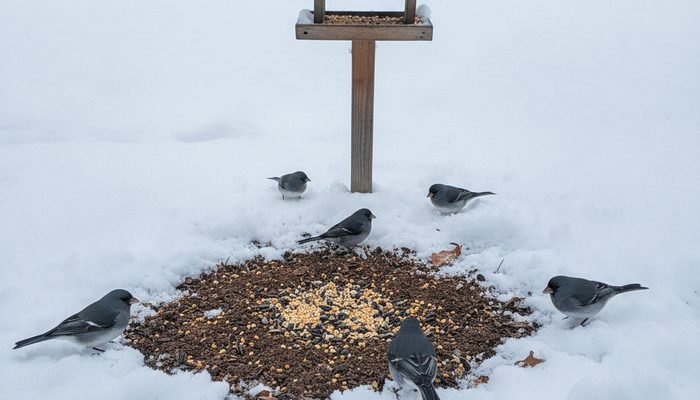
Once real snow piles up, juncos have a harder time finding ground seed. I clear a small patch under my platform feeder after a fresh snowfall, just enough to expose bare ground or packed snow where seed will sit visible.
It takes two minutes with a hand broom. Juncos notice a cleared feeding spot fast, and it keeps them coming back through the coldest stretch of winter instead of moving on to find easier pickings elsewhere.
How Long It Takes to Attract Juncos
If juncos are already moving through your area, they can find a new food source within a few days of it being set out. I usually notice the first ones within a week of cold weather setting in, once I start scattering seed again after the summer break.
Timing matters more than patience here. Juncos are a winter bird across most of the country. Data from Project FeederWatch shows their numbers at feeders climb through fall and peak in mid-winter, then drop off again as birds migrate back north in spring. Setting food out before the first hard frost gives you the best odds of catching them early in the season.
Wrapping Up
Juncos are one of the easier winter birds to attract once you know they want ground seed more than a fancy feeder. Keep a patch of open ground stocked with millet, clear it after snowfall, and be patient through early fall. In my yard, they show up like clockwork once the cold sets in, and watching that little flock work the ground under the maple is one of my favorite parts of winter feeding.
Frequently Asked Questions
Do juncos use bird feeders or prefer the ground?
Juncos are ground feeders by nature. They will use a platform feeder or hopper feeder with a wide tray, but you will see the most activity on the ground below your feeders. Scattering a little seed on the ground gives them a spot that feels natural to them.
What time of year do juncos show up at feeders?
In most of the Upper Midwest and northern states, juncos arrive in October and stay through early spring. Cornell Lab of Ornithology calls them a classic winter bird south of Canada. If you live farther north, you may see them nest there in summer instead.
Why did my juncos disappear in spring?
That is normal. Juncos are migratory in most of the country. As temperatures warm, they head north or up into higher elevations to breed. You can expect them back again once the weather turns cold in fall.
Do juncos and sparrows compete at feeders?
Yes, some overlap happens. Both feed on the ground and eat small seeds. In my yard I have not seen real conflict, just some shuffling around for space. Spreading seed over a wider area on the ground usually eases any crowding.