Nyjer (Thistle) Seed: The Finch Magnet Explained
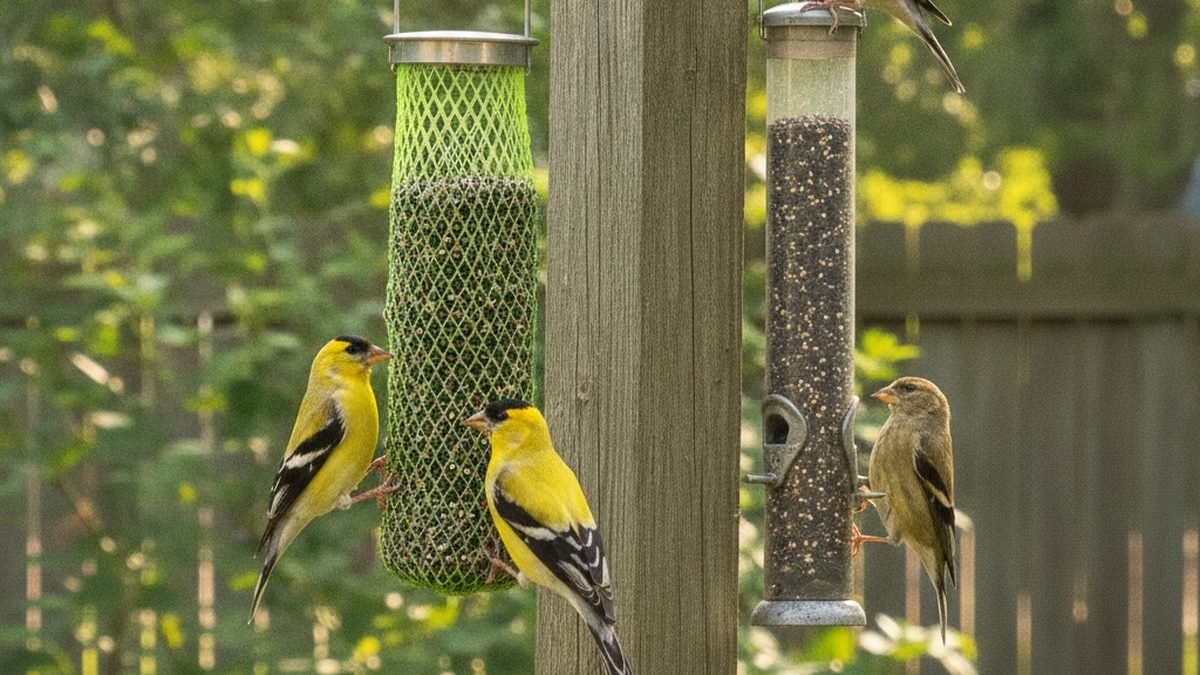
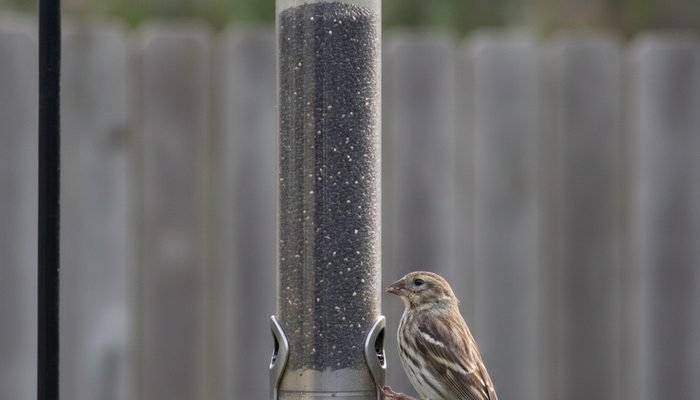
Nyjer seed birds go crazy for are mostly finches, especially American Goldfinches. If you want to pull in goldfinches, pine siskins, or common redpolls, nyjer seed in a tube feeder with small ports is one of the most reliable ways to do it.
I run a tube feeder filled with nyjer near my maple tree, and it’s the one feeder that draws the same handful of species almost every single day. Other birds barely touch it, which sounds like a downside but is actually the point.
In this article I’ll cover what nyjer seed is, which birds eat it, which birds ignore it, and how to offer it so you’re not dumping half of it on the ground.
What Is Nyjer Seed
Nyjer is a small, black, oily seed from an African daisy plant called Guizotia abyssinica. It’s not related to the invasive thistle weed people picture. That’s a common mix-up, and it’s why some folks call it “thistle seed” even though the two plants aren’t close relatives.
Most nyjer sold in the U.S. is imported and heat-treated by law to kill any weed seeds before it crosses the border. That’s also why it’s pricier than sunflower or millet. You’re paying for a seed that has to travel a long way and get processed before it lands in your feeder.
The seed itself is thin, small, and packed with oil. That high fat content is exactly why finches key in on it during colder months when they need extra calories.
Which Birds Eat Nyjer Seed
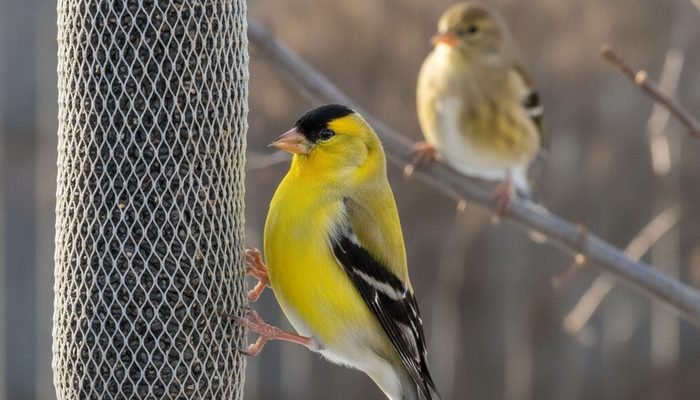
American Goldfinches are the headline act. According to the Cornell Lab of Ornithology, goldfinches are strongly drawn to nyjer and will visit tube feeders with small ports built specifically for this seed.
Other regular nyjer fans include:
- Pine Siskins, especially during irruption winters when they push farther south
- Common Redpolls in northern states during winter
- House Finches, though they’ll eat almost anything
- Dark-eyed Juncos, who often clean up spilled seed from the ground below the feeder
In my own yard, the nyjer tube feeder is goldfinch central from spring through fall. I’ve had good luck reading up on feeder setups in this guide to attracting goldfinches if you want a deeper dive on that one species.
Which Birds Ignore Nyjer Seed
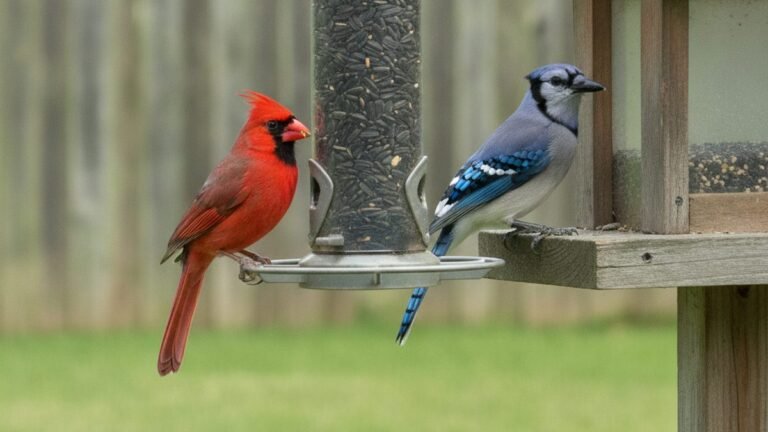
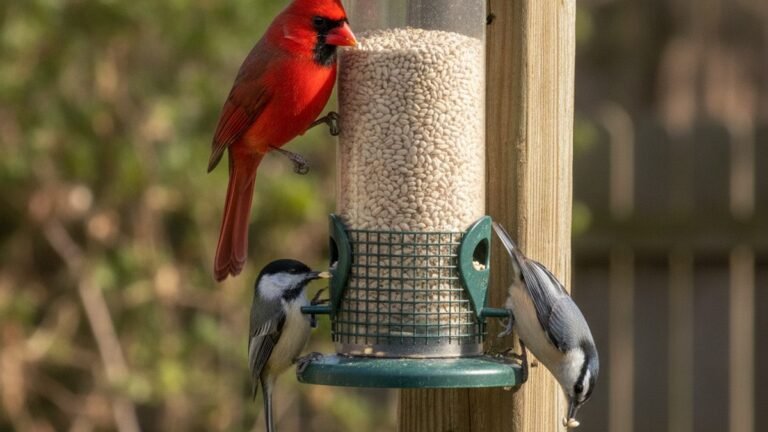
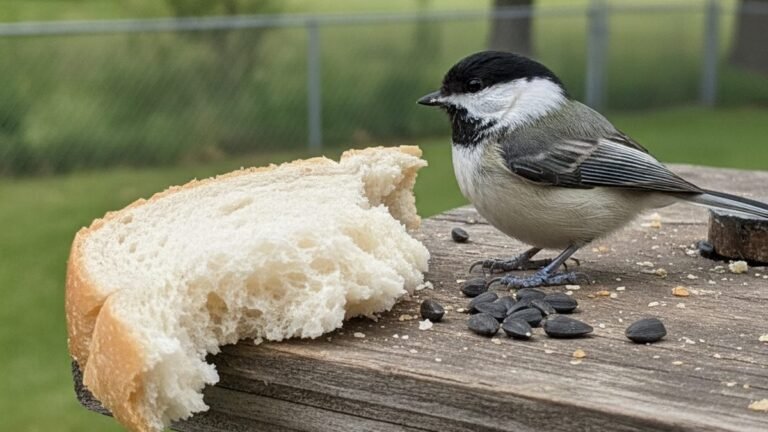
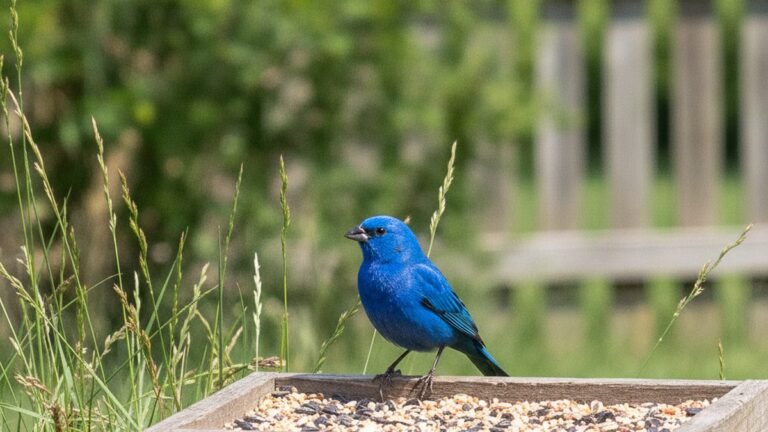
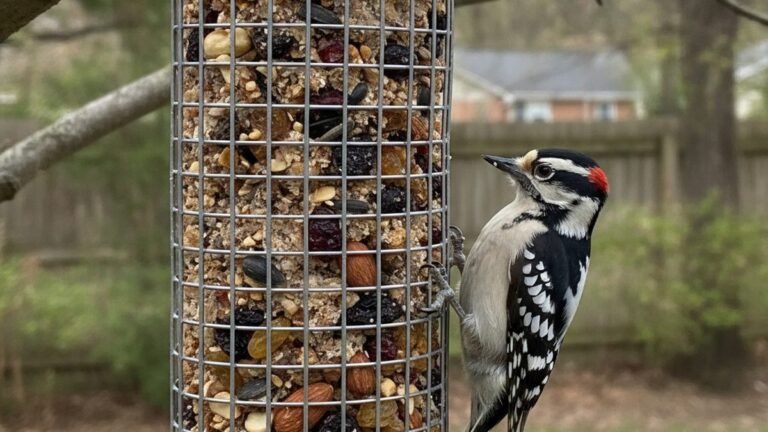
Cardinals, chickadees, nuthatches, and woodpeckers generally pass right by nyjer. The seed is too small and thin for their bill shape and feeding style.
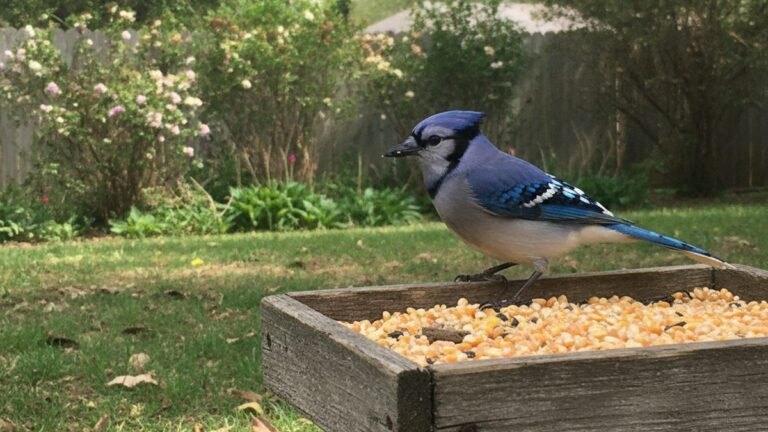
Blue Jays won’t bother with it either. They’re built for cracking bigger seeds and nuts, not picking tiny bits out of a mesh sock or narrow port.
Mourning Doves almost never use nyjer feeders because the perches are too small and the feeding style doesn’t suit them. If you want to feed doves, a platform feeder with mixed seed works far better, something I cover in my bird seed guide. That’s actually a good thing here. Nyjer feeders naturally filter out the birds who’d otherwise dominate your feeding station and hog the seed.
How to Offer Nyjer Seed
Use a tube feeder with small, slotted ports made for nyjer, or a mesh sock feeder. Regular feeder ports are too big and the fine seed will pour out everywhere.
Nyjer seed goes stale and loses oil content once it gets old or wet, and finches will stop showing up for it. Buy smaller bags more often instead of one huge bag that sits for months.
Keep the feeder dry. Clumped, wet nyjer is one of the top reasons people think their feeder is broken when it’s really just spoiled seed clogging the ports. I’ve dealt with this after a few soggy Midwest weeks, and a quick rinse and full dry-out usually fixes it. If your feeder seems to be attracting nothing at all, it’s worth checking my notes on why birds aren’t coming to your feeder for other common causes.
Placement Tips
Hang the nyjer feeder in a spot with some cover nearby, like under a tree canopy, so finches feel safe while they feed. Mine hangs about 10 feet from the trunk of my maple, which gives them a quick escape route if a hawk shows up.
Is Nyjer Seed Worth Buying
My honest take: yes, if you specifically want goldfinches or other winter finches. It’s not a good all-purpose seed, and it’s one of the more expensive options per pound.
If your main goal is feeding a wide variety of backyard birds, black oil sunflower seed will get you more species per dollar. I’d treat nyjer as a specialty seed, not your main feeder offering.
For me, the tradeoff is worth it. Watching a group of goldfinches work a nyjer sock in late summer is one of my favorite parts of the day, even if the seed costs more than I’d like.
Wrapping Up
Nyjer seed isn’t for every bird, but if goldfinches and winter finches are your goal, it’s worth the extra cost. Keep it fresh, keep it dry, and use a feeder built for the small seed size. Once you see a cluster of goldfinches working a nyjer sock on a summer morning, you’ll understand why so many of us keep buying it.
Frequently Asked Questions
Do I need a special feeder for nyjer seed?
Yes. Regular feeder ports are too large and will let nyjer spill out fast. Use a tube feeder built with small nyjer-specific ports or a mesh sock feeder designed to hold the tiny seeds while letting finches pick them out one at a time.
Why isn’t anything eating my nyjer seed?
The most common reason is stale or wet seed. Nyjer loses its oil and appeal once it’s old or clumped from moisture. Try fresh seed, check that the feeder ports aren’t clogged, and make sure you’re feeding during a season when finches are active in your area.
Is nyjer seed the same as thistle seed?
They’re often called the same thing, but nyjer comes from an African daisy plant, not the invasive thistle weed. The name “thistle seed” stuck around from early marketing, even though the two plants aren’t closely related botanically.
Can squirrels raid nyjer feeders?
Squirrels generally leave nyjer alone since it’s small, low-reward for the effort, and harder to access in slotted tube feeders. If squirrels are a bigger problem at your other feeders, my article on stopping squirrels from raiding bird feeders covers proven fixes.