How to Make Hummingbird Food at Home (Simple Recipe)
Here’s how to make hummingbird food: mix 1 part white granulated sugar with 4 parts water, heat it just enough to dissolve the sugar, then cool it before filling your feeder. That’s it. No red dye, no honey, no fancy additives.
I’ve had hummingbird feeders going every summer for over a decade, hung out past the maple tree where I can watch them from my kitchen window. I switched to homemade nectar years ago after realizing the store-bought mixes were mostly just sugar water anyway, at a much higher price.
This recipe is the one recommended by Audubon Society and backed by hummingbird researchers, because it mimics the sugar concentration found in natural flower nectar. Let’s get into exactly how to mix it, store it, and avoid the mistakes that make hummingbirds skip your feeder.
What Is Hummingbird Nectar Made Of
Real hummingbird nectar is just sugar and water. The standard ratio is 1 part white sugar to 4 parts water.
Use plain white granulated cane sugar. Don’t substitute brown sugar, powdered sugar, honey, or artificial sweeteners. Honey ferments fast and can grow a fungus that’s harmful to hummingbirds. Artificial sweeteners have no calories, so the birds get nothing from them even though they taste sweet.
Skip the red dye too. Cornell Lab of Ornithology and Audubon both note that dye isn’t necessary and may not be good for the birds. Most feeders already have red parts built in, and that’s enough to catch a hummingbird’s eye.
The Basic Recipe
Here’s the simple version I use:
- 1 cup white sugar
- 4 cups water
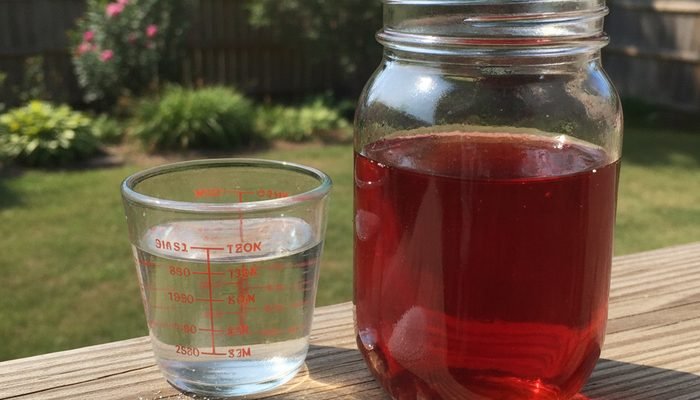
- Boil the water, stir in the sugar until fully dissolved, then let it cool completely before filling the feeder.
Boiling isn’t strictly required, but it helps the sugar dissolve fully and removes some chlorine and bacteria from tap water. If you’re short on time, dissolving sugar in warm water works fine too.
Which Birds Drink It
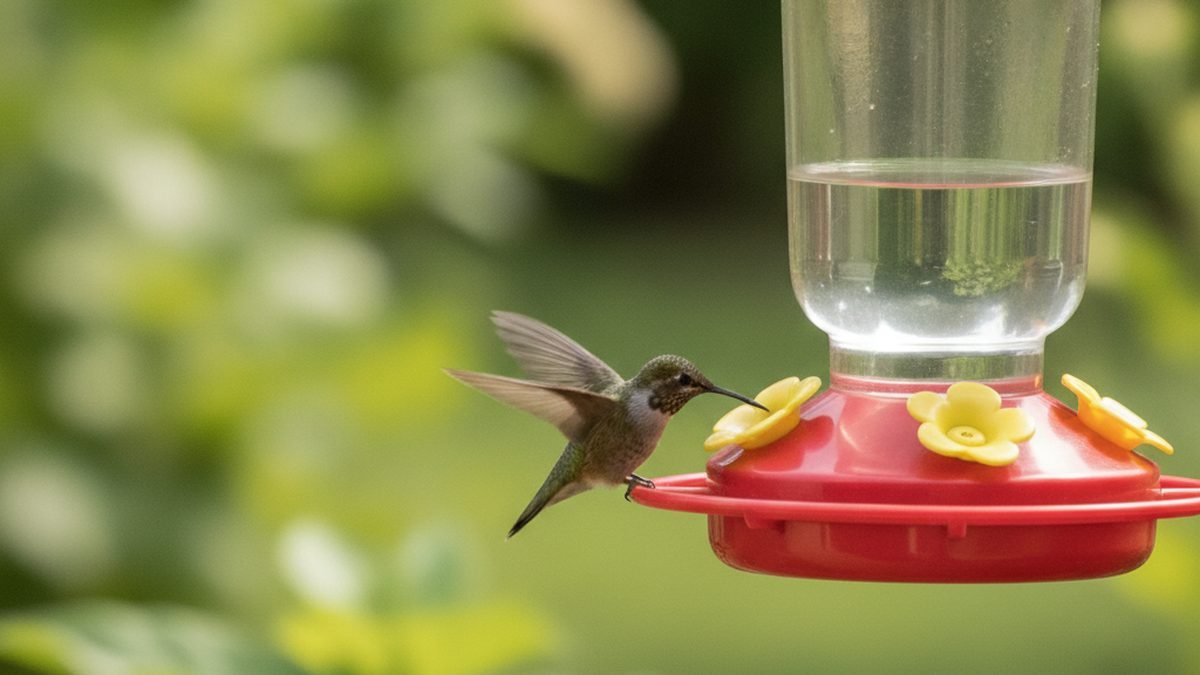
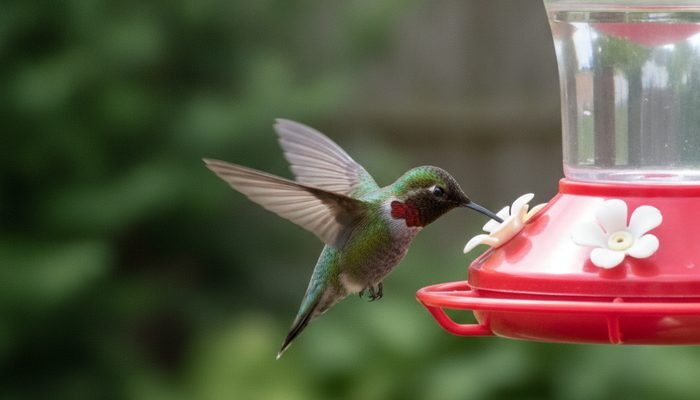
Hummingbirds are the obvious answer, and in most of the U.S. that means Ruby-throated Hummingbirds east of the Great Plains, with other species like Rufous and Black-chinned Hummingbirds showing up out west.
But hummingbird feeders aren’t just for hummingbirds. I’ve watched House Finches and even a curious Downy Woodpecker take a few sips from mine on a hot afternoon. Orioles will drink sugar water too, and some folks set up a separate oriole feeder with a slightly weaker mix for that reason.
Ants and bees show up uninvited. That’s not really a bird problem, but it’s worth planning for with an ant moat or a feeder that has a built-in bee guard.
Which Birds Ignore It
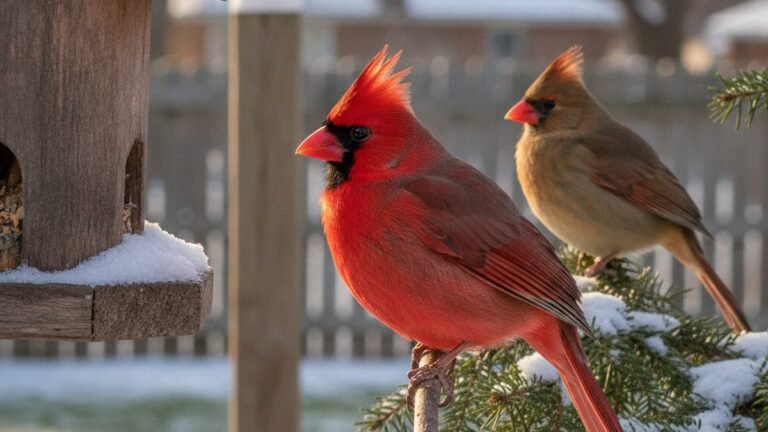
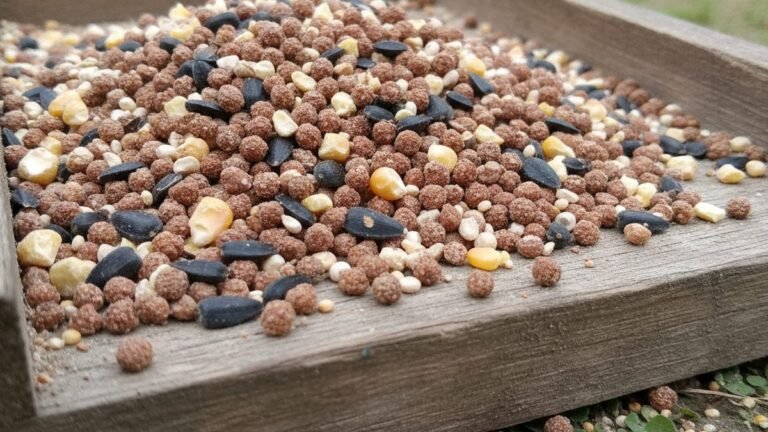
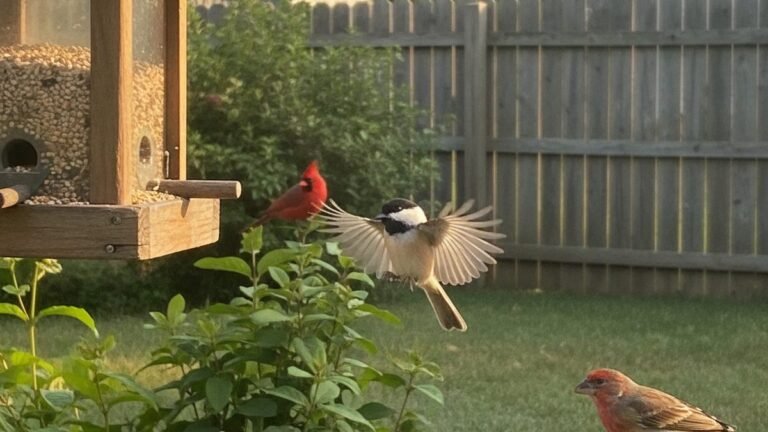
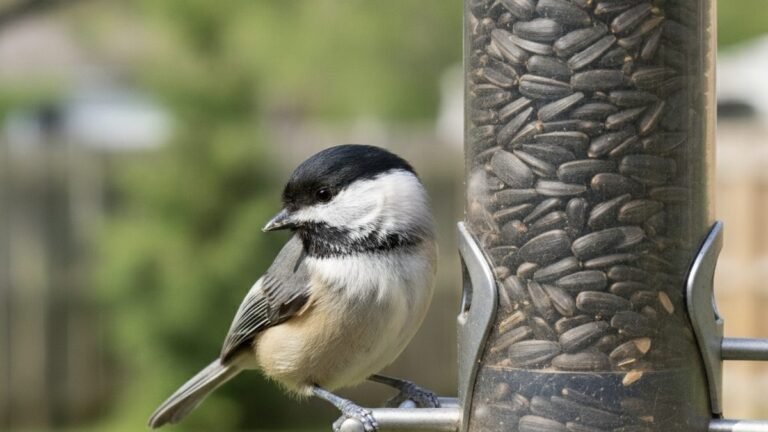
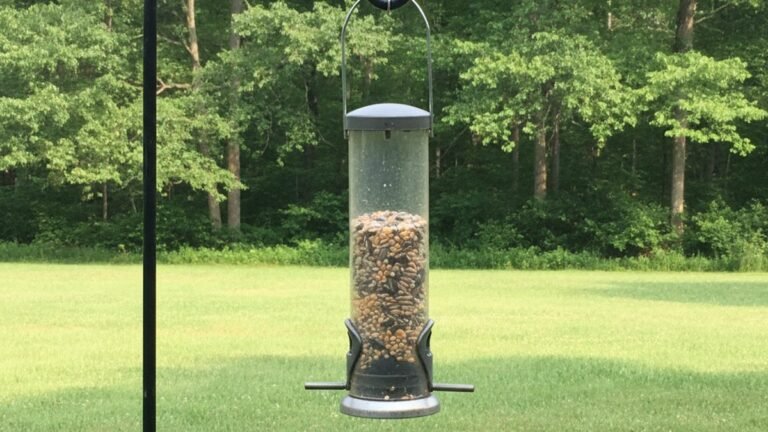
Seed-eating birds have no interest in sugar water. Cardinals, chickadees, nuthatches, and goldfinches at my feeders never touch the nectar feeder. Their beaks and diets are built for seeds and insects, not liquid nectar.
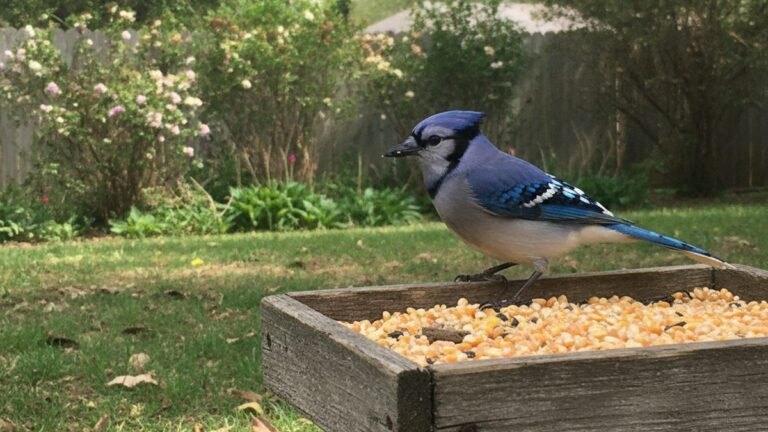
Blue Jays and Mourning Doves also skip it entirely. If you want to bring in a wider mix of species, a seed feeder set up nearby does more work than adding more nectar feeders.
How to Offer It
Fill your feeder only about half to three-quarters full if it’s hot out. Nectar spoils fast in warm weather, so a smaller batch means less waste.
Change the nectar every 2 to 3 days in normal summer heat, and every day or two if temperatures climb past 90 degrees F. Cloudy nectar or black mold inside the feeder ports means it’s past due for a cleaning, not just a refill.
Clean the feeder with hot water and a bottle brush each time you refill it. Skip the soap, since residue can be off-putting to hummingbirds. A weak vinegar solution works well if you need to scrub off mold.
Hang the feeder somewhere you can actually see it. Mine sits near the maple tree where hummingbirds get some shade during the hottest part of the day, which seems to slow down spoilage a bit. If you’re still working out where hummingbirds will actually visit, my guide on how to attract hummingbirds covers placement and timing in more depth.
Extra nectar keeps in the fridge for up to 2 weeks. I make a batch, store the extra in a jar, and just top off the feeder without dissolving new sugar every single time.
Is It Worth Making at Home (Sam’s Verdict)
Yes, and it’s honestly one of the easiest wins in backyard bird feeding. Store-bought nectar concentrate costs several dollars for what amounts to sugar and red dye. Making it yourself costs pennies and takes five minutes.
The only downside is that homemade nectar has zero preservatives, so it spoils faster than store-bought mixes. That means more frequent feeder cleanings, especially in July heat. If you’re the type who forgets to check feeders for a week at a time, that’s worth knowing going in.
For anyone dealing with ants or wasps raiding the nectar, that’s a separate fix and not a reason to buy premade mix instead. A moat or guard solves it either way.
Wrapping Up
Making your own hummingbird food really is as simple as sugar and water, mixed right and kept fresh. Once you get into a rhythm of refilling and cleaning every few days, it becomes second nature. Watch for cloudy nectar and empty ports, those are your signs it’s time for a change. Your hummingbirds will keep coming back all summer long.
Frequently Asked Questions
What is the correct ratio for hummingbird food?
The standard ratio is 1 part white sugar to 4 parts water. This matches the sugar concentration found in natural flower nectar, according to Audubon Society. Avoid stronger mixes, since overly sweet nectar can strain a hummingbird’s kidneys over time.
Do I need to boil the water for hummingbird nectar?
Boiling isn’t required, but it helps the sugar dissolve completely and reduces bacteria and chlorine in tap water. If you’re in a hurry, dissolving sugar in warm water works fine. Just let the mixture cool fully before filling your feeder.
Can I use red dye in hummingbird nectar?
No, red dye isn’t necessary and both Cornell Lab of Ornithology and Audubon Society recommend skipping it. Most feeders already have red accents that attract hummingbirds just fine. Plain, clear nectar is the safer choice.
How often should I change hummingbird nectar?
Change it every 2 to 3 days in normal summer weather. In hot temperatures above 90 degrees F, change it daily or every other day since sugar water spoils and ferments quickly in the heat.