28 Ohio Backyard Birds and How to Attract Them
If you’re trying to figure out which Ohio backyard birds are showing up at your feeders, this list covers the 28 you’re most likely to see. Ohio sits right in a sweet spot for bird variety. You get southern species near the Ohio River, northern species near Lake Erie, and a huge mix of year-round residents in between.
I live in the Upper Midwest myself, so a lot of the common feeder birds on this list are old friends of mine too. But some of these, like the Carolina Wren and Tufted Titmouse, are birds I only get to admire from a distance since they’re not regulars in my own yard. I’ll tell you straight when a bird is one I know firsthand and when I’m working from range maps and Cornell Lab data.
Each bird below gets quick ID marks, its main diet, the feeder type that works best, and one tip to help you attract it. At the end I’ll cover the three best all-around foods for Ohio yards and what changes season to season.
Northern Cardinal
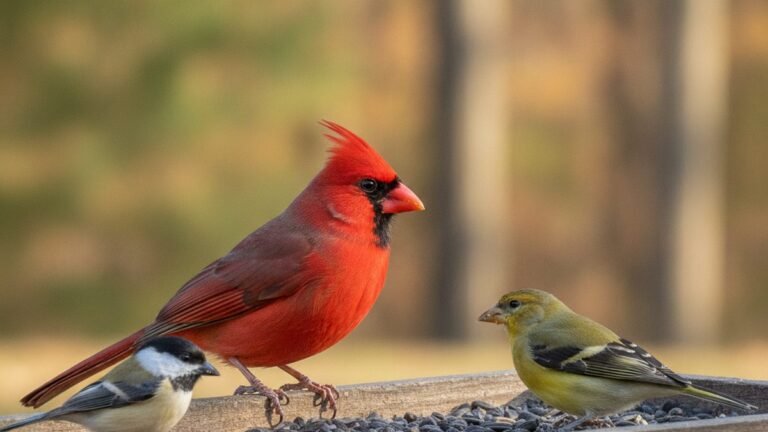
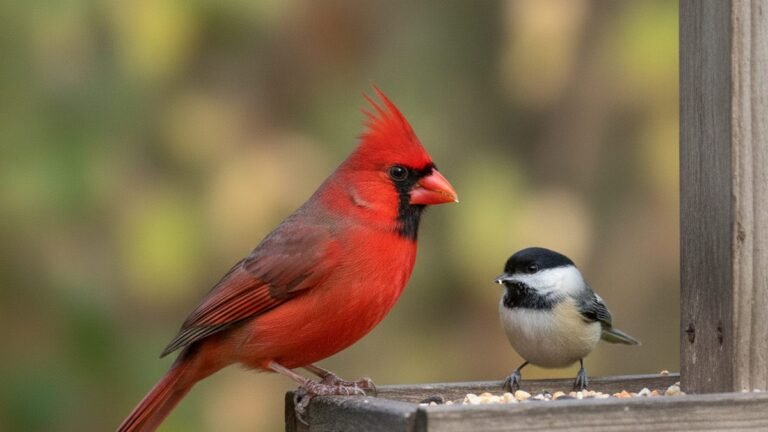
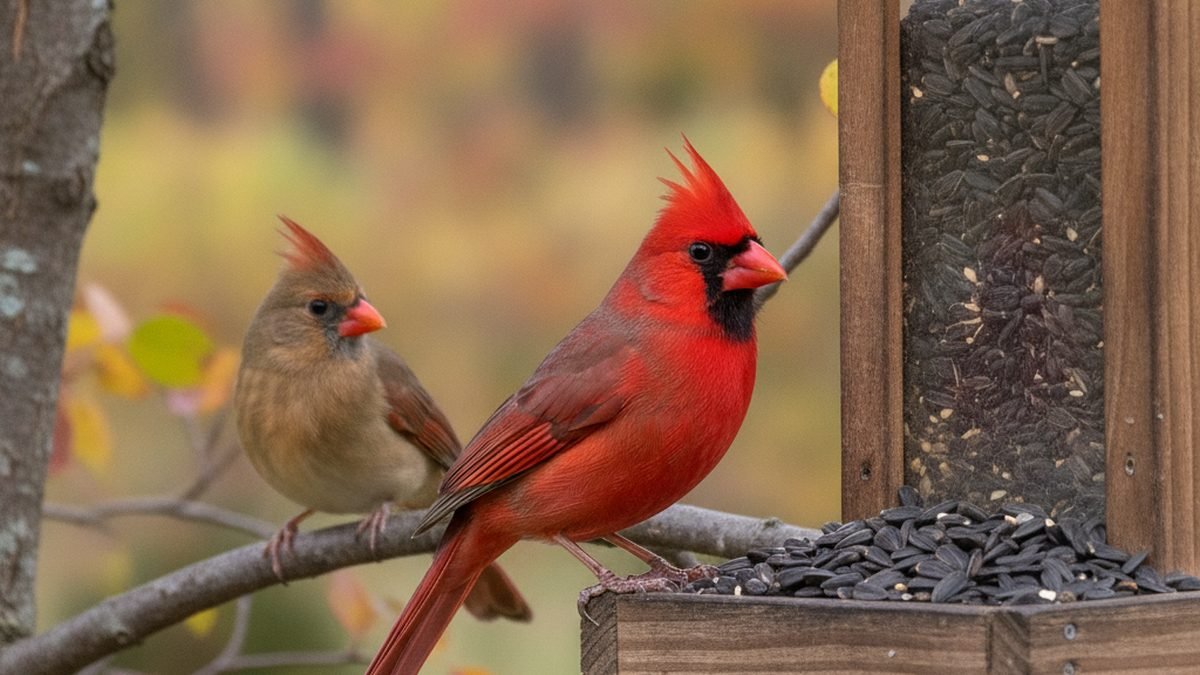
Males are bright red with a black face mask and a pointed crest. Females are warm brown with red highlights on the wings and crest. Cardinals eat sunflower seeds, safflower seeds, and berries. A hopper or platform feeder works best since they like a wide, stable perch. I get cardinals at my own hopper feeder daily, and they’re almost always the last birds feeding at dusk.
Black-capped Chickadee
Small, round birds with a black cap and bib and white cheeks. They eat sunflower seeds and suet, and they’ll grab a seed and fly off to crack it open elsewhere. Tube feeders and suet cages both work well. In my yard, chickadees are usually the first birds to find a newly filled feeder, sometimes within minutes.
Carolina Chickadee
Southern Ohio is where Carolina Chickadees take over from Black-capped Chickadees, and the two look almost identical. Carolina Chickadees have a slightly shorter tail and a less crisp wing pattern. They eat the same foods and use the same feeders as their black-capped cousins. If you’re in southern Ohio and hear a faster, higher-pitched song, that’s likely your bird.
Tufted Titmouse
Gray overall with a pointed crest and a black patch above the beak. Titmice eat sunflower seeds and suet and often store extra seeds nearby for later. A hopper feeder or tube feeder both work. Feeder watchers in Ohio report titmice are bold and will scold you loudly if you get too close while refilling.
White-breasted Nuthatch
Blue-gray on top with a white face and belly, often seen creeping down tree trunks headfirst. They eat sunflower seeds and suet. A suet cage mounted on a tree works great, and they’ll also visit tube and hopper feeders. I watch these guys work my maple tree trunk all winter, tucking seeds into the bark for later.
Red-breasted Nuthatch
Smaller than the white-breasted version, with a black-and-white eye stripe and rusty underside. They show up in Ohio mostly during fall and winter, especially in years with poor cone crops up north. Suet and sunflower seeds work well. They’re less predictable than white-breasted nuthatches, so don’t worry if you don’t see one every year.
Downy Woodpecker
Ohio’s smallest woodpecker, black and white with a short beak, and males have a small red patch on the head. They eat suet and sunflower seeds. A suet cage is the best way to bring them in close. Downy Woodpeckers visit my suet feeder almost every day, even in summer when I figured they’d stick to bugs.
Hairy Woodpecker
Looks like a larger version of the Downy Woodpecker with a longer, heavier beak. They eat suet and sunflower seeds too. Suet cages work best, though they’re a bit more cautious around feeders than Downy Woodpeckers. If you see a woodpecker that seems oddly big for the feeder, check the beak length before assuming it’s a Downy.
Red-bellied Woodpecker
Gray-faced with a black and white barred back and a red cap that runs down the neck. Despite the name, the belly is barely tinted red. They eat suet, sunflower seeds, and peanuts. A suet cage or platform feeder with peanuts works well. These are common across Ohio and tend to be noisy, so you’ll often hear one before you see it.
Red-headed Woodpecker
A striking bird with a fully red head, white belly, and black and white wings. They’re less common at feeders than other woodpeckers and prefer open woodlands with scattered trees. They eat suet and nuts. If you have mature oaks nearby, a peanut feeder might tempt one in, though they’re pickier visitors overall.
Pileated Woodpecker
Crow-sized with a flaming red crest, this is the largest woodpecker in Ohio. They mostly stick to mature forest but will visit suet feeders near wooded yards. Suet cakes in a sturdy cage work best since they’re strong enough to damage weaker feeders. Seeing one at your feeder is a memorable event, not an everyday one.
Blue Jay
Bright blue with a white chest, black necklace markings, and a crest. Blue Jays eat peanuts, sunflower seeds, and suet, and they love to cache food for later. A platform feeder handles them best since they need more space than a tube feeder allows. Mine show up in small noisy groups and clear out smaller birds for a few minutes at a time.
American Crow
All black, large, and highly intelligent. Crows aren’t typical feeder birds but will take advantage of ground scraps or platform feeders loaded with corn or peanuts. They’re more common around open yards near fields. Most Ohio feeder watchers see them flying over rather than landing at the feeder itself.
American Goldfinch
Bright yellow males with a black cap in summer, duller olive in winter. Goldfinches eat nyjer seed and sunflower hearts almost exclusively. A tube feeder with small ports made for nyjer is the best setup. I keep a tube feeder stocked with nyjer just for these guys, and they show up in little flocks all through summer and fall.
House Finch
Males have a reddish head and chest with brown streaking, females are all brown streaks. They eat sunflower seeds and readily use tube or hopper feeders. House Finches travel in small flocks and can dominate a feeder for a while. I see mine most often in spring, chattering back and forth from the maple branches above the feeder.
Purple Finch
Similar to a House Finch but with a raspberry wash over the head and back rather than streaky red. They’re winter visitors in Ohio, more common in years with poor seed crops farther north. Sunflower seeds at a tube or hopper feeder will attract them. Check the face pattern carefully, since they’re easy to mix up with House Finches.
Pine Siskin
A small streaky finch with a touch of yellow in the wings and tail. Pine Siskins are irregular winter visitors, showing up in bigger numbers some years than others. They love nyjer seed and will share a tube feeder with goldfinches. If you see a flock appear out of nowhere in January, siskins are a likely culprit.
Dark-eyed Junco
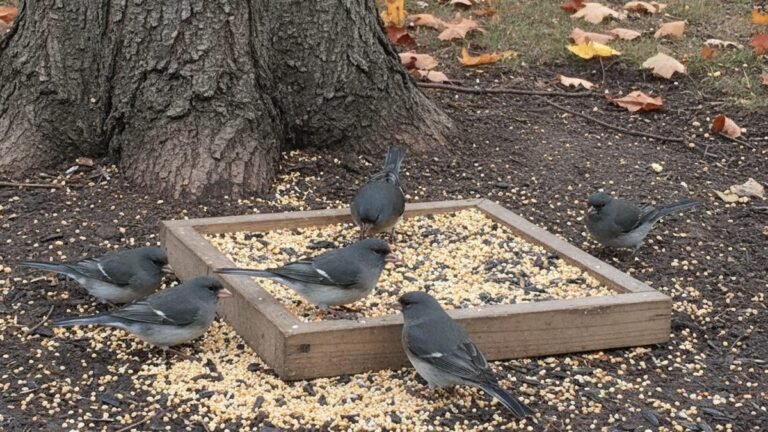
Slate gray above, white below, with a pink beak. Juncos are winter-only visitors in Ohio, arriving in fall and heading back north in spring. They prefer to feed on the ground or from a platform feeder. In my own yard they show up right around the first hard frost, like clockwork every year.
Song Sparrow
Brown and streaky with a dark central spot on the chest. Song Sparrows eat mixed seed and millet, usually foraging on the ground below feeders. A platform feeder or just scattered seed on the ground works well. They’re common in Ohio year-round and sing a clear, musical song even in cooler months.
White-throated Sparrow
A striped head with either white or tan stripes and a small yellow spot near the eye. They visit Ohio in fall through spring, feeding on the ground on mixed seed and millet. A platform feeder or ground tray gets the best results. Their whistled song is one of the easiest sparrow calls to learn.
House Sparrow
Males have a gray cap and black bib, females are plain brown. House Sparrows are non-native but common around Ohio neighborhoods, especially near buildings. They eat most seed types and will feed at almost any feeder style. They tend to show up in flocks and can be persistent, so don’t be surprised if they crowd out other birds.
Carolina Wren
Rusty brown with a bright white eyebrow stripe and a loud voice for such a small bird. They eat suet and peanut bits more than seed. A suet feeder placed low, near shrubs or brush piles, works best. Carolina Wrens are common across Ohio but I don’t get them in my own yard, so I’m going by range data and feeder reports from other Ohio birders here.
Mourning Dove
Soft gray-brown with a long pointed tail and a small round head. They eat mixed seed and cracked corn, almost always from the ground or a platform feeder. Mourning Doves are gentle, quiet birds that often show up in pairs. Mine tend to arrive right after the more excitable birds clear out, like they’re waiting their turn.
Rock Pigeon
Gray with a darker head and iridescent neck feathers, though colors vary a lot bird to bird. They eat mixed seed and corn from platform feeders or the ground. Rock Pigeons are more common in urban and suburban parts of Ohio than in rural yards. If you don’t want them at your feeder, skip ground feeding and stick to hanging feeders.
European Starling
Dark, glossy, speckled in winter, and iridescent purple-green in summer. Starlings are non-native and will eat almost anything, including suet, seed, and mixed feed. A platform feeder or ground scraps will bring them in fast, sometimes in noisy flocks. Many Ohio feeder watchers use caged suet feeders specifically to keep starlings out while still feeding woodpeckers.
Red-winged Blackbird
Males are glossy black with a red and yellow shoulder patch, females are streaky brown. They’re common in Ohio spring through fall, especially near open areas and wetlands. They eat mixed seed and cracked corn from platform feeders or the ground. Listen for their distinctive raspy call before you spot them in the branches nearby.
Baltimore Oriole
Males are bright orange and black, females are duller yellow-orange. Orioles pass through Ohio in spring and summer and are drawn to orange halves, grape jelly, and nectar feeders rather than seed. A dedicated oriole feeder works best. They’re not everyday visitors, but seeing one show up for jelly in May is worth the wait.
Ruby-throated Hummingbird
Ohio’s only breeding hummingbird, with iridescent green feathers and males showing a ruby-red throat patch. They visit Ohio from April through October, feeding on nectar and tiny insects. A nectar feeder with a simple sugar-water mix (no red dye needed) does the trick. seed preferences for other feeder birds can help if you want to plan a mixed-feeder setup nearby.
Wrapping Up
Ohio’s mix of habitats means you can realistically expect a big chunk of this list in a single year if you offer the right foods. Start with black oil sunflower seed and suet since those two cover most of these 28 birds. Add nyjer if you want goldfinches, and keep a nectar feeder up from spring through fall for hummingbirds and the occasional oriole. Patience pays off here, some of these birds are seasonal visitors, so don’t expect all 28 at once.