How to Attract Hummingbirds to a Feeder in 3 Steps
If you want to know how to attract hummingbirds, it comes down to three things: the right sugar water, a feeder they can spot from the sky, and a spot that feels safe to them. Get those three right and hummingbirds usually find your yard within a few days to a couple weeks.
I don’t run a hummingbird feeder myself right now, but I’ve spent a lot of time reading through Cornell Lab of Ornithology research and watching what feeder watchers report each summer. The same three mistakes come up again and again, and they’re all fixable in one afternoon.
July is a great time to start. Hummingbirds are actively feeding up for migration, and they’re always scouting for new nectar sources. Here’s the step-by-step plan.
Step 1: Make the Right Nectar (Skip the Store-Bought Mix)
Hummingbird nectar is just sugar water. You don’t need the red powdered mixes sold at most stores.
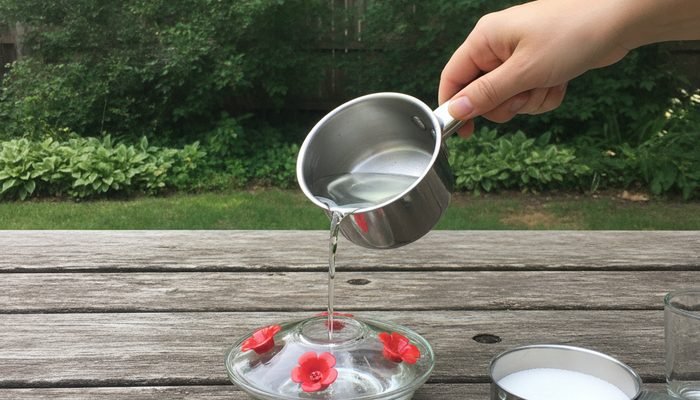
The Audubon Society and Cornell Lab both recommend a simple ratio: 1 part white granulated sugar to 4 parts water. Boil the water, stir in the sugar until it dissolves, then let it cool completely before filling the feeder.
Never use honey, brown sugar, artificial sweeteners, or red food dye. Honey ferments fast and can grow mold that’s dangerous to hummingbirds. Dye isn’t necessary since the feeder itself provides the red color that draws them in.
For the exact steps and how much to make at once, I wrote a full breakdown here: how to make hummingbird food.
Change It Often
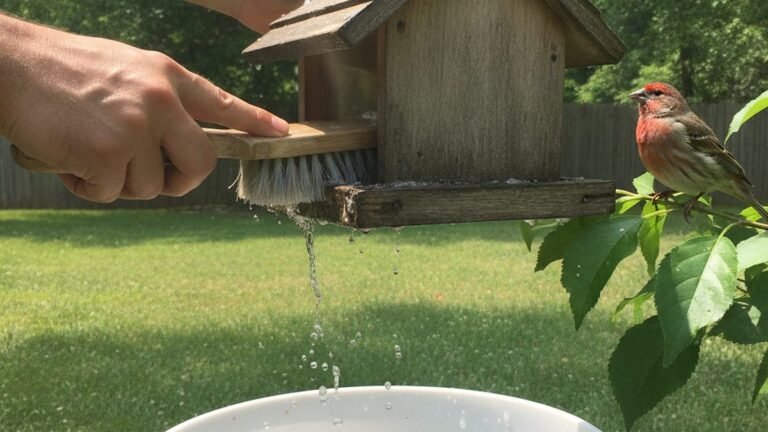
In hot summer weather, nectar can spoil in as little as 2 days. Cloudy or stringy liquid means it’s gone bad. Rinse the feeder with hot water (no soap residue) and refill with fresh nectar every 2 to 3 days during peak heat.
Step 2: Choose a Feeder Hummingbirds Can Actually Find
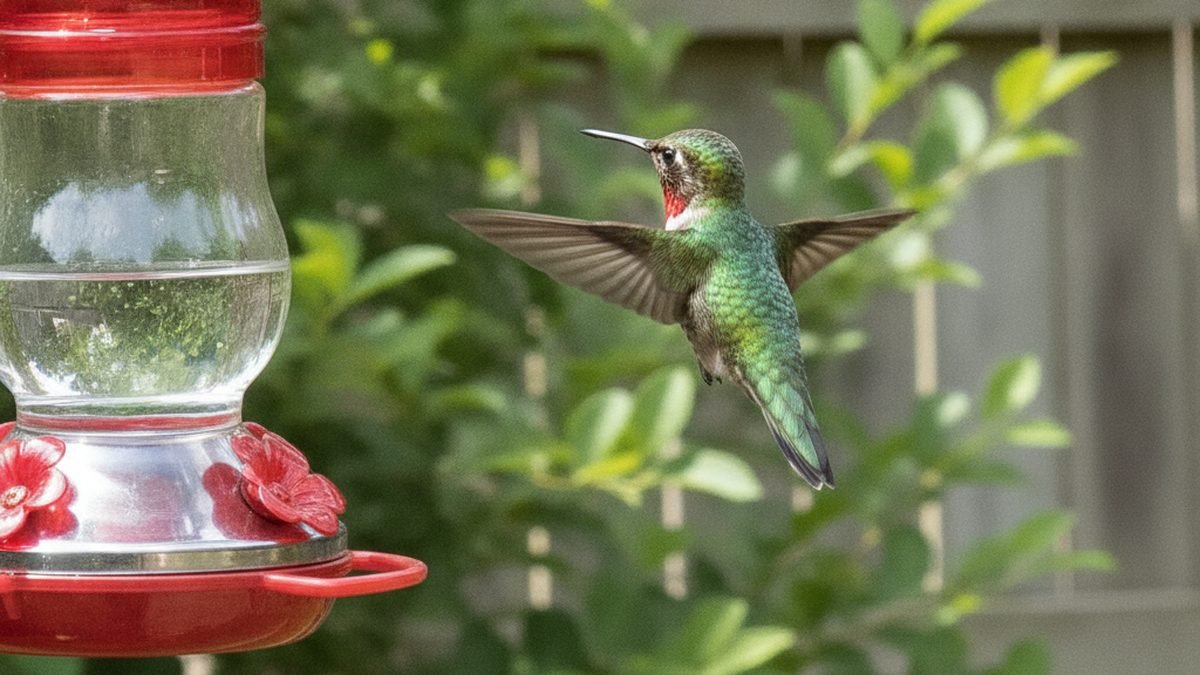
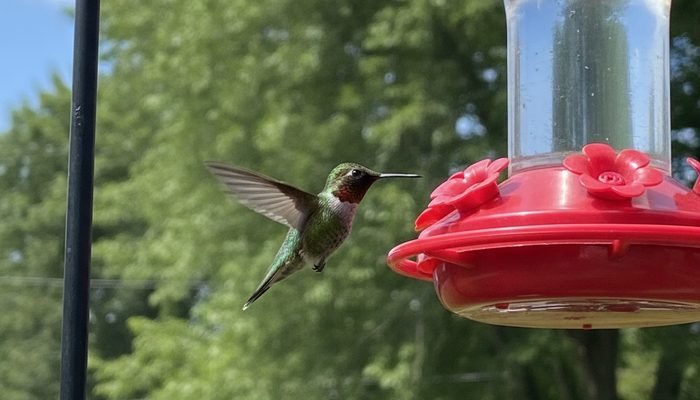
Hummingbirds are drawn to the color red, so most feeders come with red bases, ports, or flowers molded right into the plastic. That’s not just decoration. It’s how they spot a nectar source from a distance.
Look for a feeder with multiple feeding ports so more than one bird can feed at once, though hummingbirds are famously territorial and will still squabble over a single feeder. Bee guards or ant moats are worth having too, since sugar water attracts more than just birds.
If you’re comparing styles, saucer feeders tend to leak less in wind and are easier to clean than the bottle-style ones. I go through the pros and cons of each design in this guide: types of bird feeders.
Step 3: Hang It Somewhere Safe and Visible
Placement makes a bigger difference than most people expect. Hummingbirds want a clear flight path to the feeder, but they also want cover nearby where they can perch and watch for competitors.
A spot near a tree or shrub, but with open air in front of the feeder, works well. In my own yard, my feeders hang near a mature maple tree about 10 feet from the trunk, and that kind of half-open, half-covered setup is exactly what small birds like hummingbirds seem to prefer.
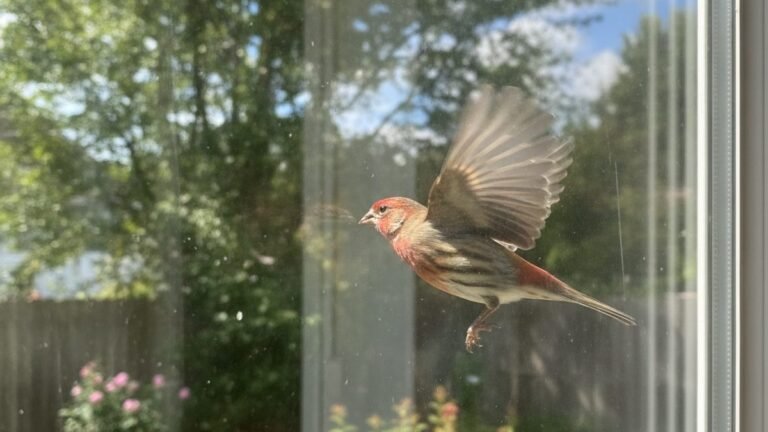
Keep the feeder more than 30 feet from windows, or within 3 feet if it has to be close. This is the standard 3/30 rule from Cornell Lab and Audubon for preventing window strikes. Anything in between gives a bird too much room to build up speed before hitting the glass. For more on this, see preventing bird window collisions.
I watch my own feeders from the kitchen window across the yard, well outside that danger zone, and it’s still close enough to see the action clearly with a cup of coffee in hand.
What Else Helps Bring Hummingbirds In
Feeders work best alongside real flowers. Tubular, nectar-rich blooms like bee balm, salvia, trumpet vine, and native honeysuckle give hummingbirds a natural food source and make your yard easier for them to spot in the first place.
A shallow water source or mister helps too. Hummingbirds don’t usually use a standard birdbath for bathing, but they like misting water on leaves they can flutter through.
Skip pesticides if you can. Hummingbirds eat small insects and spiders for protein, especially when raising young, so a yard with some bug life is actually a good sign, not a bad one.
How Long It Takes for Hummingbirds to Find a New Feeder
In most cases, it takes anywhere from a few days to two weeks for hummingbirds to discover a new feeder, according to patterns reported through Project FeederWatch. It can take longer in early spring before birds have returned, or faster in mid-summer when more birds are already moving through your area.
If it’s been a few weeks with no visitors, check placement and freshness first. Old nectar and feeders hidden too deep in foliage are the two most common culprits. My article on this covers more general causes too: why aren’t birds coming to my feeder.
Wrapping Up
Getting hummingbirds to visit really is as simple as fresh nectar, a feeder they can see, and a safe spot to hang it. Give it a couple weeks before you assume it’s not working. Once one hummingbird finds your yard, it tends to spread the word to its neighbors fast, and before long you’ll have your own little air show outside the window.
Frequently Asked Questions
What is the best homemade hummingbird nectar recipe?
Mix 1 part white sugar with 4 parts water, boil, stir until dissolved, and cool before use. Never add red dye, honey, or artificial sweeteners. This ratio closely matches the sugar content of natural flower nectar and is the recipe recommended by Cornell Lab of Ornithology.
Why aren’t hummingbirds coming to my feeder?
The most common reasons are spoiled nectar, a feeder placed too deep in cover, or simply not enough time passed yet. Fresh nectar changed every 2 to 3 days in summer heat and a visible, semi-open location give you the best odds of attracting visitors.
What color feeder attracts the most hummingbirds?
Red is the color hummingbirds respond to most strongly, since it mimics many of the tubular flowers they naturally feed from. Most feeders already include red parts, so added dye in the nectar itself isn’t necessary.
How often should I clean a hummingbird feeder?
Clean it every time you refill, which should be every 2 to 3 days in hot weather and once a week in cooler temperatures. Use hot water and a bottle brush, and skip soap since residue can linger and affect the nectar taste.