How to Attract House Finches vs Purple Finches (ID Guide)
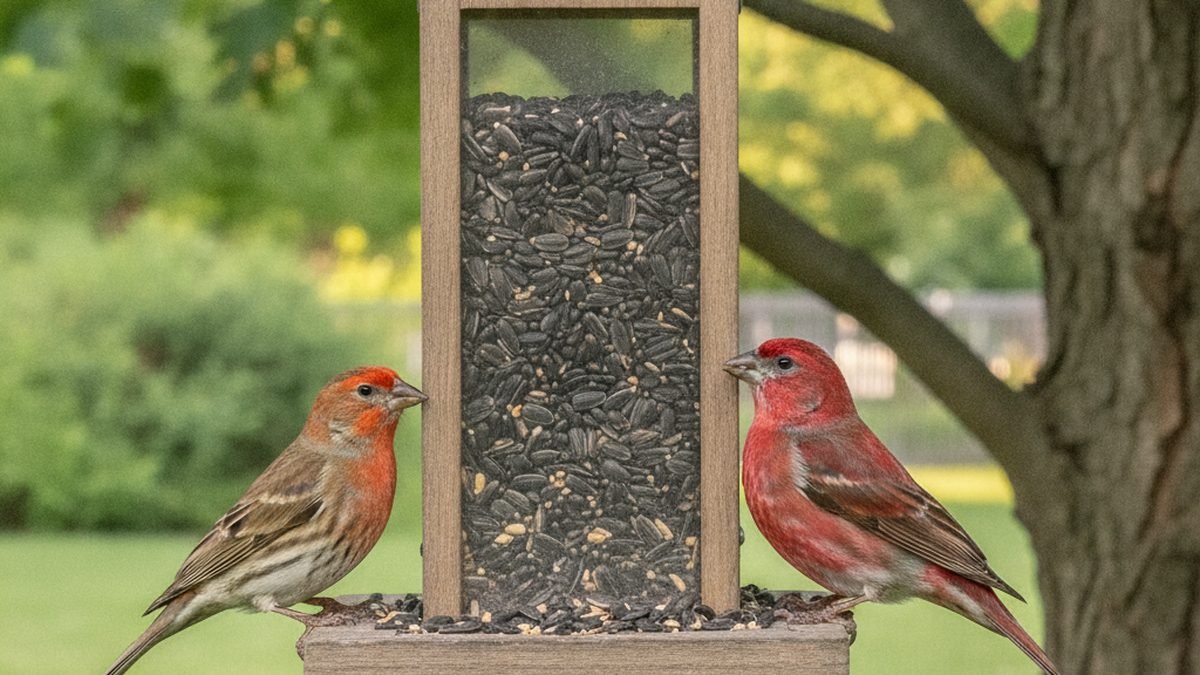
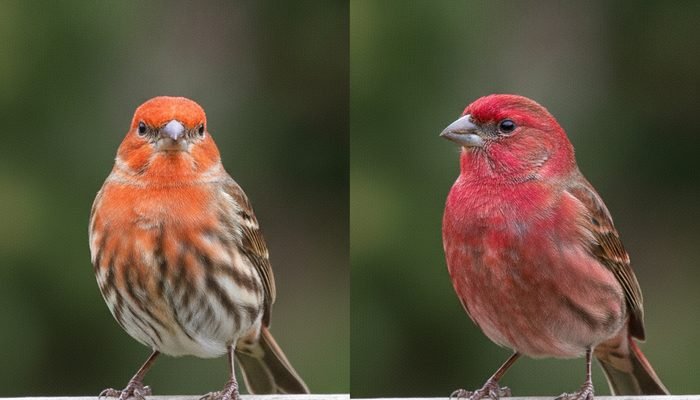
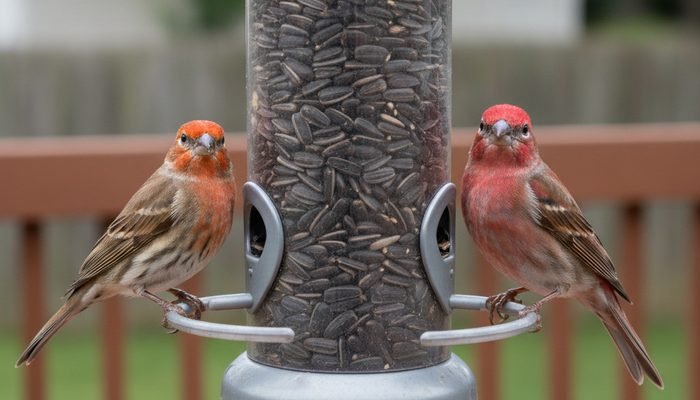
The easiest way to tell a house finch vs purple finch apart is the color and the streaking. House finches have a brighter, more orange-red patch limited to the head and chest, with heavy brown streaking down their sides. Purple finches have a deeper raspberry-red wash that covers more of the head, back, and wings, and their sides are cleaner.
I get asked about these two a lot. House finches show up in my yard all year, but purple finches are more of a passing surprise, usually in fall or a hard winter. Once you know what to look for, you won’t mix them up again.
This guide covers the ID marks, what each bird eats, and how to set up your feeders to get more visits from both.
House Finch vs Purple Finch: Key ID Differences
Start with the face. Purple finches have a bold white eyebrow stripe and a notched tail. House finches have a plainer face and a squared-off tail.
Color is next. Male house finches range from pale orange to bright red, and the color depends on their diet during molt (Cornell Lab of Ornithology notes this comes from pigments in their food). Male purple finches are more uniformly raspberry, like someone dipped their head and shoulders in juice.
Females are trickier. Female house finches are plain grayish brown with blurry streaks. Female purple finches have a strong facial pattern, with a dark cheek patch and white eyebrow, on a more crisply streaked body. If you’re staring at a brown finch wondering which one it is, check the face pattern first.
Body Shape and Size
Purple finches look a bit stockier and shorter-tailed than house finches. It’s subtle, but once you see several of each side by side (or in photos), the difference in proportions starts to jump out.
What Both Finches Eat
Both species are seed eaters at heart. In the wild they eat tree buds, seeds from grasses and weeds, and some insects in summer. At feeders, both go for black oil sunflower seed first.
House finches will also eat nyjer, milo, and cracked corn, and they’re famous for cleaning out a feeder fast once a flock finds it. Purple finches are less likely to visit in big numbers. You might get one or two at a time, mixed in with your regular house finch crowd.
My tube feeder runs nyjer for the goldfinches, and I’ve had house finches perch right next to them without much fuss. Purple finches, in my experience watching feeder reports from birding friends farther north, tend to prefer the sunflower feeders over nyjer.
Best Feeder Type for Each Species
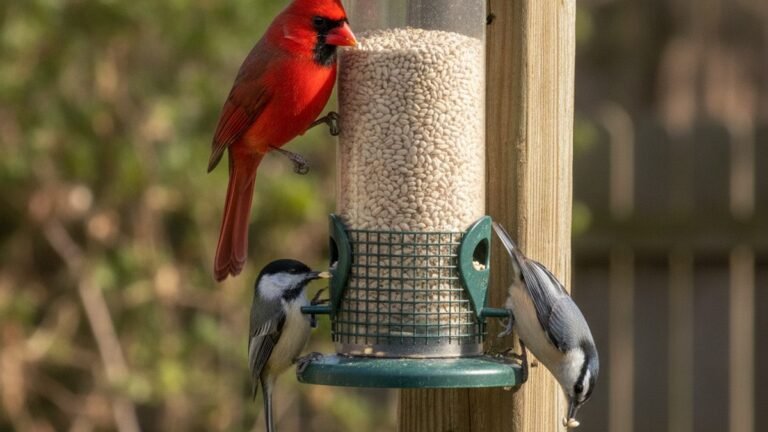
A tube feeder or hopper feeder with sunflower seed works for both. House finches are comfortable on any perch style, including platform feeders, and they don’t mind crowding in with House Sparrows or goldfinches.
Purple finches tend to be a bit more cautious. A hopper feeder or a sturdy tube feeder in a quiet corner of the yard gives them a calmer spot to land. If your feeders sit close to a lot of human foot traffic, that may be part of why you see house finches daily but purple finches rarely.
If your feeders are getting overrun by house finches and you’re not seeing much else, that’s a common complaint. I’ve written about that exact problem in why birds aren’t coming to your feeder, which covers spacing and feeder variety.
Where to Place Your Feeders
Both finches like some cover nearby, like a shrub or tree they can dart into. My feeders hang near a mature maple tree, about 10 feet from the trunk, and that cover gets used constantly, mostly by house finches and chickadees ducking in and out.
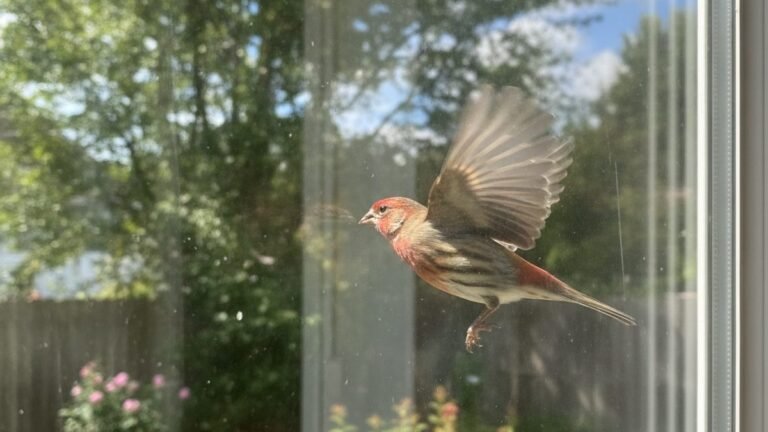
Keep feeders either within 3 feet of a window or more than 30 feet away. This is the standard advice from Audubon Society and Cornell Lab to cut down on window strikes. Anything in between is the danger zone where birds build up speed but don’t see the glass in time.
Purple Finch Irruptions: Why Some Winters Are Better Than Others
Purple finch numbers at feeders swing year to year. In some winters they show up in good numbers across the northern and eastern United States. In other years they barely appear at all.
This pattern is tied to seed crops farther north in Canada. When wild seed crops fail up there, purple finches (along with other winter finches) move south in search of food, a pattern that Project FeederWatch tracks every season. If you want a shot at purple finches, keep sunflower feeders stocked through fall and into winter, since that’s when irruptive movements tend to bring them south.
How Long It Takes to Attract Them
House finches are usually quick. If they’re active in your area, they can find a new feeder within a few days to a couple of weeks, especially once one bird finds it and others follow.
Purple finches take patience. Since they’re not year-round residents in most yards, you might wait an entire season and only get a visit during migration or an irruption winter. I’d call it a bonus bird rather than something you can count on.
Wrapping Up
House finches are the reliable regulars, and purple finches are the treat you get once in a while if you keep sunflower seed on hand through fall and winter. Learn the face pattern and tail shape, and you’ll never second-guess an ID again. Keep your feeders stocked and your eyes on the window, and let the birds sort out the rest.
Frequently Asked Questions
What is the easiest way to tell a house finch from a purple finch?
Look at the face and sides. Purple finches have a bold white eyebrow stripe and cleaner, less streaked sides. House finches have a plainer face and heavy brown streaking down the flanks. The purple finch’s color also looks more raspberry and even, while house finch red is patchier and more orange.
Are purple finches rare at backyard feeders?
They’re not rare everywhere, but they’re much less common than house finches in most yards. Purple finch numbers depend on seed crops up north. In years with poor wild seed crops, more of them move south to feeders, a pattern Project FeederWatch documents each winter.
Do house finches and purple finches eat the same food?
Yes, both eat black oil sunflower seed as a top choice, along with other seeds like milo and cracked corn. House finches are less picky and more likely to show up in large groups, while purple finches usually visit in smaller numbers.
Why do I only see house finches and never purple finches?
House finches are year-round residents in most areas and adapt well to busy yards. Purple finches are more migratory and cautious, and prefer quieter feeding spots. If you don’t see them, it may just be that none are moving through your area that season.