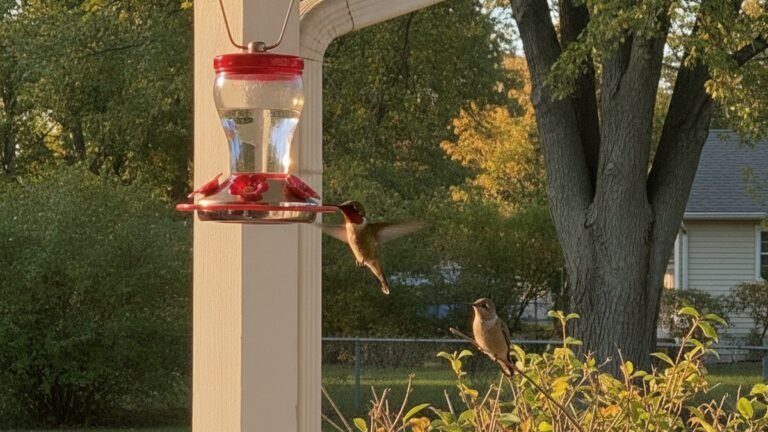
How to Keep Ants and Bees Off Your Hummingbird Feeder
Ants on a hummingbird feeder are almost always chasing spilled or leaking nectar, and the fix is usually simple: block their path with an ant moat and stop drips at the source. Bees and wasps show up for the same reason, sugar water, but they need a slightly different approach since you can’t just build them a moat around the pole.
I’ve had both problems on my own hummingbird feeder in late summer. August is peak season for this in the Upper Midwest, when nectar ferments faster in the heat and every ant colony within 50 feet seems to know it. The good news is that most fixes cost nothing or next to nothing.
This guide walks through the most common causes, starting with the one I see (and deal with) most often, and ends with what not to do so you don’t accidentally hurt the birds you’re trying to help.
Ants Are Climbing the Pole or Hanger
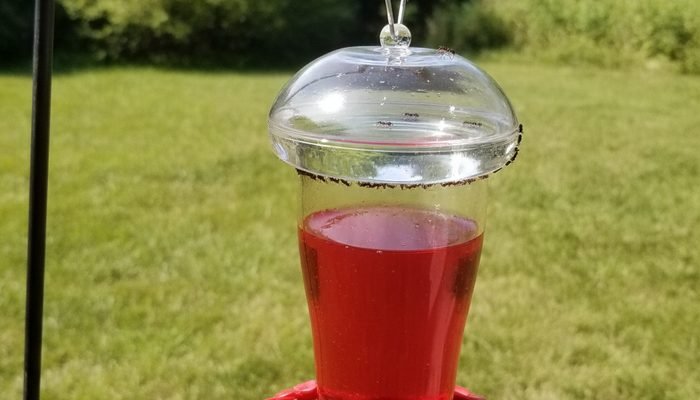
This is the number one reason people search for how to stop ants on hummingbird feeder problems. Ants find the nectar, tell their colony, and suddenly you’ve got a highway of them marching up the pole.
The fix is an ant moat. It’s a small cup that sits above the feeder, between the feeder and the hanger. You fill it with plain water, and ants can’t cross it. I’ve watched ants reach the edge of a moat and just turn around, which is oddly satisfying to watch from the kitchen window.
Ant moats are cheap and some hummingbird feeders come with one built in. If yours doesn’t, you can buy a standalone moat for a few dollars and hang it above almost any feeder. Just remember to refill the water when it evaporates, especially during hot, dry stretches.
Nectar Is Leaking or Dripping
If your feeder drips, you’re basically ringing a dinner bell for ants and bees. Leaks happen when a feeder isn’t level, when the seal is worn out, or when it gets too hot and the nectar expands and pushes out through the ports.
Check that your feeder hangs level. A tilted feeder pushes nectar toward the lower ports and out the seams. Also check the rubber gaskets or seals where the reservoir meets the base. Over a few seasons these can crack or warp, and that’s when leaks start even on a level feeder.
Hanging the feeder in at least partial shade helps too. Direct afternoon sun heats up the nectar, which speeds up expansion and fermentation. For more on feeder placement in general, see this guide on where to place a bird feeder.
Bees and Wasps Are Guarding the Ports
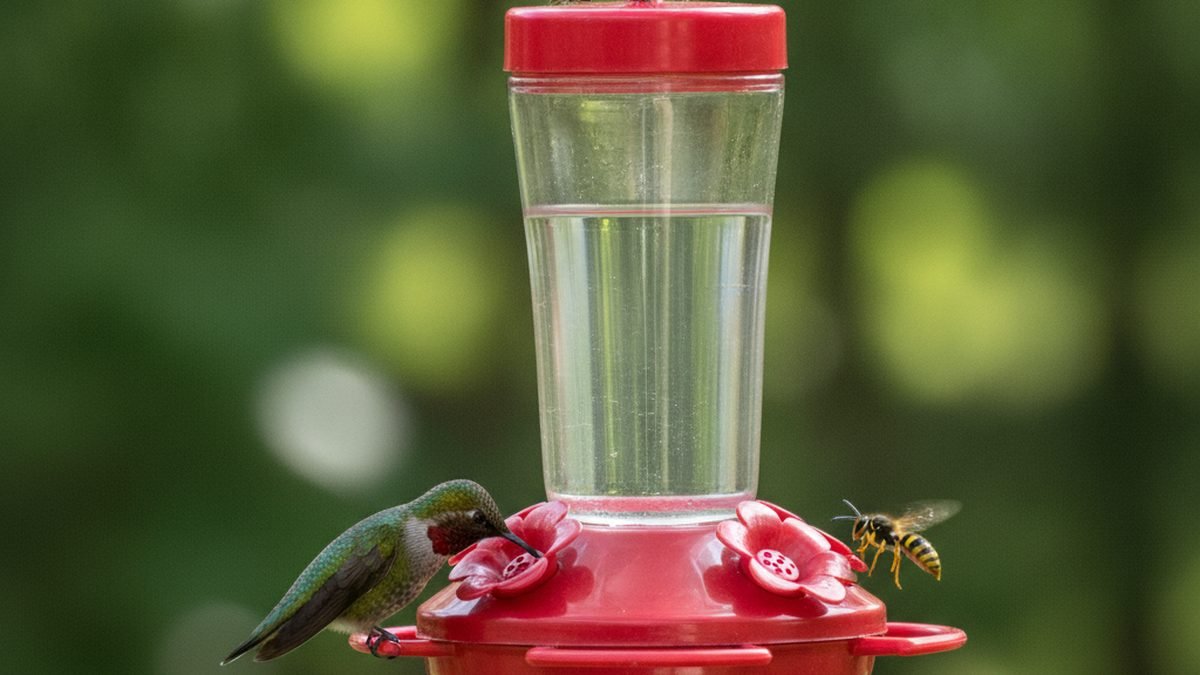
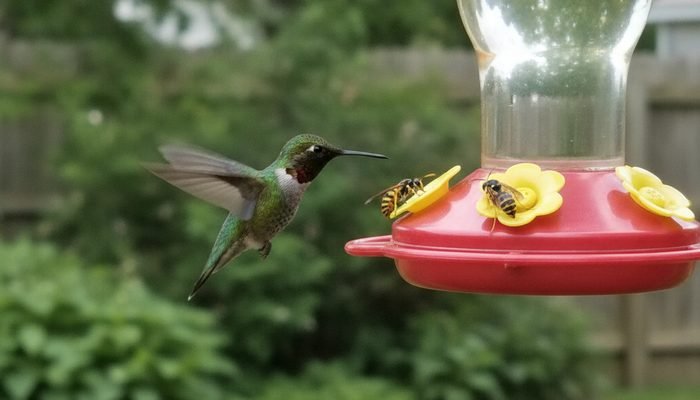
Bees and wasps are drawn to nectar just like ants, but they can be more persistent, and sometimes aggressive enough to keep hummingbirds away entirely. I’ve seen a single wasp claim a whole feeder port and defend it for an afternoon.
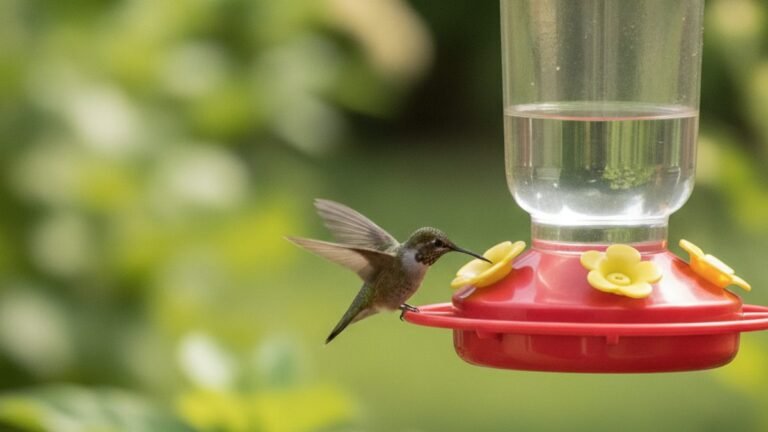
Feeders with bee guards, the little plastic mesh caps over each port, help a lot. They let a hummingbird’s long tongue reach the nectar but keep bees from getting close enough to feed.
Saucer-style feeders with nectar set below the ports (rather than feeders where nectar sits right at the port opening) tend to attract fewer insects in the first place, since bees can’t reach liquid that’s recessed below their reach. If you’re shopping for a new feeder, this overview of bird feeder types covers the saucer style along with others.
Your Nectar Ratio Is Too Sweet
A too-strong nectar mix attracts insects faster than a properly diluted one. The standard ratio recommended by Cornell Lab of Ornithology and Audubon Society is 4 parts water to 1 part white sugar. Stronger mixes might seem like a treat for hummingbirds, but they also make your feeder irresistible to every ant and bee in the neighborhood.
I’ve made this mistake myself, eyeballing the sugar instead of measuring. It doesn’t take much extra sugar to turn a feeder into an insect magnet. If you want the exact steps for mixing a safe batch, check how to make hummingbird food.
The Nectar Has Gone Bad
Fermented or cloudy nectar smells sweeter and stronger to insects, which pulls in even more of them. In hot weather, nectar can spoil in as little as two days.
Change the nectar every 2 to 3 days in temperatures above 80 degrees F, and every 3 to 4 days in cooler weather, per Audubon Society guidance. Rinse the feeder with hot water (no soap) each time you refill it. This single habit cuts down on both ants and bees, since you’re never leaving old, fermenting sugar water sitting out as bait.
What NOT to Do
Don’t use pesticides, insecticide sprays, or sticky traps like Tanglefoot directly on or near a hummingbird feeder. Hummingbirds can get residue on their feathers or beaks, and it can be toxic to them. This is one of the more common mistakes I see mentioned in bird forums and it’s worth repeating: keep chemical pest control away from the whole feeding area.
Don’t add anything other than plain water to an ant moat. Vinegar, oil, or soap can drip into the nectar below and harm hummingbirds.
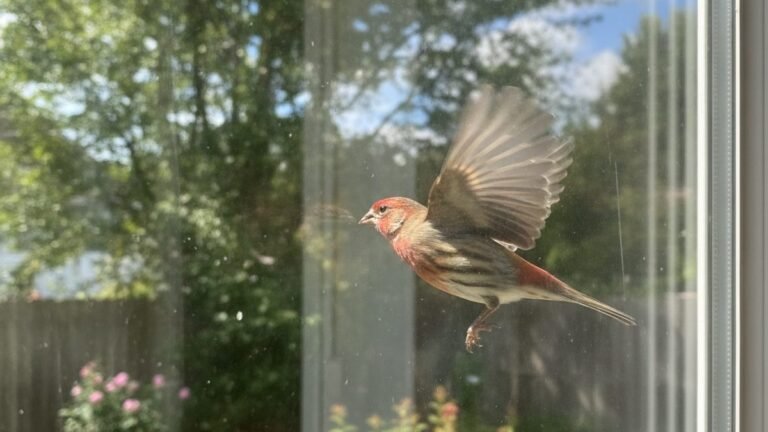
Don’t move the feeder right next to a window to escape insects. That trades one problem for a worse one. The Cornell Lab and Audubon Society both point to the 3/30 rule: place feeders within 3 feet of a window or more than 30 feet away, to reduce collision risk. For more on this, see how to stop birds flying into windows.
Wrapping Up
Ants and bees on a hummingbird feeder are annoying, but they’re almost always fixable with a moat, a bee guard, and a regular nectar-changing habit. I check my own feeders every couple of days in August since that’s when the heat makes everything spoil faster. Stick with plain water and fresh nectar, skip the chemicals, and your hummingbirds will have the feeder back to themselves in no time.
Frequently Asked Questions
Why are there so many ants on my hummingbird feeder all of a sudden?
A sudden ant surge usually means a leak or drip started, or the weather got hot enough to draw more foragers out. Check the feeder seals and hanging level first. Also consider whether your nectar mix is too strong or overdue for a change, since both make a feeder more attractive to ants.
Does vinegar keep ants off hummingbird feeders?
Vinegar can repel ants, but it’s risky to use directly on or near a hummingbird feeder because residue can contaminate the nectar. Stick with a plain water ant moat instead. It works just as well without any risk to the birds.
Will ants and bees scare hummingbirds away?
Yes, especially bees and wasps. A hummingbird will often avoid a feeder guarded by aggressive insects, even if nectar is still available. Ants are usually less intimidating to hummingbirds but can still contaminate the nectar, which is reason enough to deal with them.
What is the best homemade ant moat for a hummingbird feeder?
A simple option is a small plastic cup or bottle cap with a hole drilled through the center, threaded onto the hanger above the feeder and filled with plain water. Store-bought moats work the same way and are inexpensive if you’d rather skip the DIY step.