Do American Robins Visit Bird Feeders? What to Know
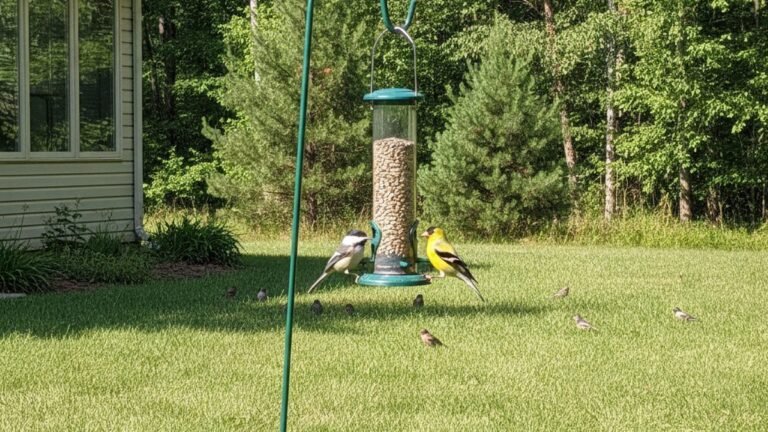
Do robins eat from bird feeders? Not usually. American Robins are ground foragers, not seed eaters, so most hopper and tube feeders don’t interest them much at all.
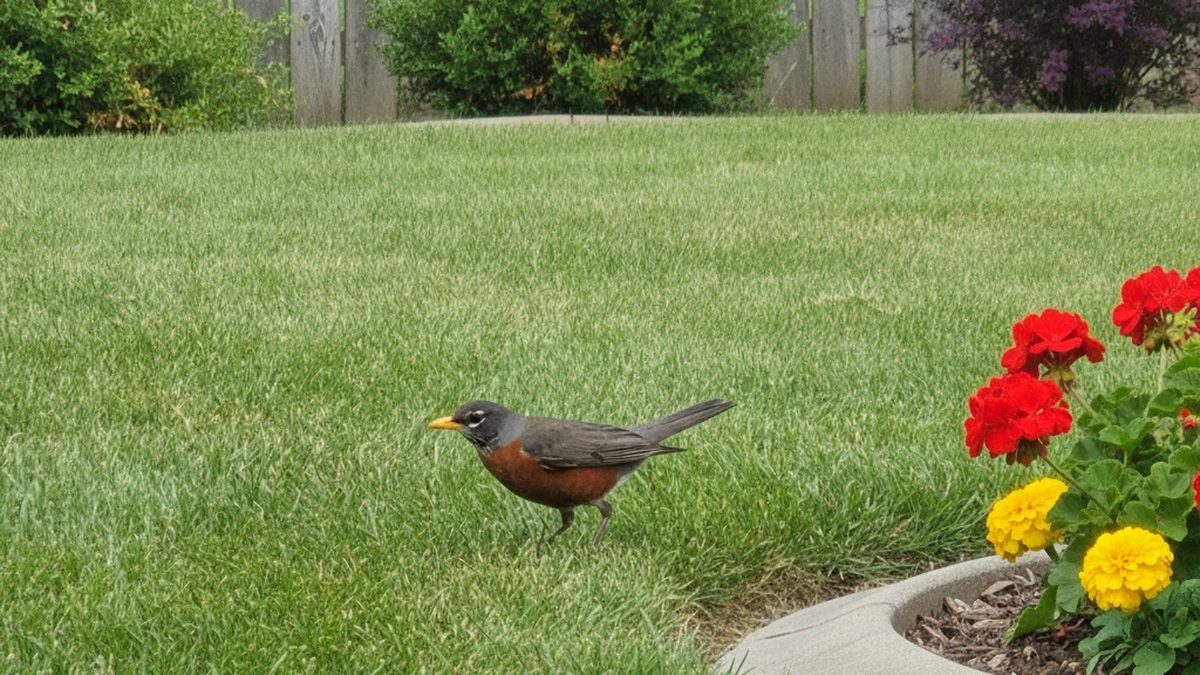
That said, robins will visit a yard that offers the right kind of food in the right kind of setup. I’ve watched robins hop across my lawn plenty of times, never once landing on my hopper or tube feeder, but always checking the grass near the maple tree for worms.
In this article I’ll cover what robins actually eat, which feeder style gives you the best shot, where to put it, and how long it might take before you see one show up.
What Robins Eat
American Robins eat mostly earthworms and insects in spring and summer. Cornell Lab of Ornithology notes that a robin’s diet is roughly 40 percent invertebrates and 60 percent fruit over the course of a year, though that ratio shifts a lot by season.
In fall and winter, robins switch heavily to fruit. They’ll eat berries from trees and shrubs like dogwood, chokecherry, sumac, holly, and serviceberry. This is a big reason why the answer to “do robins eat from bird feeders” is usually no. Standard birdseed just isn’t on their menu.
If you want to offer something a robin will actually eat, mealworms are your best option. Dried or live mealworms mimic the bugs robins hunt naturally. Soaked raisins, currants, or chopped fresh fruit can also work.
Best Feeder Type for Robins
Skip the tube feeder and the hopper feeder for robins. Their feet and body shape are built for hopping on open ground, not gripping small perches.
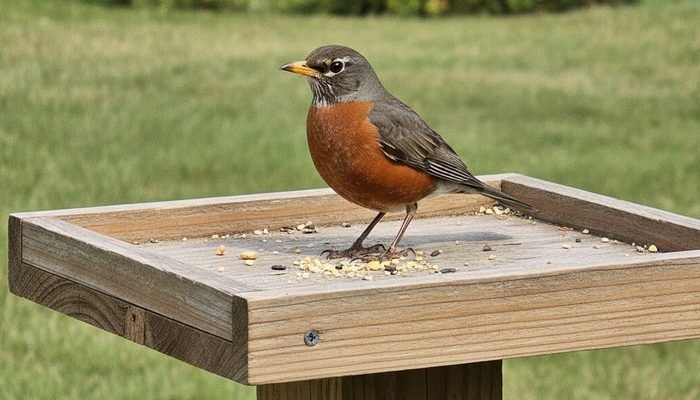
A platform feeder is your best bet. It’s open, flat, and low, which matches how robins already forage. I keep a platform feeder in my own yard for mixed visitors, and it’s the one style that at least gives a robin a fair shot at landing.
Scattering mealworms or berries directly on the ground or a low tray works even better, since it’s closest to how robins naturally search for food. If you’re weighing feeder styles for your whole yard, this guide to different types of bird feeders breaks down which ones suit which birds.
Where to Place Food for Robins
Robins like open lawn areas near trees or shrubs. They forage in the open but want cover close by to retreat to if a hawk or cat shows up.
Place a platform feeder or ground tray near the edge of your lawn, within sight of a tree line or hedge. Keep it away from dense brush where a cat could hide and ambush.
Follow the same window safety rule you’d use for any feeder. Keep it within 3 feet of a window or more than 30 feet away, so a startled bird doesn’t build up enough speed to get hurt in a collision. For more on this, check out where to place a bird feeder.
A Birdbath Might Work Better Than a Feeder
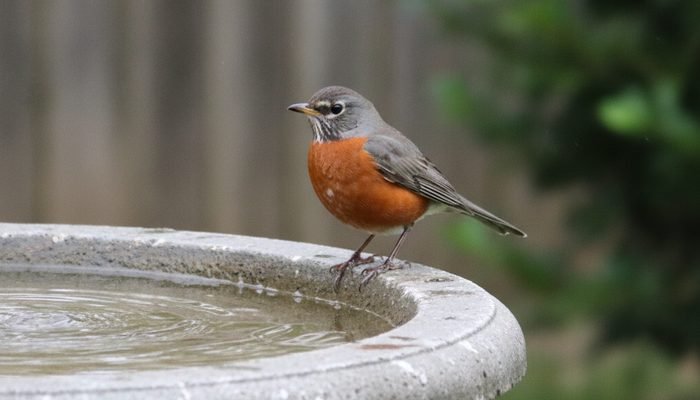
If your main goal is just seeing robins in the yard, a birdbath may do more work than any feeder. Robins are drawn to water for both drinking and bathing, and the Audubon Society lists water as one of the most reliable ways to attract a wide range of species, robins included.
I’ve noticed my own pedestal birdbath pulls in birds that never touch my feeders, and robins are a good example of that pattern. Keep the water shallow (2 to 3 inches at the deepest point) and clean, and change it every few days, especially in summer heat.
How Long It Takes to Attract Robins
Robins tend to notice new food or water sources faster than you’d think, sometimes within a few days if your yard is already on their territory route. But a full pattern of regular visits can take a couple of weeks to settle in.
Mealworms tend to get noticed fastest since robins are actively hunting for that kind of food anyway. Berries and fruit may take longer, especially outside of fall and winter when robins rely on them less.
If you’ve set food or water out and nothing’s showing up after a few weeks, it might be worth checking your whole setup. This article on why birds aren’t visiting your feeder covers common reasons feeders get ignored.
Wrapping Up
Robins aren’t feeder birds in the usual sense, and that’s okay. If you offer mealworms on a platform feeder, keep a clean birdbath nearby, and leave some open lawn near cover, you’re doing everything you reasonably can. I still get a kick out of watching one hunt worms in the grass every spring, even though it’s never once landed on my tube feeder.
Frequently Asked Questions
Why don’t robins come to my bird feeder?
Most feeders offer seed, and robins are not big seed eaters. They mainly eat worms, insects, and fruit. If you want robins in your yard, try mealworms on a platform feeder or plant berry bushes. A birdbath also helps since robins love water for drinking and bathing.
What food will attract robins?
Live or dried mealworms are the best bet. Robins also go for berries like chokecherry, dogwood, and serviceberry, plus soaked raisins or currants. Cornell Lab of Ornithology notes fruit becomes a bigger part of their diet in fall and winter when insects are scarce.
Do robins use tube or hopper feeders?
Rarely. Robins are ground foragers and don’t perch well on small feeder ports. They do much better with open platform feeders or food scattered right on the ground or a low table, close to natural cover like shrubs or a tree.
Will a birdbath attract robins better than a feeder?
Often, yes. Robins are drawn to water for drinking and bathing more reliably than to most seed feeders. A shallow, clean birdbath placed near shrubs or trees can bring robins into view even if they never touch your other feeders.