28 Pennsylvania Backyard Birds and How to Attract Them
Pennsylvania backyard birds change a lot with the seasons, and that’s what makes feeding them so fun. You get cardinals and chickadees year-round, warblers passing through in spring and fall, and juncos showing up once the cold hits.
I live over in the Upper Midwest, but Pennsylvania’s mix of forest, farmland, and suburbs pulls in a lot of the same species I get, plus a few I only see photos of from friends out east. This guide covers 28 birds you’re likely to find in a Pennsylvania yard, from the state’s woods to its cities, and what it takes to get them to visit.
By late summer 2026, most of the summer breeders are still around and getting ready to move south, so this is a good time to start building feeding habits before fall migration ramps up.
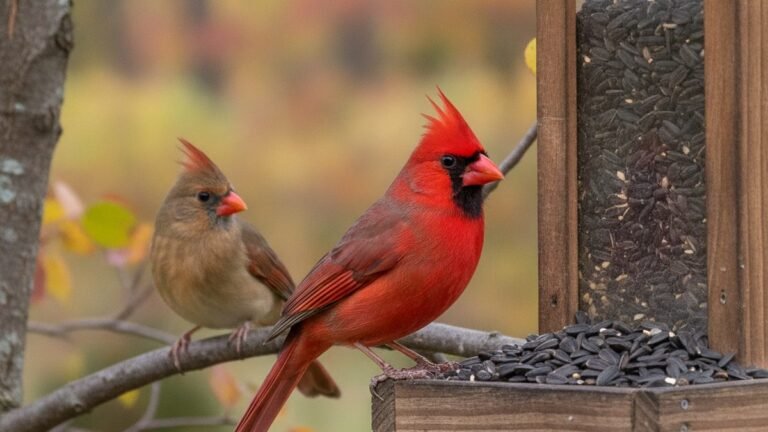
Northern Cardinal
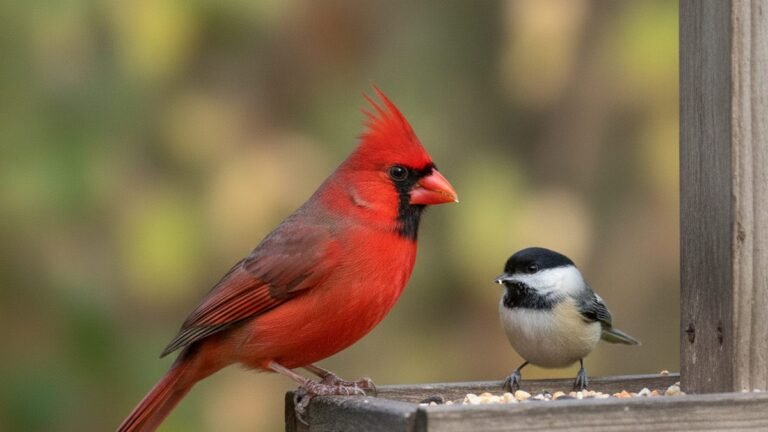
Bright red males and soft tan-and-red females make this one of the easiest Pennsylvania backyard birds to identify. Look for the pointed crest and thick orange bill built for cracking seeds.
Cardinals eat sunflower seeds, safflower, and cracked corn. They like a platform or hopper feeder because they’re not great at clinging to tube feeders.
Tip: cardinals feed at dawn and dusk. If your feeder sits empty in the morning, that’s often why you’re missing them.
Black-capped Chickadee
You’ll know this one by its black cap, white cheeks, and the cheerful “chick-a-dee-dee” call. It’s a year-round resident across most of Pennsylvania.
Chickadees love black-oil sunflower seed and suet. A tube feeder or suet cage works well since they’re quick, agile feeders.
They’re one of the tamest birds you’ll meet. With patience, some people get them to eat right from their hand.
Carolina Chickadee
Southern Pennsylvania sits right in the overlap zone between Carolina and Black-capped Chickadees, so you may see either, and they can be tough to tell apart by sight alone.
Carolina Chickadees eat the same foods as their black-capped cousins: sunflower seed, suet, and small nuts. Same feeder setup works for both.
If you’re not sure which one you have, Cornell Lab of Ornithology notes that voice is the best way to separate them, though hybrids do complicate things.
Tufted Titmouse
This small gray bird has a pointed crest and a peachy wash on its sides. It’s a common feeder visitor across Pennsylvania.
Titmice go for sunflower seeds and suet, and they often grab a seed and fly off to crack it open elsewhere.
They’re bold around feeders and will scold you loudly if you refill too slowly for their taste.
White-breasted Nuthatch
Look for a bird creeping headfirst down a tree trunk. That upside-down habit is a dead giveaway for this species.
Nuthatches eat sunflower seeds, suet, and peanuts. A suet cage mounted on a tree works especially well since it matches how they naturally forage.
I watch mine work the maple near my own feeders most winter mornings. They’re stubborn little birds and rarely spook easily.
Downy Woodpecker
This is the smallest woodpecker in North America, with a short bill and a black-and-white checkered back. Males have a small red patch on the head.
Suet is the top draw, though they’ll also take sunflower seeds and peanuts.
They’re common at feeders across the whole state and tend to be less wary of people than larger woodpeckers.
Hairy Woodpecker
Hairy Woodpeckers look almost like an oversized Downy, with a longer, thicker bill being the best way to tell them apart.
They eat suet and sunflower seeds, same as Downies, but tend to be shyer and stick closer to wooded edges.
If you get one at your feeder, watch the bill length first. It’s the most reliable field mark.
Red-bellied Woodpecker
Despite the name, the red is mostly on the head, not the belly. Males have a full red cap from bill to nape; females just have red on the back of the neck.
These woodpeckers like suet, peanuts, and sunflower seeds. They’re common across Pennsylvania and have expanded their range north over the past few decades, according to Cornell Lab of Ornithology data.
They can be a bit noisy, with a rolling call that carries across a yard.
Blue Jay
Blue Jays are hard to miss with their bright blue, white, and black pattern and loud calls. They’re common statewide.
Peanuts (in the shell or out) are their favorite, along with sunflower seeds and corn. A platform feeder handles their size better than a small tube feeder.
They’re smart birds and will remember a reliable feeding spot for a long time.
American Goldfinch
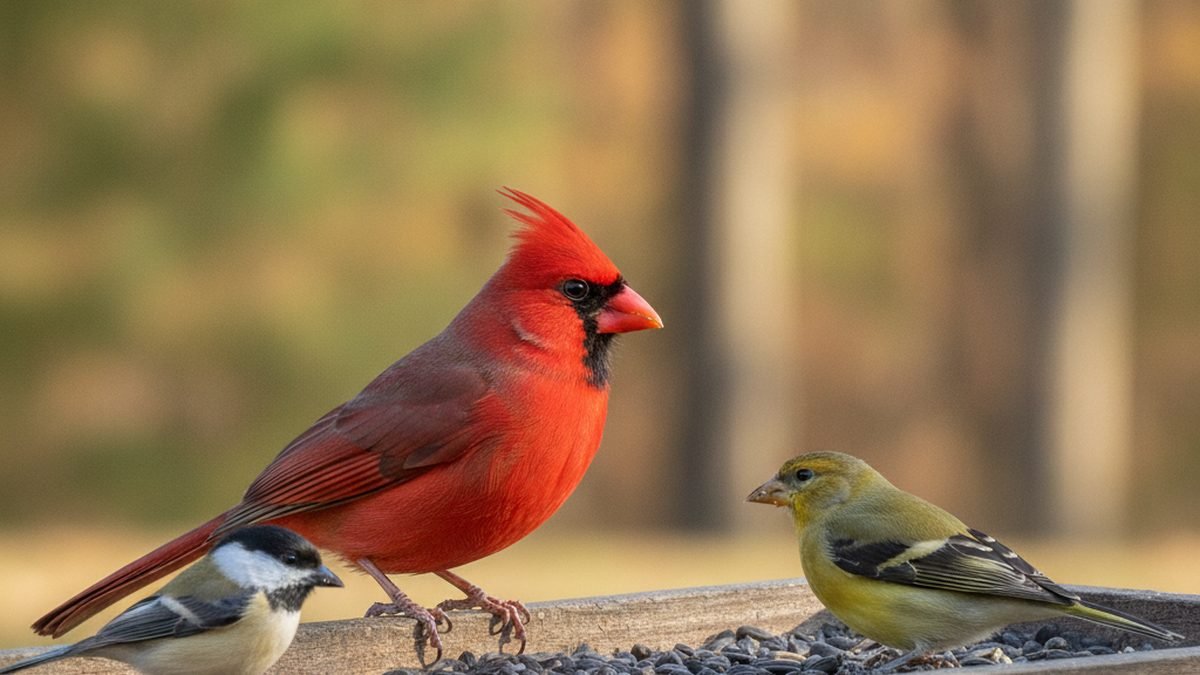
Males turn bright yellow with a black cap in summer, then fade to olive-brown in winter. Females stay duller year-round.
Nyjer seed is the classic draw, offered in a tube feeder with small ports. My own nyjer feeder pulls in goldfinches steadily from spring through fall.
They’ll also eat sunflower hearts if you don’t want to keep two kinds of seed on hand.
House Finch
Males show a reddish wash on the head and chest, while females are streaky brown. Both have a fairly thick, conical bill for seed cracking.
They eat sunflower seed and nyjer, and often show up in small flocks rather than alone.
Watch for eye disease in House Finches. Cornell Lab of Ornithology tracks this condition, and cleaning feeders regularly helps limit its spread.
Purple Finch
Purple Finches look like a House Finch dipped in raspberry juice, with color spreading further down the back and wings.
They’re more common in Pennsylvania during migration and winter than as year-round residents. Sunflower seed is their main draw at feeders.
Side by side with a House Finch, the deeper, more even color is the easiest way to tell them apart.
American Robin
The orange breast and gray-brown back make this one of the most recognized birds in the state. Robins are common in yards, parks, and lawns.
They don’t usually visit seed feeders. Mealworms or a platform with fruit like berries can bring them in, along with a birdbath for drinking and bathing.
They’re often one of the first birds active at first light.
Mourning Dove
A soft gray-brown bird with a long pointed tail and a mournful cooing call. They’re common across Pennsylvania in open and suburban areas.
Mourning Doves feed on the ground or from a platform feeder, eating millet, cracked corn, and sunflower seed.
They tend to arrive in pairs or small groups and sit quietly for long stretches once settled.
Dark-eyed Junco
Known to many as “snowbirds” since they show up in Pennsylvania yards mostly from fall through early spring. They’re slate gray above with a white belly.
Juncos feed on the ground, eating millet and small seeds that fall from feeders above.
I get a strong wave of juncos each winter myself, and they’re one of the more reliable signs that colder weather is coming.
Song Sparrow
A streaky brown sparrow with a central dark spot on the chest. It’s common in brushy yard edges and gardens statewide.
Song Sparrows eat mixed seed and millet, usually foraging on the ground or from a low platform.
Their song is a nice mix of clear notes and trills, often one of the first sounds you’ll notice in spring.
White-throated Sparrow
Look for the white throat patch and yellow spot between the eye and bill. This species passes through Pennsylvania in migration and winters in the state as well.
They eat mixed seed and millet scattered on the ground or a platform feeder.
Their whistled song is sometimes described as “Oh Sweet Canada,” a handy way to learn the call.
Chipping Sparrow
A small, trim sparrow with a rusty cap and clean gray face, common in Pennsylvania during the breeding season.
They eat small seeds and readily visit platform feeders or ground trays with millet.
By late summer, young birds look duller and streakier, which can trip up new birders trying to ID them.
European Starling
Starlings are stocky, dark, and glossy, with speckled winter plumage and a yellow bill in breeding season. They’re common and non-native across the state.
They’ll eat almost anything at a feeder, including suet, which can be a nuisance if they show up in large numbers.
Switching to suet without corn or oats mixed in sometimes reduces how much starlings take.
Red-winged Blackbird
Males are glossy black with bold red-and-yellow shoulder patches. Females are streaky brown and easy to mistake for a large sparrow.
They eat mixed seed and cracked corn, often showing up in spring and summer near wetter or open areas.
Males can get territorial and vocal, especially near nesting sites in cattails or tall grass.
Common Grackle
A large, glossy blackbird with a long tail and pale eyes. Grackles are common across Pennsylvania, especially in open and suburban spaces.
They eat corn, sunflower seed, and just about anything else on a platform feeder.
They tend to arrive in noisy groups, so a feeder can get crowded fast when they show up.
Eastern Bluebird
Males show deep blue upperparts with a rusty chest, and this species nests in boxes across Pennsylvania farmland and open country.
Bluebirds don’t usually eat seed. Mealworms, live or dried, are the best way to draw them to a feeder.
A nest box near open ground is often more effective than any feeder for attracting a pair to your yard.
Carolina Wren
A small reddish-brown bird with a bold white eyebrow stripe and a surprisingly loud song for its size. It’s a year-round Pennsylvania resident.
They eat suet and mealworms more than seed, and they’ll often check out brush piles and porches too.
Cold snaps can hit their population hard, so a reliable suet feeder helps them through harsh winter stretches.
House Wren
A plain brown, energetic little bird that’s more often heard than seen, with a bubbly, rapid song. It’s a common summer breeder in Pennsylvania.
House Wrens eat insects almost exclusively and rarely visit seed feeders.
Leaving some natural brush or a small nest box nearby does more to attract them than any feeder will.
Cedar Waxwing
Sleek, crested birds with a yellow-tipped tail and a black mask. They travel in flocks and show up wherever berries are ripe.
They rarely eat seed. Fruit-bearing shrubs like serviceberry or dogwood are the real draw, more than any feeder.
Watching a flock strip a berry bush in minutes is one of the more fun backyard bird moments in Pennsylvania.
Ruby-throated Hummingbird
The only hummingbird species regularly seen in Pennsylvania, with males showing an iridescent red throat patch.
Sugar water (one part sugar to four parts water) in a hummingbird feeder is the standard way to attract them, along with tubular flowers like bee balm.
By August they’re feeding heavily to build fat reserves for migration south, so this is a great time to keep feeders full and clean.
Baltimore Oriole
Males are bright orange and black, one of the most striking birds in a Pennsylvania summer yard.
Orioles go for orange halves, grape jelly, and nectar feeders built for their larger bill, more than standard seed.
They usually show up in spring and head south by early fall, so late summer sightings tend to taper off.
Rose-breasted Grosbeak
Males have a bold rose-red triangle on a white chest, paired with a thick, pale bill built for cracking seed.
They eat sunflower seed and will use a platform or hopper feeder during migration and the breeding season.
They’re more common in spring and early fall migration than as steady summer residents in most Pennsylvania yards.
Pine Siskin
A small, heavily streaked finch with a touch of yellow in the wings and tail, more common in Pennsylvania during irruption winters when northern seed crops fail.
They eat nyjer and sunflower seed and often mix in with goldfinch flocks at a tube feeder.
Some winters bring almost none, and others bring a lot, so their numbers vary a great deal year to year.
The 3 Best All-Around Foods for Pennsylvania Backyards
If you only stock a few things, these cover the most Pennsylvania backyard birds with the least waste.
Black-oil sunflower seed
This is the closest thing to a universal feeder food. Cardinals, chickadees, titmice, nuthatches, woodpeckers, and finches all eat it readily. see which birds eat sunflower seeds for a deeper breakdown.
Suet
Woodpeckers, nuthatches, chickadees, and Carolina Wrens all rely on suet, especially in colder months when insects are scarce. It’s one of the best cold-weather foods you can offer.
Nyjer seed
This one is narrower in appeal but pulls in goldfinches, House Finches, and Pine Siskins reliably. A dedicated tube feeder with small ports keeps waste down and larger birds out.
Seasonal Notes for Pennsylvania Feeding
Late summer, like August 2026, is a good time to keep feeders clean and full as hummingbirds and orioles fatten up before migration. Seed demand usually dips a bit in summer since natural food is everywhere, but it picks back up fast once fall migration and cooler weather arrive.
Fall brings a mix of lingering summer birds and early winter arrivals like juncos and Pine Siskins some years. Winter is when suet becomes especially important, since natural insects are hard to find and birds need the fat for energy.
If your feeders sit quiet for stretches at any time of year, it’s worth checking placement and feeder type before assuming something’s wrong. common reasons birds avoid a feeder covers the usual culprits.
Wrapping Up
Pennsylvania has one of the richer bird lists in the eastern US, and a simple mix of sunflower seed, suet, and nyjer covers most of what shows up in a typical yard. Pay attention to feeder type as much as food, since a platform bird like a Mourning Dove will never work a tube feeder the way a goldfinch does. Keep an eye on the season too, since who visits in August looks pretty different from who visits in January. Start with the basics and adjust from there based on who actually shows up at your place.