How to Attract Nuthatches to Your Backyard
If you want to know how to attract nuthatches, the short answer is this: offer suet and black oil sunflower seed, hang a feeder near mature trees, and be patient for a week or two. Nuthatches are creatures of habit, but once they find a reliable food source, they tend to stick around.
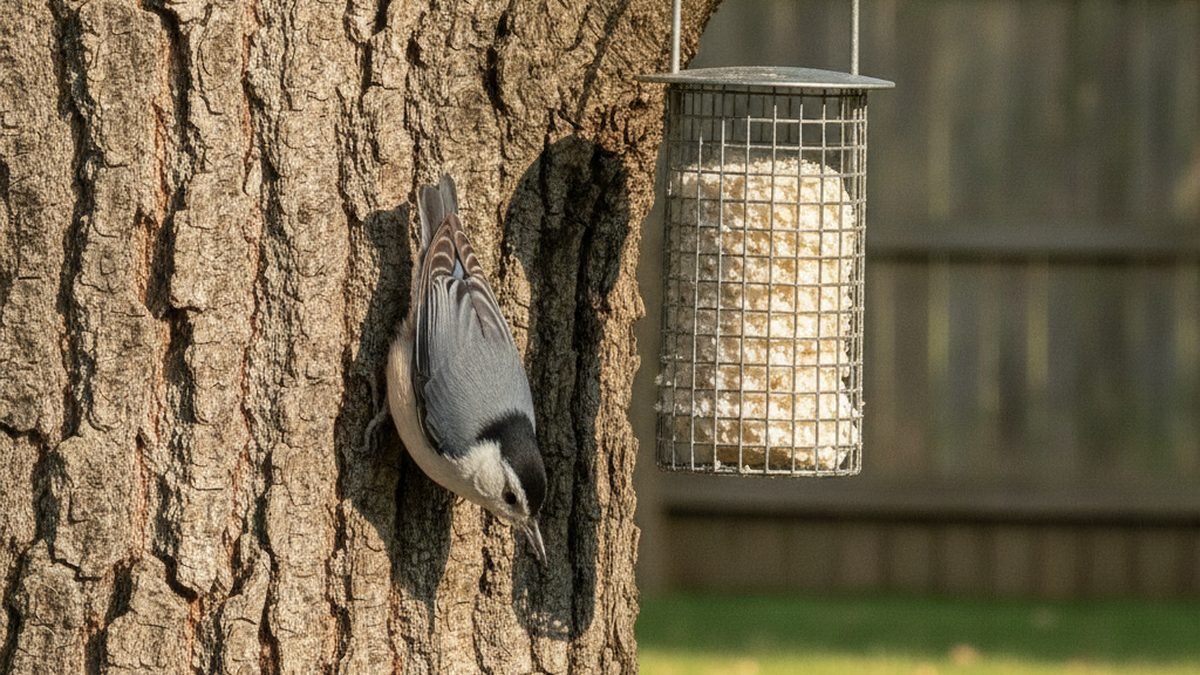
I get White-breasted Nuthatches at my feeders pretty regularly. They’re the ones that creep down the trunk of my maple tree headfirst, which always looks like a bird doing something slightly against the rules. Once you learn their habits, getting them to visit is not hard at all.
What Nuthatches Eat
Nuthatches eat a mix of insects and seeds, depending on the season. In spring and summer, they hunt for beetles, ants, caterpillars, and spiders tucked into bark. In fall and winter, they switch to seeds and nuts, and this is when your feeders matter most.
At the feeder, nuthatches go for black oil sunflower seed, suet, and peanuts (shelled or unshelled). The Cornell Lab of Ornithology notes that nuthatches also cache food, wedging seeds into bark crevices to eat later. If you’ve ever seen a bird stash a sunflower seed under tree bark like it’s hiding cash from a roommate, that’s a nuthatch at work.
They generally ignore nyjer seed and milo. My tube feeder is loaded with nyjer for the goldfinches, and I’ve never once seen a nuthatch bother with it.
Best Feeder Type for Nuthatches
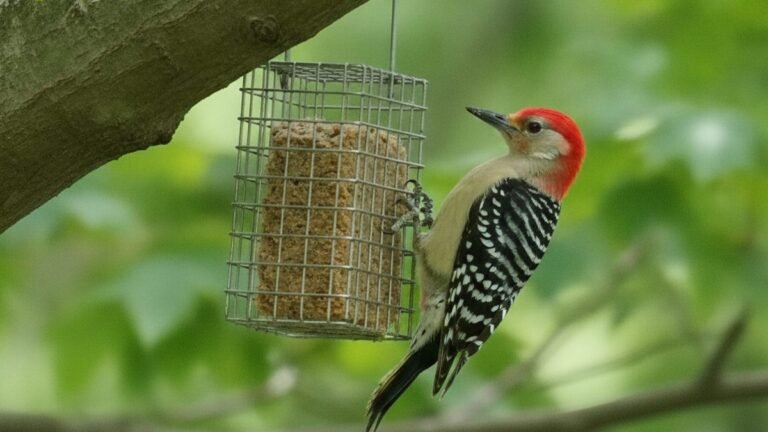
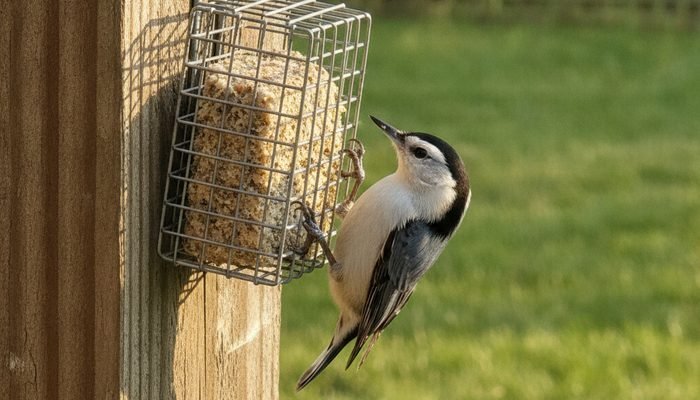
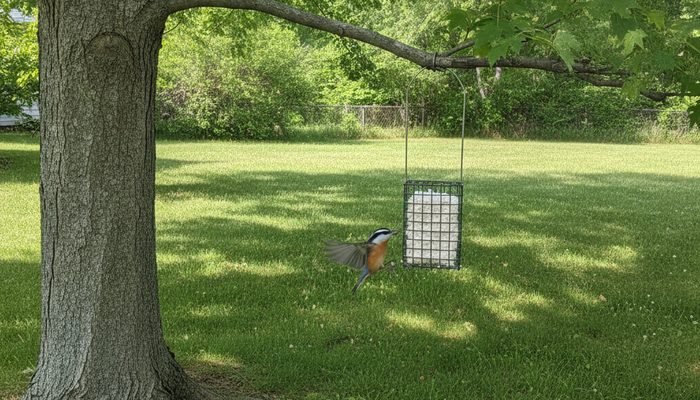
Suet feeders are the single best draw for nuthatches. A simple wire suet cage works fine and gives them a spot to cling upside down while they peck, which is basically their signature move.
Hopper feeders and platform feeders stocked with sunflower seed are a close second. Nuthatches will grab a seed and fly off to crack it open on a branch rather than sit and eat like a finch would. If you’re not sure which feeder style fits your yard, this guide to types of bird feeders breaks down the pros and cons of each one.
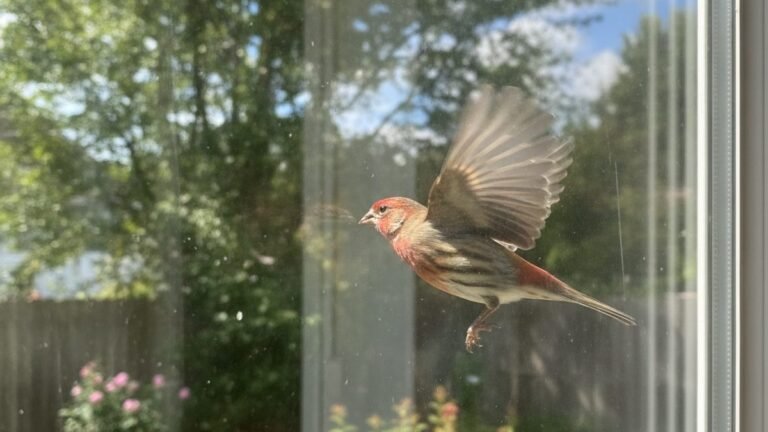
Tube feeders with sunflower ports also work, though nuthatches sometimes have to compete with House Finches and chickadees for a perch. I’ve watched my chickadees and nuthatches basically take turns at the suet cage without much drama, so mixing feeder types in one area tends to work well.
Where to Place the Feeder
Nuthatches feel safest near trees, since that’s where they forage and nest naturally. I hang my feeders about 10 feet from the trunk of a mature maple, and that distance seems to give birds enough cover without letting squirrels launch themselves onto the feeder pole.
Keep feeders either within 3 feet of a window or more than 30 feet away. This is the standard rule from Audubon and Cornell Lab of Ornithology for reducing window strikes. Anything in between creates a dangerous middle zone where birds build up speed but don’t recognize the glass in time. If window strikes are already a problem in your yard, check out tips for stopping birds from flying into windows.
I watch my feeders from the kitchen window across the yard, so the birds get their space and I still get a good view with coffee in hand.
Nuthatch-Specific Tips
Nuthatches are cavity nesters, so leaving a dead tree or snag standing (if it’s safe to do so) gives them a natural nesting option. They’ll also use nest boxes sized for chickadees.
Smear a little suet or peanut butter directly onto bark if you want to see their natural foraging behavior up close. It’s a fun way to watch them work without changing your whole feeder setup.
They’re also non-migratory in most of their range, meaning the nuthatches you attract in August are likely the same ones you’ll see all winter. That’s worth knowing if you’re trying to build trust with a skittish pair.
A birdbath helps too. Nuthatches drink and bathe like most backyard birds, and a pedestal bath with fresh water is an easy add-on to whatever feeder setup you already have.
How Long It Takes to Attract Nuthatches
In my experience, new suet feeders get discovered within a week or two if there are nuthatches already living nearby. If you live somewhere without much mature tree cover, it can take longer, or you may not get any at all since habitat matters more to nuthatches than it does to some other feeder birds.
Project FeederWatch data shows nuthatches are common but not universal feeder visitors, so patience matters. If nothing shows up after a month, it’s worth reviewing your setup with this guide on why birds aren’t coming to your feeder.
Wrapping Up
Attracting nuthatches really comes down to two things: suet and trees. If your yard has both, you’re most of the way there already. Give it a few weeks, keep the feeder stocked, and don’t be surprised if you catch one creeping headfirst down a trunk like it owns the place.
Frequently Asked Questions
What is the best food to attract nuthatches?
Suet and black oil sunflower seed are the top choices. Peanuts, shelled or unshelled, are also a strong draw. Nuthatches tend to skip nyjer seed and milo, so don’t count on those to bring them in.
Do nuthatches prefer certain feeder heights?
Nuthatches aren’t picky about exact height, but they like feeders near tree trunks or branches they can use as a landing spot first. A feeder mounted 5 to 6 feet up near tree cover usually works well.
Why don’t I have nuthatches at my feeder?
The most common reason is a lack of mature trees nearby, since nuthatches rely on bark for foraging and nesting. Offering suet instead of just seed, and placing feeders closer to tree cover, often helps bring them in.
Are nuthatches aggressive at feeders?
Nuthatches are generally calm and will share space with chickadees and Downy Woodpeckers. They may chase off smaller birds from a suet cage briefly, but they’re not as territorial as species like Blue Jays.