How to Clean a Bird Feeder (And How Often You Should)
If you want to know how to clean a bird feeder, the short answer is this: take it apart, scrub it with hot water and a mild bleach solution, rinse well, and let it dry completely before refilling. Do this every two weeks at minimum, more often in hot or wet weather.
I learned this the hard way a few years back. I noticed my house finches looked a little off, and when I finally pulled my hopper feeder down for a closer look, there was a ring of black gunk around the feeding ports. That was moldy, wet seed. Cleaning bird feeders regularly isn’t just tidiness. It’s basic disease prevention for the birds you’re trying to help.
This guide covers what a dirty feeder actually does to birds, how to clean each type the right way, and a schedule you can actually stick to.
What Is Feeder Buildup, Really?
Feeder grime is a mix of old seed husks, bird droppings, mold, and sometimes mildew from rain or dew. It builds up fastest on tube feeders and hopper feeders where wet seed can sit in the bottom corners without much airflow.
The Cornell Lab of Ornithology and the Audubon Society both point to dirty feeders as a common source of disease spread among backyard birds. Two of the biggest concerns are salmonellosis and a condition called avian conjunctivitis, which spreads easily at feeders where lots of birds share the same surfaces.
Mold on seed can also produce toxins that make birds sick if they eat enough of it. This is one reason I never leave a feeder full of old, damp seed after a stretch of rain.
Which Birds Are Most at Risk?
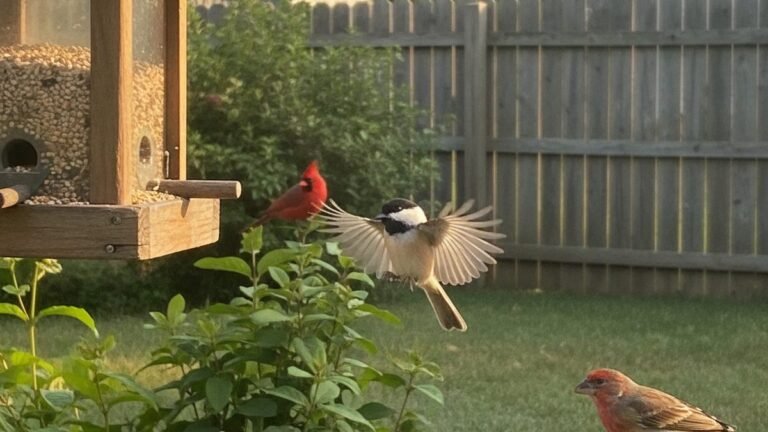
Any bird that visits a feeder can pick up germs from a dirty one, but flock feeders draw the most concern. House Finches are especially known for spreading eye disease at feeders, since they tend to gather in groups and share space at hopper and platform feeders.
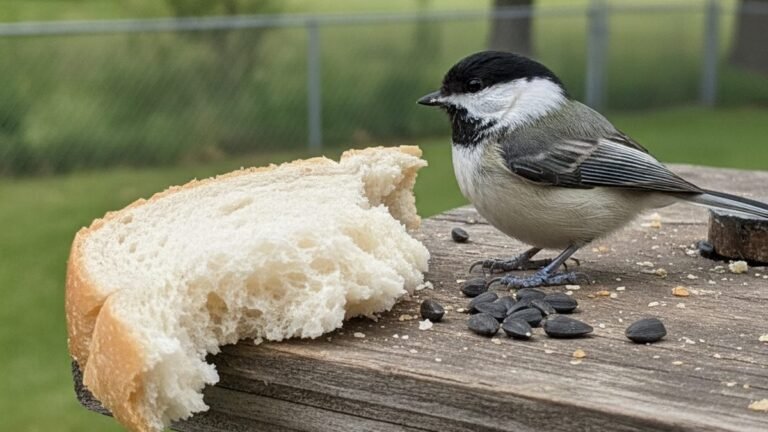
Chickadees, nuthatches, and goldfinches visit feeders often too, so they’re exposed just as regularly, even if they don’t get as much attention in disease studies. I’ve watched Black-capped Chickadees and White-breasted Nuthatches take turns at my feeders all day long during winter, which is exactly the kind of heavy traffic that makes cleaning matter.
How to Clean a Bird Feeder Step by Step
Here’s the process I use, and it works for hopper feeders, platform feeders, and tube feeders with only small adjustments.
1. Empty and Disassemble
Dump out all old seed first. Don’t just add fresh seed on top of old seed, even if it looks fine. Take the feeder apart as much as it allows, removing perches, trays, and ports.
2. Scrub With Hot, Soapy Water
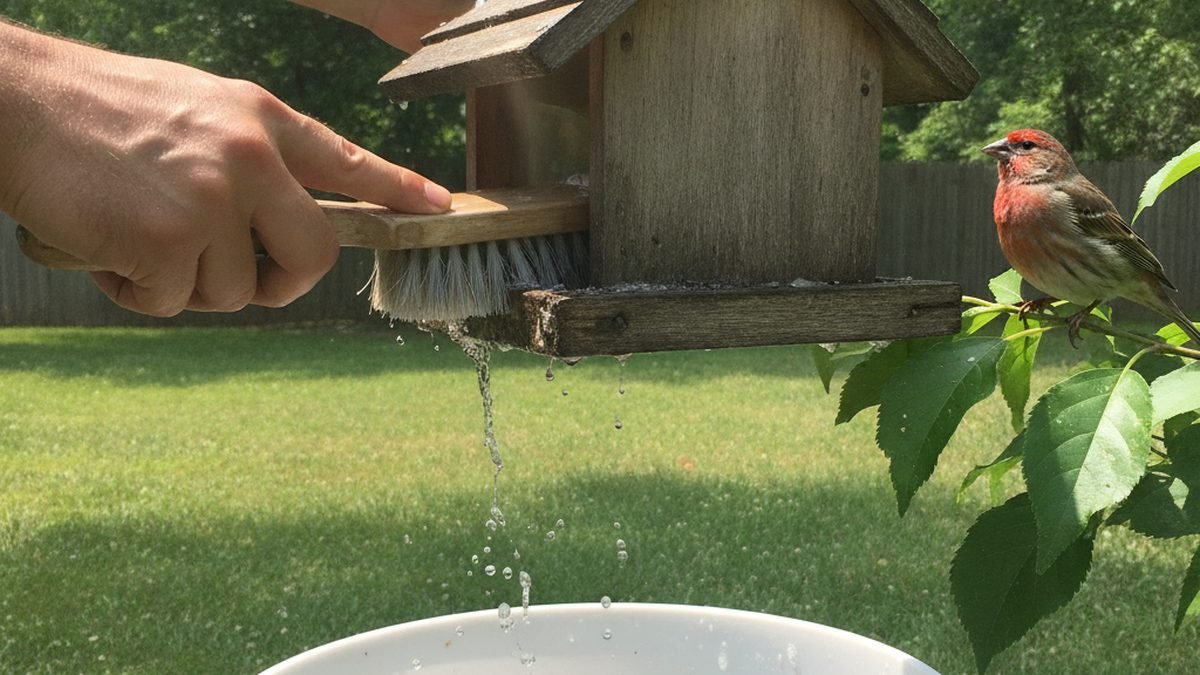
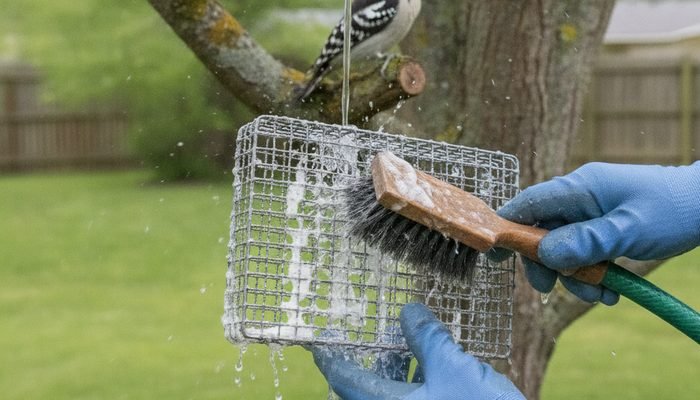
Use a bottle brush or an old toothbrush to scrub every surface, especially corners and feeding ports where grime hides. Dish soap and hot water handle most of the job.
3. Disinfect With a Diluted Bleach Solution
Mix one part bleach to nine parts water. Soak the feeder parts for about 10 minutes. This kills mold spores and bacteria that soap alone won’t remove.
4. Rinse Thoroughly
Rinse every part several times under running water. Leftover bleach residue can irritate birds, so don’t skip this step.
5. Dry Completely Before Refilling
This part matters more than people think. Damp seed inside a feeder is exactly what causes mold in the first place. I let mine air dry outside in the sun for a few hours before I put seed back in.
Cleaning Suet Cages and Nyjer Tube Feeders
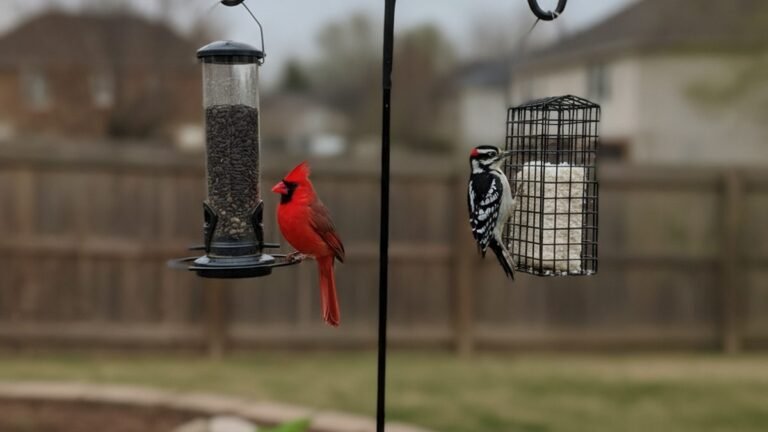
Suet cages get greasy fast, especially in summer heat. Scrub them with hot soapy water and a stiff brush, then rinse well. Check them more often between deep cleanings since fat residue attracts bacteria quickly.
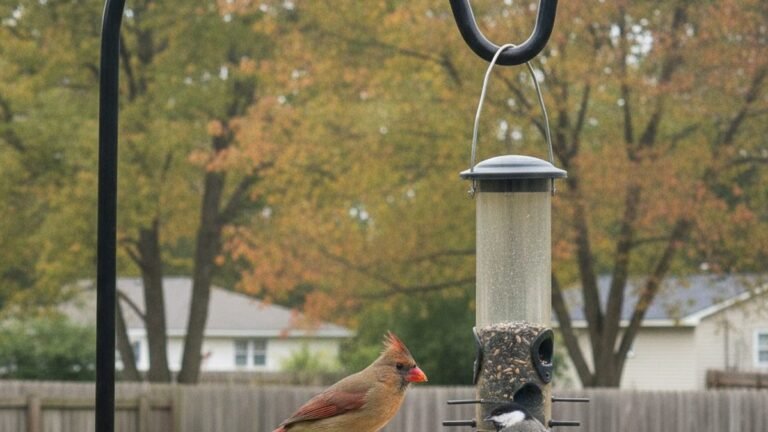
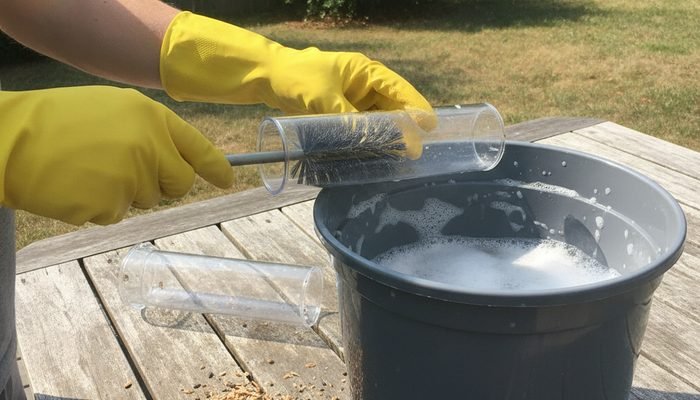
My nyjer tube feeder for goldfinches needs a slightly gentler touch, since the tiny feeding ports clog easily with old husks. I run a bottle brush through the tube itself and rinse the ports under a strong stream of water to clear any packed seed. For more on feeder styles and what maintenance each one needs, this guide on different types of bird feeders breaks it down well.
Don’t Forget the Birdbath
A birdbath needs cleaning even more often than feeders, since standing water grows algae and bacteria fast, especially in warm weather. I scrub my pedestal birdbath with a brush and change the water every two to three days in summer. Mosquitoes can start breeding in stagnant water in under a week, which is one more reason not to let it sit.
How Often Should You Clean a Bird Feeder?
As a baseline, clean feeders every two weeks. Audubon and Cornell Lab both recommend stepping that up during humid summer months or after any rain gets seed wet, since mold grows fast in warm, damp conditions.
If you notice sick or lethargic birds at your feeders, or you spot moldy seed, clean immediately and consider taking the feeder down for a few days to let birds disperse. This is one of the mistakes I cover in more detail in this piece on common bird feeding mistakes, since skipping cleanings is one of the most frequent ones I hear about.
Is Regular Cleaning Worth the Effort?
Yes, without question. It’s one of the cheapest, easiest things you can do to keep your yard’s birds healthy. It takes me about 15 minutes per feeder, and I do it while my coffee’s brewing on a Saturday morning.
Compare that small time cost to the risk of an outbreak among your regular visitors, and it’s an easy call. If you’re just getting started with feeding, this ties in well with the basics covered in how to start bird feeding, since good habits from day one save you trouble later.
Wrapping Up
Cleaning your feeders isn’t glamorous, but it’s one of the best things you can do for the birds in your yard. Set a reminder every two weeks, and don’t skip it just because the feeder looks fine from a distance. Your regular visitors, whether it’s chickadees, finches, or cardinals, will be healthier for it, and you’ll enjoy watching them a lot more knowing your setup is clean.
Frequently Asked Questions
How often should I clean my bird feeder?
Clean it at least every two weeks. In hot, humid, or rainy weather, clean weekly since mold and bacteria grow faster in damp conditions. If you see mold, clumped wet seed, or sick birds, clean it right away instead of waiting for your regular schedule.
Can I use just soap and water instead of bleach?
Soap and water removes dirt and grime, but it won’t reliably kill mold spores or bacteria like salmonella. A diluted bleach solution (one part bleach to nine parts water) is the standard recommendation from Cornell Lab and Audubon for a full disinfecting clean.
What happens if I don’t clean my bird feeder?
Old, wet seed molds and can make birds sick, including diseases like salmonellosis and avian conjunctivitis. Dirty feeders also attract more insects and can smell bad in warm weather. Regular cleaning keeps your feeder safe and pleasant for both birds and you.
Should I take my feeder down while cleaning?
Yes, take the whole feeder down to clean it properly rather than wiping it while it hangs. This also gives birds a short break and lets you check for any hidden mold or pest issues you might otherwise miss.