How to Attract Chickadees: 6 Tips That Actually Work
If you want to know how to attract chickadees, the short answer is this: offer black oil sunflower seed or suet in a small feeder, keep some brushy cover nearby, and give them fresh water. Chickadees are one of the easiest backyard birds to win over once you get a few basics right.
I’ve had Black-capped Chickadees at my feeders for over a decade now. They’re usually the first birds to show up when I hang something new, and honestly, they’re some of the boldest little visitors I get. Here are six tips that have worked in my own yard, based on how chickadees actually behave.
1. Offer Black Oil Sunflower Seed and Suet
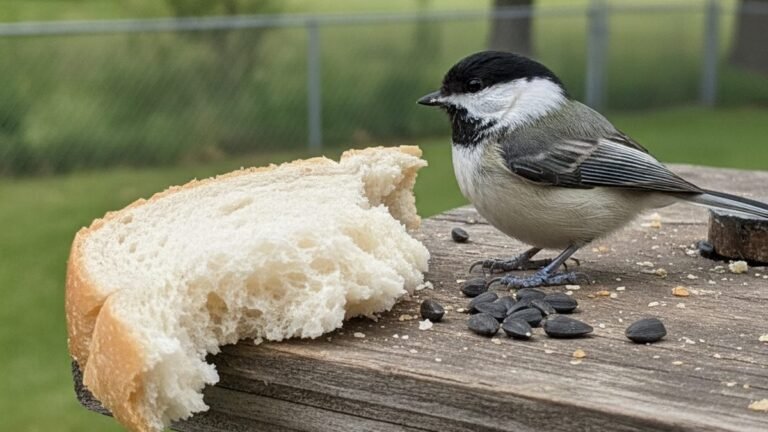
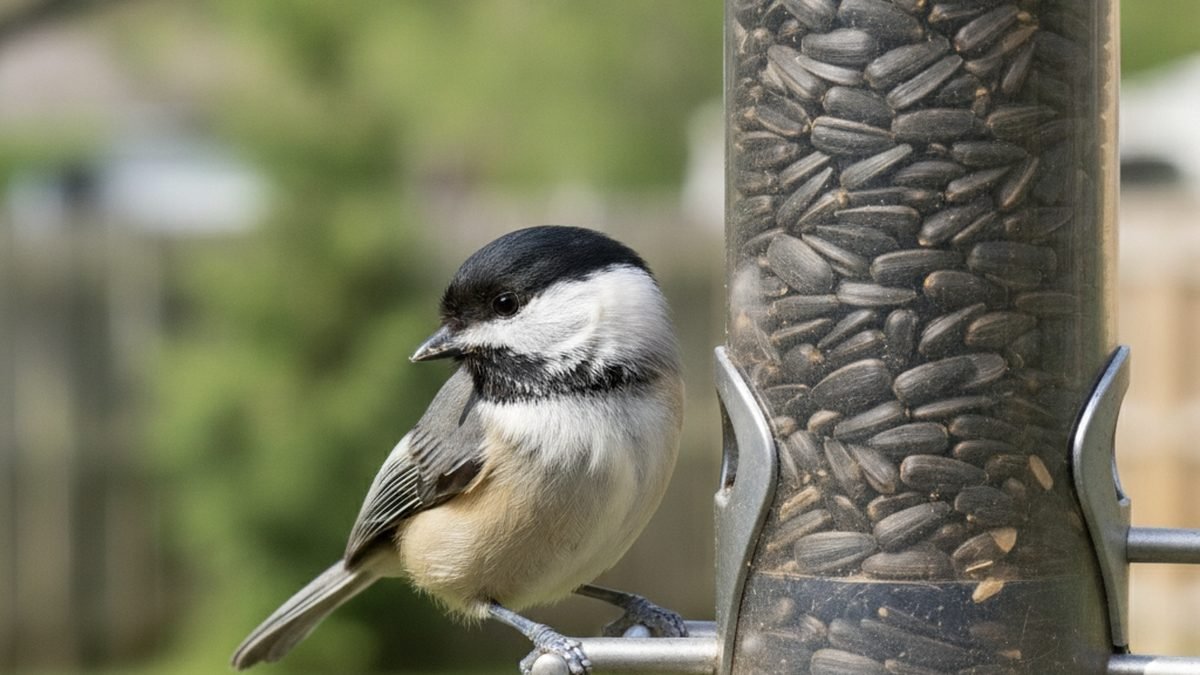
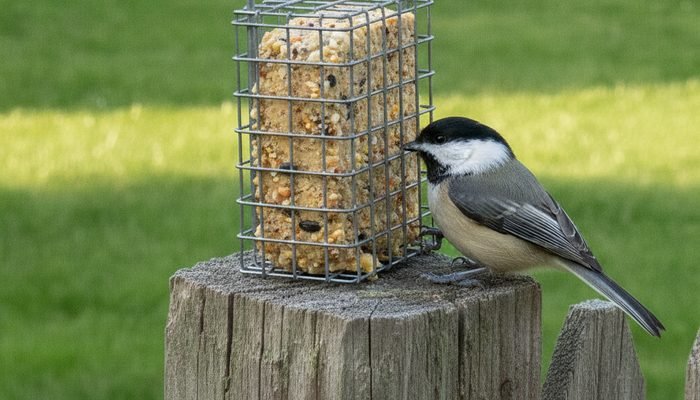
Chickadees love black oil sunflower seed more than almost anything else. The shells are thin, so they’re easy for a small bird to crack open with that tiny beak. Suet is their other favorite, especially in cold weather when they need fast energy.
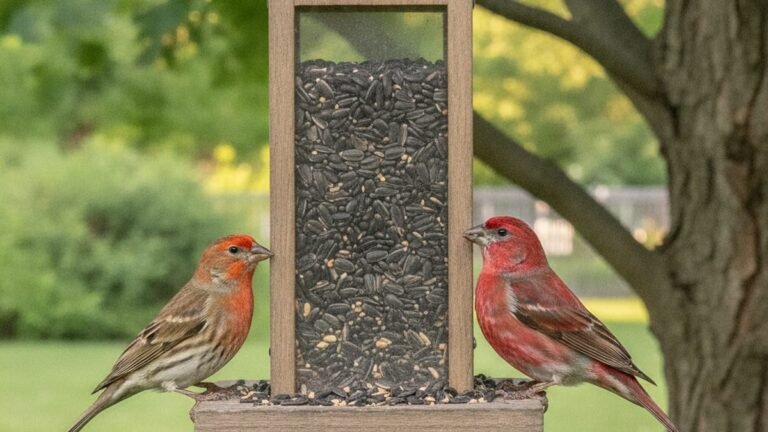
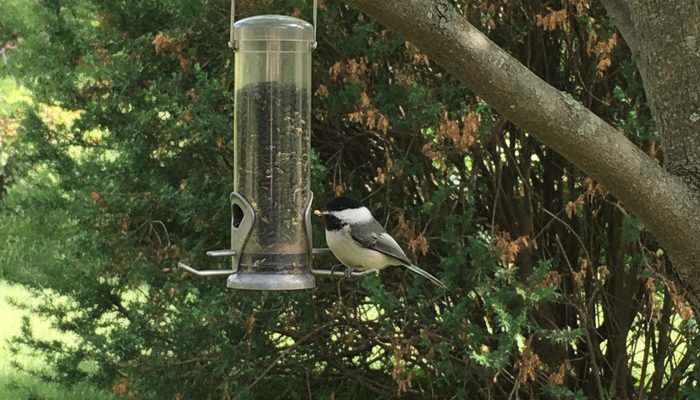
My tube feeder and suet cage both get regular chickadee visits. If I had to pick just one food to start with, it would be black oil sunflower seed. It pulls in Black-capped Chickadees, House Finches, and American Goldfinches all at once. For more detail on what different seeds attract, check out this bird seed guide.
Peanuts (shelled, unsalted) are another chickadee favorite. Cornell Lab of Ornithology notes that chickadees will cache extra food in bark crevices to eat later, so don’t be surprised if you see one grab a seed and fly off without eating it right away.
2. Use a Small Feeder They Can Grip Easily
Chickadees are tiny, usually under half an ounce. They do best on feeders with small perches or mesh they can cling to. A tube feeder with short perches works well, and so does a suet cage.
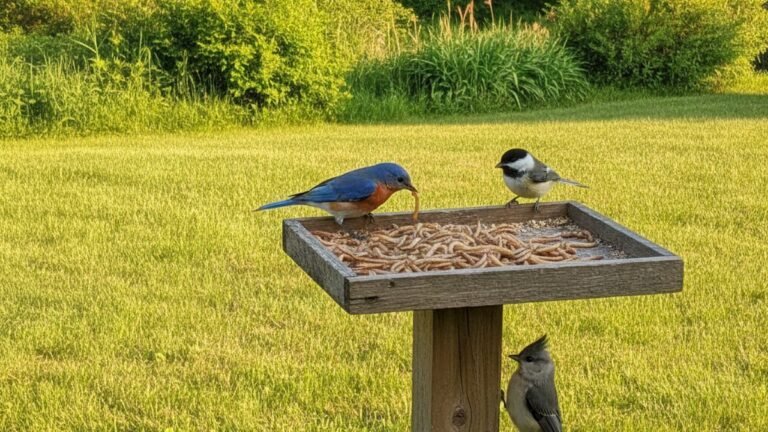
Platform feeders work too, since chickadees are happy to grab a seed and dash off to a nearby branch to eat it. If you’re not sure which feeder style fits your yard, this rundown of bird feeder types breaks down the pros and cons of each one.
3. Place the Feeder Near Trees or Shrubs
Chickadees like to feed, then retreat somewhere safe to eat or watch for danger. A feeder out in open space alone won’t feel safe to them.
My feeders hang near a mature maple tree, about 10 feet from the trunk. The chickadees use that tree as their staging area. They’ll swoop in, grab one seed, and zip back to a branch before eating it. Watching that pattern repeat over and over is oddly satisfying, kind of like watching a tiny, feathered assembly line.
Just remember the 3/30 rule when picking a spot. Keep feeders within 3 feet of a window or more than 30 feet away, so birds don’t misjudge the glass and collide with it. Cornell Lab and the Audubon Society both recommend this spacing. For more on placement, see this guide on where to place a bird feeder.
4. Keep Water Available Year-Round
Chickadees need water for drinking and bathing just like any other bird. A birdbath gives them a reliable spot, especially during dry summer stretches or freezing winter months when natural water sources ice over.
I keep one pedestal birdbath in my yard, and chickadees stop by it often, especially in summer heat. In winter, a heated birdbath or a bath with a de-icer keeps the water from freezing solid, which matters a lot once temperatures drop below freezing for weeks at a time.
5. Put Up a Nest Box in Late Winter
Black-capped Chickadees are cavity nesters. They’ll use a nest box readily if it’s the right size, with an entrance hole around 1 1/8 inches wide. Putting a box up in late winter, before nesting season starts in spring, gives them time to find and claim it.
Chickadees that nest nearby tend to stick around your yard year-round, since they don’t migrate far. That means more chickadees at your feeders once breeding season ends too.
6. Try Hand-Feeding Them
Chickadees are famous for becoming hand-tame faster than almost any other backyard bird. If you stand near a feeder with sunflower seeds in your open palm and stay still, a chickadee may eventually land right on your hand to grab one.
It takes patience. Start by standing quietly near the feeder for a few days so they get used to your presence. Then hold out seed and wait. Some folks report chickadees landing on their hand within a week or two, while others take longer. Either way, it’s one of the most rewarding things you can do in backyard bird feeding, and it costs nothing but time.
How Long It Takes to Attract Chickadees
Chickadees are curious and quick to check out new feeders. In my experience, they’re often among the first birds to investigate a new feeder, sometimes within days. If your yard already has some tree cover nearby, you may see chickadees before you see any other species.
If nothing shows up after a couple weeks, the problem is usually food choice, feeder placement, or a lack of nearby cover. This guide on why birds aren’t coming to your feeder walks through the most common fixes.
Wrapping Up
Chickadees are one of the most rewarding birds to bring into your yard because they respond so quickly and get so comfortable around people. Start with black oil sunflower seed, give them some nearby cover, and keep your feeders in a safe spot. Once they settle in, don’t be surprised if they’re the first ones waiting when you refill the feeder each morning.
Frequently Asked Questions
What is the best food to attract chickadees?
Black oil sunflower seed is the top choice. It’s easy for chickadees to crack open and packed with fat and protein. Suet and unsalted peanuts are close seconds, especially in colder months when chickadees need extra calories to stay warm.
Do chickadees prefer certain feeder types?
Chickadees do well on tube feeders, suet cages, and platform feeders. They need small perches or clinging surfaces since they’re such tiny birds. Avoid feeders with only large perches, since chickadees may struggle to grip them comfortably.
Will chickadees really land on my hand?
Yes, chickadees are known for becoming hand-tame with patience. Stand near a feeder holding seed in an open palm and stay still. It may take days or weeks, but many backyard birders report chickadees eventually landing to grab a seed.
Do chickadees migrate away in winter?
Black-capped Chickadees generally stay in their territory year-round and don’t migrate long distances. This means if you attract them to your yard, they’re likely to stick around through winter, especially if you keep feeders and water available.