How to Attract Woodpeckers: The Complete Guide
If you want to know how to attract woodpeckers, the short answer is suet, dead wood, and patience. These birds come for high-fat food and the right kind of trees, and once they find a reliable spot they tend to stick around.
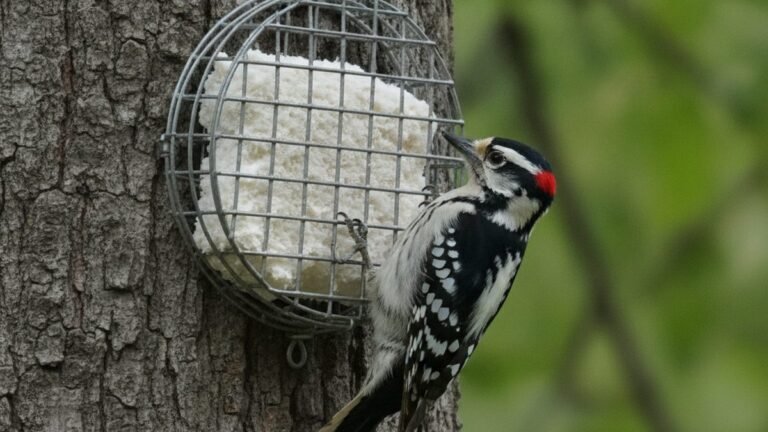
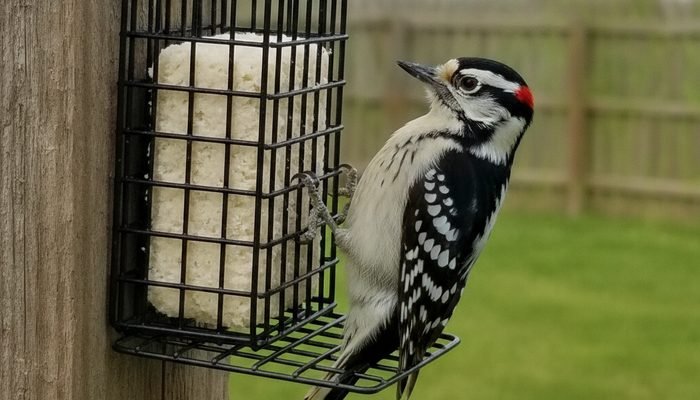
I’ve had Downy Woodpeckers working my suet cage for years. They show up almost every morning, usually right after the chickadees clear out. Getting that first visit took a few weeks of trial and error, so I want to save you some of that time.
What Woodpeckers Eat
Woodpeckers eat insects, larvae, tree sap, nuts, and berries in the wild. They drill into bark and dead wood to find beetle grubs and ants. That’s their main protein source most of the year.
In a backyard setting, suet is the closest thing to their natural diet. Beef suet mixed with seeds and sometimes dried fruit gives them the fat and protein they need, especially in cold months when insects are scarce. Cornell Lab of Ornithology notes that suet is one of the most effective foods for drawing woodpeckers to feeders.
Peanuts (shelled or in the shell) are another favorite. Black oil sunflower seeds work too, though woodpeckers usually rank them below suet and peanuts. If you’re curious what other birds go for those seeds, I cover it in my sunflower seed guide.
Best Feeder Type for Woodpeckers
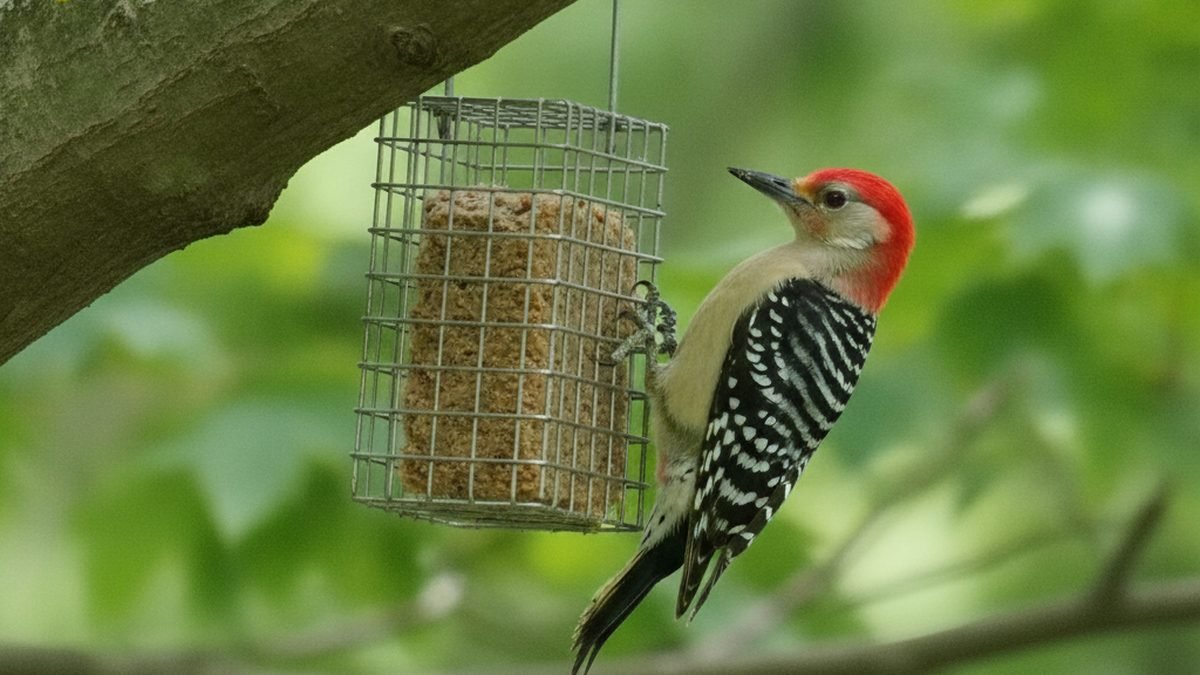
A suet cage is the best feeder for attracting woodpeckers. It’s a simple wire cage that holds a suet block and lets birds cling to the sides while they peck.
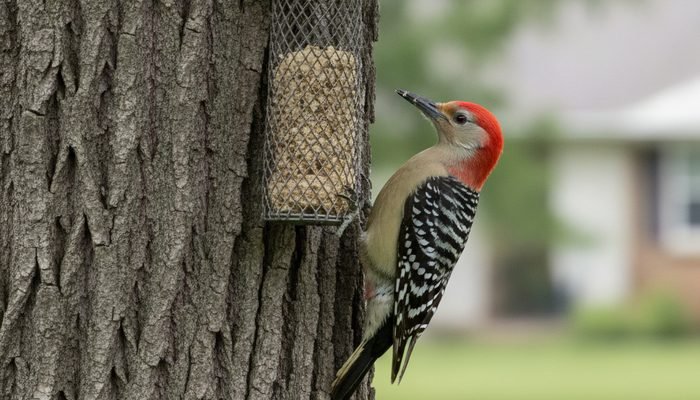
Look for a suet feeder with a tail prop, a small wire flap under the cage. Woodpeckers use their stiff tail feathers to brace themselves against tree bark, and that flap gives them the same kind of support. It makes a real difference in how long they stay at the feeder.
A platform feeder loaded with peanuts or peanut butter mix is a solid second option. My platform feeder gets less woodpecker traffic than the suet cage, but I’ve watched a Downy Woodpecker land on it for shelled peanuts more than once.
If you’re still building out your setup, my guide to feeder types breaks down which styles work best for which birds.
Where to Place the Feeder
Hang suet feeders near trees, not out in the open. Woodpeckers feel safest when they can move between the feeder and nearby bark or branches. My suet cage hangs near a mature maple, about 10 feet from the trunk, and that closeness seems to matter.
Keep feeders either within 3 feet of windows or more than 30 feet away. This is the standard rule from Audubon Society and Cornell Lab for preventing window strikes. A spot too close in the middle distance gives birds enough speed to hurt themselves if they spook and fly off.
I watch my feeders from the kitchen window across the yard, well outside that middle danger zone. If your feeders are already getting hit by birds, take a look at my window collision guide for fixes.
Extra Tips Specific to Woodpeckers
Leave a dead branch or snag standing if you can do it safely. Woodpeckers drill into dead wood for grubs and often use snags for nesting cavities. A live tree with one dead limb is actually valuable habitat, not an eyesore.
Offer suet without a lot of added filler. Cheap suet cakes are often padded with milo or wheat, which woodpeckers mostly ignore. Check the ingredient list and look for suet where fat and nuts are near the top.
Water helps too. My pedestal birdbath gets occasional woodpecker visits in summer, usually for a quick drink rather than a bath.
How Long It Takes to Attract Woodpeckers
In my experience, it can take anywhere from a few days to a few weeks for woodpeckers to find a new suet feeder. It depends on how many are already nesting or foraging nearby.
Project FeederWatch data shows woodpecker visits tend to increase in fall and winter when natural food sources drop off. If you set up suet in summer, don’t be discouraged if it’s slower to get noticed. Once one woodpecker finds it, though, it usually becomes a regular stop.
If weeks go by with no activity at all, something in your setup may be off. My troubleshooting guide covers the most common reasons birds skip a feeder entirely.
Wrapping Up
Attracting woodpeckers really comes down to good suet, a feeder they can grip, and a spot close to trees. Give it a few weeks and stay patient, especially if you’re starting in summer. Once they find your yard, they tend to become regulars, and watching a Downy Woodpecker work a suet cage never really gets old.
Frequently Asked Questions
What is the best food to attract woodpeckers?
Suet is the best food for attracting woodpeckers. It gives them the fat and protein they’d normally get from insects and grubs. Peanuts, shelled or in the shell, are a strong second choice. Avoid suet cakes padded with filler grains, since woodpeckers tend to skip those in favor of pure fat and nut blends.
Do woodpeckers use bird feeders?
Yes, woodpeckers regularly use suet cages and platform feeders stocked with peanuts. They’re less likely to use tube feeders or feeders without a place to grip. A feeder with a tail prop, which mimics tree bark support, tends to get the most consistent woodpecker visits.
How do I keep woodpeckers from pecking my house?
House pecking usually means a woodpecker is looking for insects in the siding or trying to establish territory. Offering suet nearby can redirect some of that activity. Removing dead or infested wood siding and using reflective tape near problem spots can also help discourage it.
What time of year are woodpeckers most active at feeders?
Woodpeckers visit feeders year-round, but activity often increases in fall and winter when natural insect food becomes scarce. Project FeederWatch reports higher woodpecker feeder visits during colder months. Spring activity can pick up too, when they’re feeding young and need extra protein.