How to Attract Goldfinches to Your Yard (5 Easy Tips)
If you want to know how to attract goldfinches, the short answer is nyjer seed, a tube feeder built for tiny beaks, and a little patience. American Goldfinches are picky eaters and creatures of habit, so the setup matters more than it does for most backyard birds.
I’ve had goldfinches working my tube feeder for years now, and July is actually one of the best months to reel them in. This is peak breeding season, so they’re feeding heavily and teaching fledglings where the good food is.
Here are five tips that actually move the needle, based on what these finches need and how they behave.
1. Offer Nyjer Seed (Not Just Sunflower)
Goldfinches are almost strict seed eaters, and nyjer (sometimes called thistle) is their favorite. It’s a tiny black seed packed with oil, and it fits their small, pointed beaks perfectly.
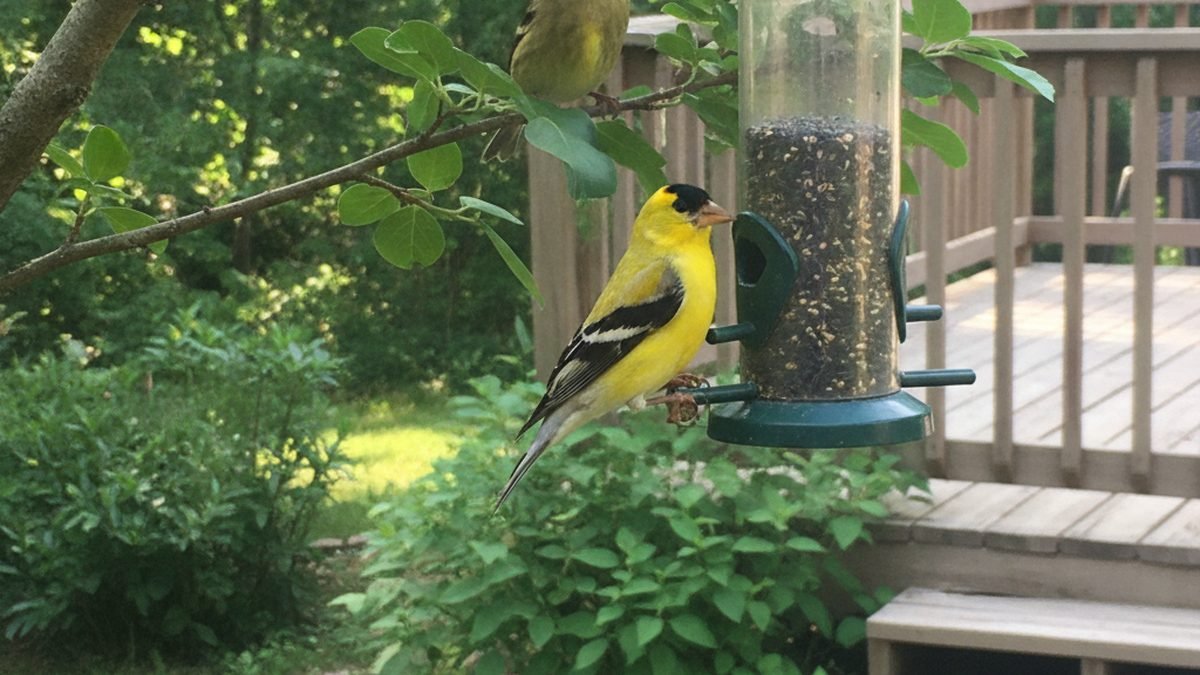
My tube feeder is filled with nyjer specifically for the goldfinches that visit, and it’s rare to see it go untouched for more than a day. Black oil sunflower seed works too, and goldfinches will eat it from a hopper or platform feeder if that’s what you have. But nyjer pulls them in faster and keeps them from wasting food, since there’s no shell to toss aside.
One catch: nyjer goes stale fast in heat and humidity. Buy small bags in summer and check that it still smells fresh, not musty.
2. Use a Feeder Made for Finches
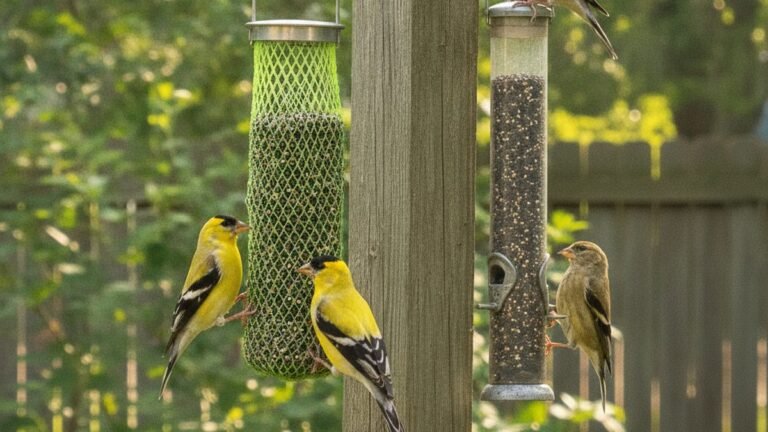
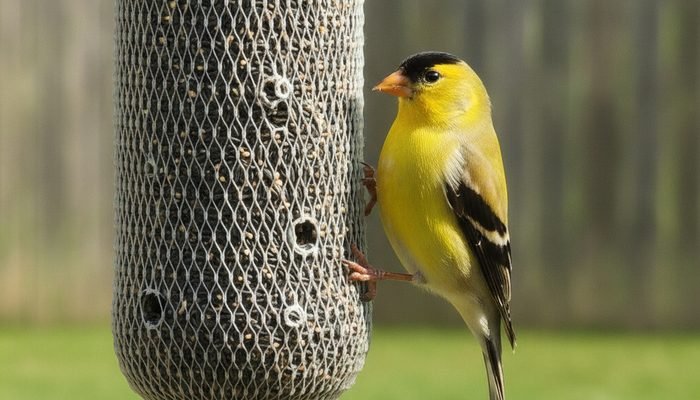
Feeder style matters a lot with this species. A mesh sock feeder or a tube feeder with small nyjer ports gives goldfinches a perch and a beak-sized opening. Regular feeder ports are often too big and let the tiny seed spill out.
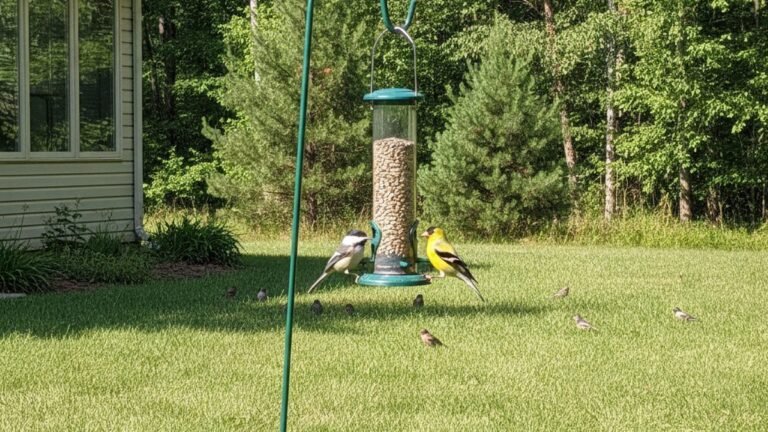
Tube feeders also keep goldfinches happy longer because several birds can perch and feed at once, which fits their social nature. If you’re still deciding on equipment, this guide to types of bird feeders breaks down which style fits which bird.
Cheap plastic finch feeders exist, but the ports crack in freezing weather and warp in summer heat. A sturdier metal-port tube feeder costs more up front but lasts through Upper Midwest winters and hot summers alike.
3. Place the Feeder Where Goldfinches Feel Safe
Goldfinches like some cover nearby, but they also want a clear flight path to spot hawks. I hang my tube feeder near a mature maple tree, about 10 feet out from the trunk, so the birds have both an escape route and a place to perch while they wait their turn.
Keep the feeder either within 3 feet of a window or more than 30 feet away. This is the standard rule from Cornell Lab of Ornithology and Audubon Society for preventing window strikes, since birds startled from a close feeder don’t build up enough speed to hurt themselves, and birds far away have more warning to veer off. If you want more detail on this, check out where to place a bird feeder for a full placement walkthrough.
4. Add Native Plants That Bloom Into Late Summer
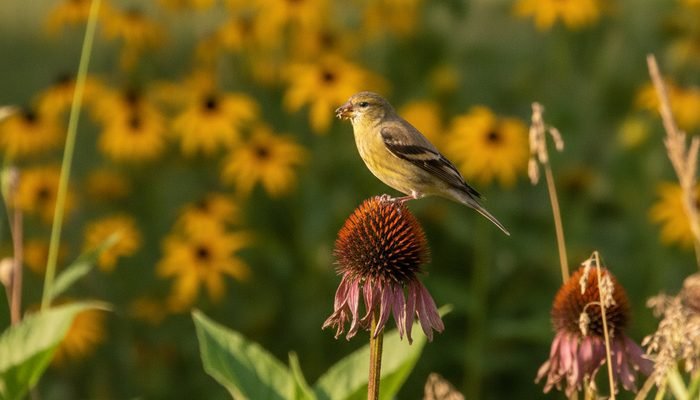
Goldfinches time their breeding season later than most songbirds, often into July and August, because they wait for seed-bearing plants to mature. Coneflowers, black-eyed Susans, and native thistle are natural magnets.
Letting a few flower heads go to seed instead of deadheading them gives goldfinches a free snack right in the garden. I leave a patch of coneflowers standing every year just for this reason, and it’s an easy way to supplement whatever’s in the feeder.
5. Keep Water Available and Feeders Clean
Goldfinches bathe and drink often, especially in summer heat. A birdbath gives them a reliable water source, and mine gets regular goldfinch visits alongside the usual cardinals and chickadees.
Clean nyjer feeders every couple of weeks in summer. Damp seed clumps and molds fast in humidity, and moldy seed can make birds sick. A quick scrub with warm water and a diluted vinegar rinse keeps things safe. For a broader list of setup slip-ups, see common bird feeding mistakes.
How Long It Takes to See Goldfinches
Once you put up a nyjer feeder in the right spot, it can take anywhere from a few days to a couple of weeks for goldfinches to find it. They travel in loose flocks and rely on other finches to lead them to food, so the first visitors are often the hardest to attract.
Project FeederWatch data shows goldfinch visits pick up through summer as breeding activity increases, so late July is actually a strong time to start. Don’t get discouraged if the feeder sits quiet the first week. Once one goldfinch finds it, more usually follow.
Wrapping Up
Attracting goldfinches really comes down to fresh nyjer, the right feeder, and a little patience while they find you. Once they do, they tend to stick around all summer, especially if you’ve got some coneflowers or thistle going to seed nearby. Keep that feeder clean and full, and you’ll likely have goldfinches as regulars for years to come.
Frequently Asked Questions
What is the best food to attract goldfinches?
Nyjer seed is the top choice for attracting American Goldfinches. It’s small, oil-rich, and fits their narrow beaks better than sunflower or mixed seed. Black oil sunflower seed is a solid backup if nyjer isn’t available, but nyjer in a proper finch feeder gets results faster.
Why won’t goldfinches come to my feeder?
The most common reasons are stale nyjer seed, the wrong feeder type, or poor placement. Nyjer loses its oil and smell within a few months, so old seed just sits there untouched. Make sure the feeder has small ports made for finches and sits near some cover with a clear flight path.
Do goldfinches use regular bird feeders?
Yes, but they prefer tube or mesh sock feeders designed for tiny seed. They can technically eat from a hopper or platform feeder stocked with sunflower seed, but they’re much less consistent visitors there compared to a dedicated nyjer feeder.
When is goldfinch breeding season?
American Goldfinches breed later than most songbirds, typically from late June through September. This is tied to the seed production of plants like thistle and coneflower, which they rely on for both food and nesting material.