The Complete Bird Seed Guide: What Every Seed Attracts
If you want one bird seed guide that actually explains what each seed does, here it is. Different seeds attract very different birds, and buying the wrong bag is the number one reason feeders sit empty.
I’ve run four feeders in my Upper Midwest backyard for over a decade, and I’ve dumped out my share of seed that nothing wanted. A hopper feeder, a tube feeder, a suet cage, and a platform feeder taught me fast that seed choice matters more than feeder choice. This guide covers every seed type you’ll actually find at the store, who eats it, and who ignores it.
By the end, you’ll know exactly which bag to grab for your yard instead of guessing at the pet store aisle.
Black-Oil Sunflower Seed: The One to Buy First
If you only buy one seed, make it black-oil sunflower. It has a thin shell and a high fat content, which makes it easy for small birds to crack and a great energy source in cold weather.
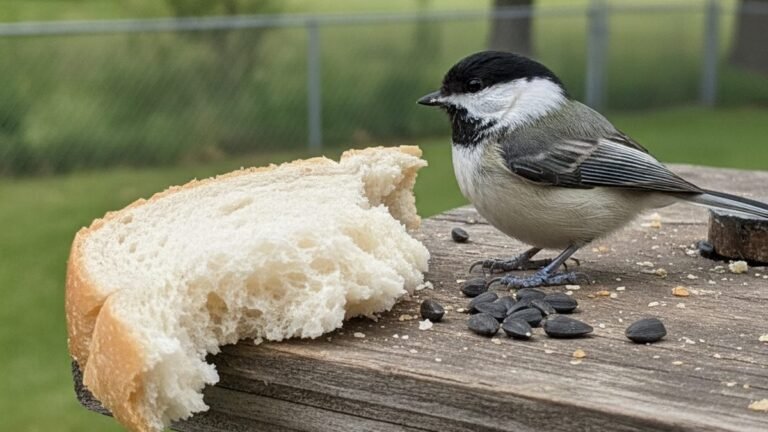
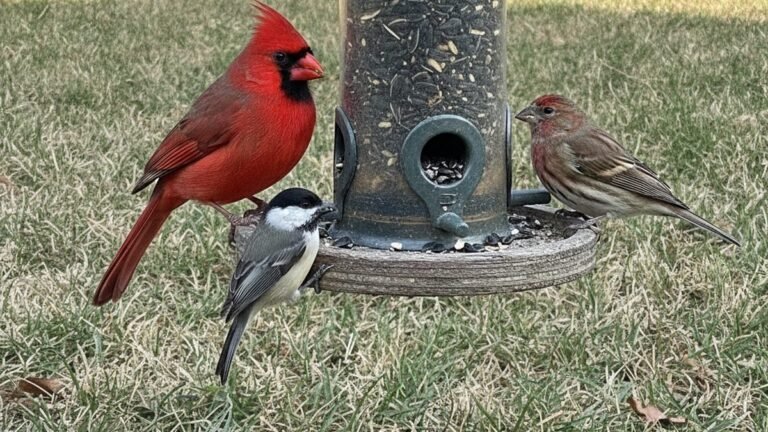
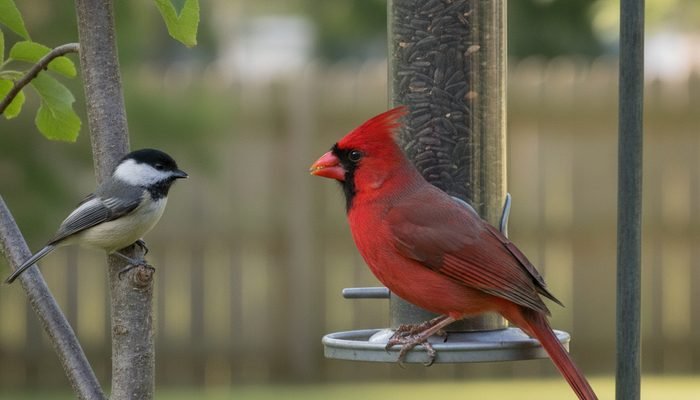
Cardinals, chickadees, nuthatches, House Finches, and woodpeckers all go for it. Blue Jays love it too, though they’ll take more than their share if you let them. In my yard, black-oil sunflower disappears from the hopper feeder faster than anything else I offer.
Striped sunflower seed has a thicker shell. Bigger birds like jays and grosbeaks can handle it, but it’s harder for smaller birds like chickadees to open. For a full breakdown of which species prefer which type, check out this guide to birds that eat sunflower seeds.
Nyjer Seed: The Goldfinch Magnet
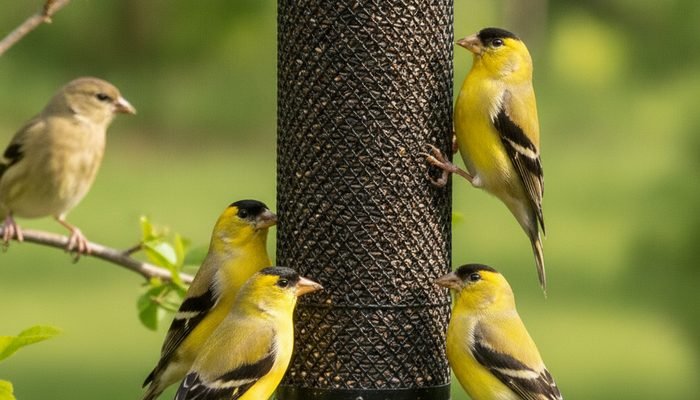
Nyjer (sometimes called thistle) is a tiny, black, oily seed. It’s the top choice for American Goldfinches, and it also draws in House Finches and Pine Siskins in winter.
You need a special tube feeder with small slotted ports for nyjer, or a mesh sock feeder. Regular feeder ports let the tiny seeds spill everywhere. My tube feeder is set up just for nyjer, and I watch goldfinches work it from my kitchen window most summer mornings.
One catch: nyjer goes stale fast. Buy small bags and store them somewhere cool and dry. If the goldfinches suddenly stop showing up, check the seed before you blame your setup. For more on that species specifically, see how to attract goldfinches.
Safflower Seed: The Squirrel and Blackbird Deterrent
Safflower is a white, cone-shaped seed with a bitter taste that squirrels and many blackbirds don’t care for. Cardinals, chickadees, and doves eat it happily.
This makes safflower a smart pick if squirrels keep raiding your feeders. It’s not squirrel-proof by any stretch, but it’s less appealing to them than sunflower seed. If squirrels are a real problem at your place, pair a safflower switch with the tips in how to keep squirrels away from bird feeders.
Some birds need time to warm up to safflower if they’re used to sunflower seed. Don’t be surprised if it takes a week or two to catch on.
White Millet: Good for Ground Feeders, Skip It in Tube Feeders
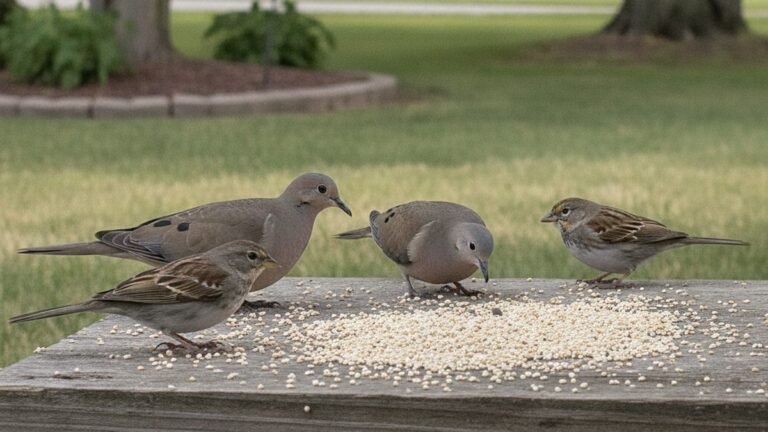
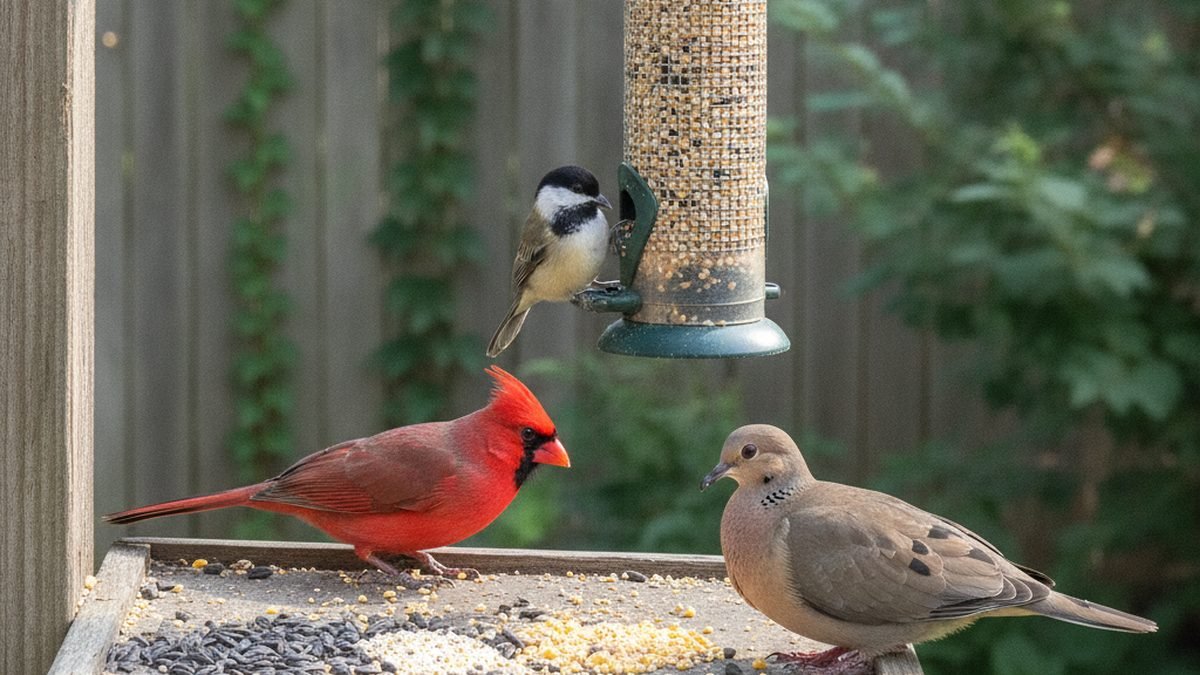
White millet is a small, round, pale seed. Mourning Doves, Dark-eyed Juncos, and sparrows eat it readily off the ground or a platform feeder.
Cardinals and finches mostly ignore it. If you put millet in a hopper or tube feeder, it often just gets kicked out onto the ground anyway, which is fine if you have a platform feeder or feed on open ground, but wasteful otherwise.
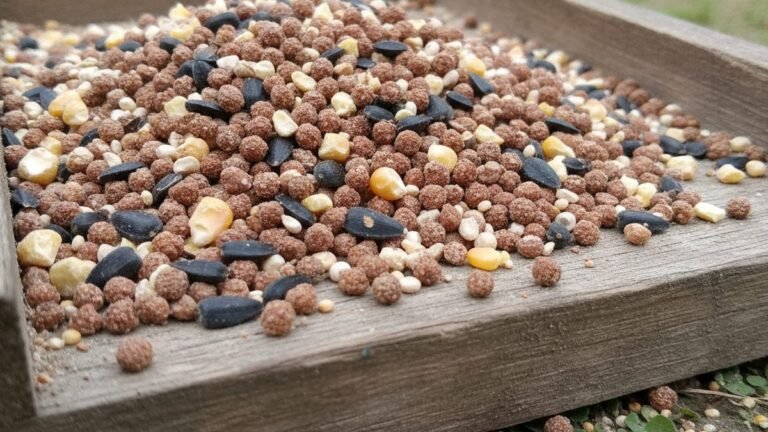
Millet is a common filler in cheap mixed bags. If you see a lot of small round seeds and little else, you’re likely paying for filler your target birds won’t touch.
Cracked Corn: A Ground-Feeding Staple (Use With Care)
Cracked corn brings in doves, juncos, jays, and sometimes woodpeckers. It’s cheap and filling.
The downside is that corn draws in less welcome visitors too, including raccoons and deer, and it can attract more House Sparrows and starlings than most people want. Wet cracked corn also molds fast, which isn’t good for birds or your yard.
I’d treat corn as an occasional platform feeder addition, not a main seed. Small amounts, checked often, work better than a big pile that sits out for days.
Peanuts (Shelled and In-Shell): High Energy for Bigger Birds
Peanuts are a favorite of Blue Jays, woodpeckers, nuthatches, and chickadees. They’re high in fat and protein, great for cold months.
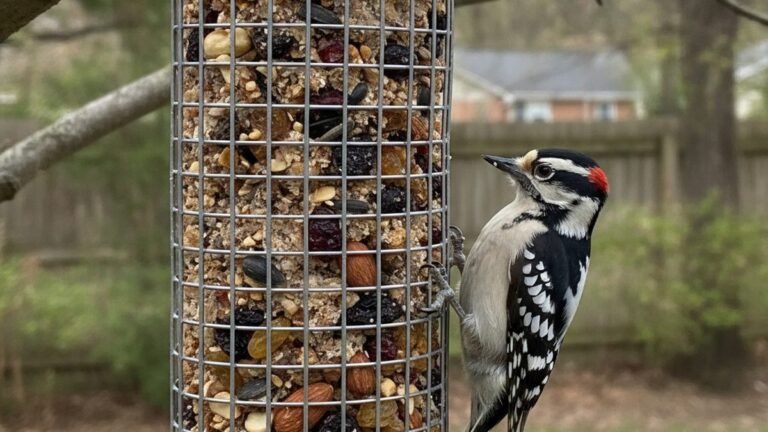
Shelled peanut pieces work in most feeders. Whole in-shell peanuts usually need a wire mesh feeder built for them, since jays and woodpeckers will happily hammer the shells open themselves. If jays are regulars at your place, this guide on attracting Blue Jays covers peanut feeding in more depth.
Buy peanuts labeled for birds, not the salted snack kind from the grocery store. Salt and added oils aren’t good for them.
Milo (Sorghum): The Seed Most Birds Skip
Milo is a round, reddish seed used as cheap filler in many big-box mixed bags. Most backyard birds in the Upper Midwest and Northeast ignore it completely. Some ground-feeding birds out West, like quail, will eat it, but for most yards it just sits there or gets kicked to the ground.
If a mixed bag lists milo as one of the first ingredients, it’s probably not a great value even if the price looks good.
Nuts and Tree Seeds (Beyond Peanuts)
Chopped walnuts, pecans, and almonds show up in some premium mixes. Woodpeckers, nuthatches, and jays will eat them. They’re pricier than sunflower or peanuts, so I treat them as an occasional treat mixed into suet rather than a everyday offering.
Whole almonds and hard nuts should be chopped first. Whole nuts are hard for smaller birds to manage and can be a choking risk.
What About Mixed Bags?
Not all mixed bags are created equal. Good mixes lead with sunflower seed and add smaller amounts of millet, peanuts, or safflower. Cheap mixes lead with milo and corn, which most birds pick around to get to the good stuff.
Flip the bag over and read the ingredient list before you buy. If you see milo or wheat listed first, put it back. For a broader look at setting up feeders the right way from day one, this beginner’s guide to starting bird feeding is a good next stop.
Which Birds Ignore Which Seeds
It helps to know what your regulars will walk right past. Cardinals and finches largely ignore milo and wheat. Chickadees rarely bother with cracked corn. Goldfinches stick close to nyjer and small sunflower chips, and mostly skip millet and corn.
Ground feeders like doves and juncos are the exception. They’ll clean up millet and cracked corn that other birds leave behind, so nothing goes to waste if you scatter a little on a platform feeder or the ground below.
How to Offer Seed So It Doesn’t Go to Waste
Match the seed to the feeder. Nyjer needs a nyjer tube feeder. Sunflower and mixed seed work in hoppers and tube feeders. Millet, corn, and safflower do best scattered on a platform feeder or low table.
Keep seed dry. Wet seed molds fast and can make birds sick, according to guidance from Cornell Lab of Ornithology. I only fill my feeders with as much as will get eaten in a few days, especially in humid summer stretches.
If your feeders are sitting mostly empty no matter what you fill them with, the problem might not be the seed at all. Check why birds aren’t coming to your feeder and where to place your bird feeder for other common culprits.
Is It Worth Buying Specialty Seed? (Sam’s Verdict)
Black-oil sunflower is worth buying every time. It’s the closest thing to a sure bet across most of the country, and Project FeederWatch data consistently shows it as one of the top draws for common feeder birds.
Nyjer is worth it only if you specifically want goldfinches or siskins, since almost nothing else eats it. Safflower is worth the higher price if squirrels or blackbirds are wearing out your patience. Skip milo-heavy mixes and straight cracked corn unless you’re specifically feeding ground birds in an open area.
My honest take: a bag of black-oil sunflower in the hopper, nyjer in the tube feeder, and suet in the cage covers almost every regular yard bird without much waste.
Wrapping Up
Picking the right seed isn’t complicated once you know what each type does. Start with black-oil sunflower, add nyjer if you want goldfinches, and go easy on the filler-heavy mixes. Watch what actually disappears from your feeders and let that guide your next purchase. That’s really all the science you need.
Frequently Asked Questions
What is the best all-around bird seed?
Black-oil sunflower seed is the best all-around choice. It has a thin shell that’s easy for small birds to crack and high fat content for energy. It attracts cardinals, chickadees, nuthatches, finches, and more, making it the safest single bag to buy.
Why do birds avoid some seed in my mixed bag?
Cheap mixes often use milo, wheat, or excess cracked corn as filler. Most common feeder birds skip these and leave them behind. Check the ingredient list and pick mixes where sunflower seed is listed first.
Does the type of seed really matter that much?
Yes. Different birds have different beak shapes and preferences. A goldfinch can’t efficiently eat cracked corn, and a dove has little use for nyjer. Matching seed to the birds you want is more effective than buying whatever’s cheapest.
How long does bird seed stay fresh?
It depends on storage, but most seed stays fresh for a few months in a cool, dry container. Nyjer loses its oil content and appeal faster than sunflower seed. Buy smaller bags if you can’t go through seed within a couple months.