10 Birds That Mate for Life (With Photos)
Birds that mate for life stick with the same partner for one or more breeding seasons, and in some species, for their entire lives. This list covers 10 real examples, from backyard regulars to birds you’ll only see near water or in the far north.
I’ve watched the same pair of Northern Cardinals return to my yard for at least three summers now. I can’t prove it’s the exact same two birds every time, but their behavior around my platform feeder sure looks like an old married couple who know each other’s habits.
Not all bird pairs are loyal for the same reasons or the same length of time. Some stay together because raising chicks takes two parents working nonstop. Others just don’t bother finding a new mate if the old one is still around and the nesting spot still works. Let’s get into the list.
1. Northern Cardinal
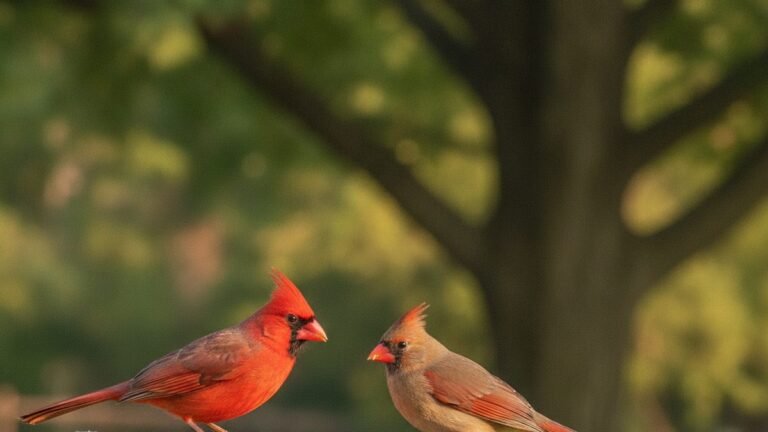
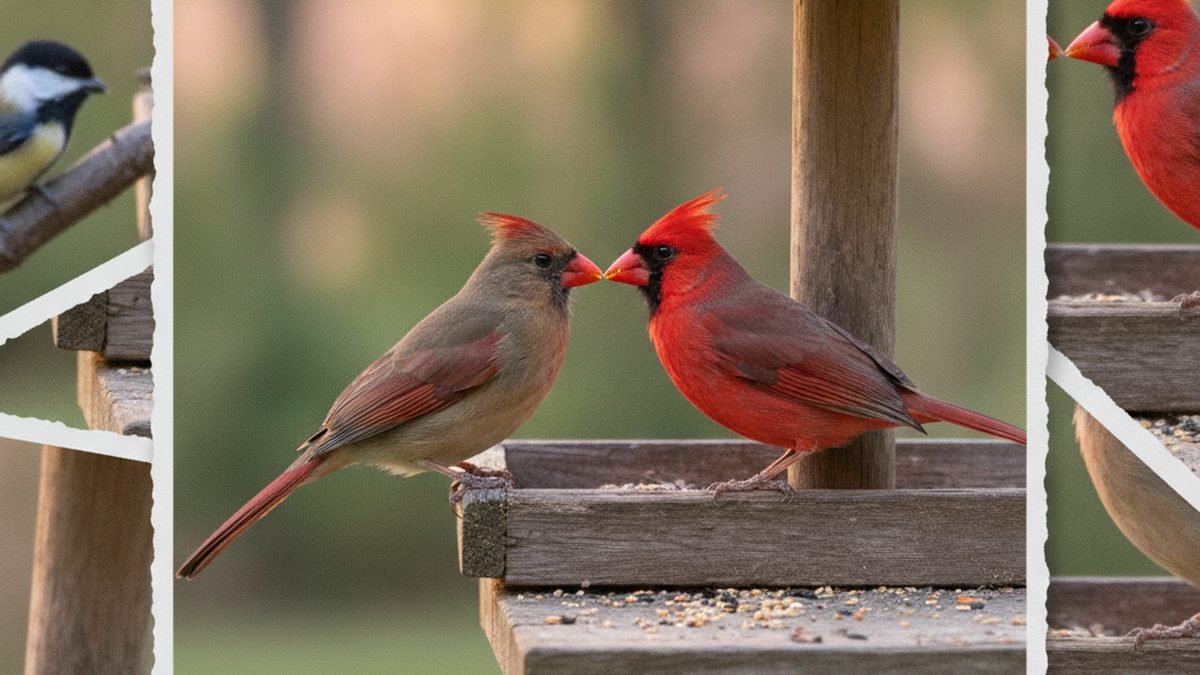
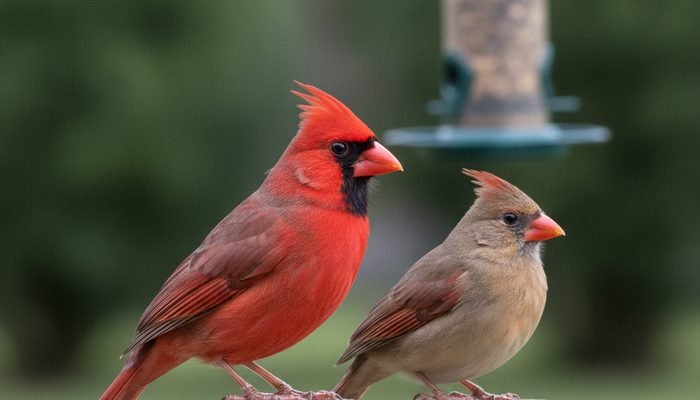
Northern Cardinals are easy to identify. Males are bright red with a black face mask, females are soft brown with red highlights on the wings and crest. Both have that short, thick, orange-red beak built for cracking seeds.
Cardinal pairs often stay together for a full breeding season, and many pairs reunite the next year if both birds survive the winter. Cornell Lab of Ornithology notes that some pairs stick together year-round, even outside of breeding.
In my own yard, I see cardinal pairs show up together at the platform feeder well before nesting starts. The male will sometimes pick out a sunflower seed and pass it to the female beak to beak. It’s one of my favorite things to watch all spring.
2. Black-capped Chickadee
Black-capped Chickadees are small, gray and white birds with a black cap and bib. They’re one of the easiest backyard birds to identify by sound, thanks to their clear “chick-a-dee-dee-dee” call.
Chickadee pairs form in fall and often stay bonded through the following breeding season. Research from Project FeederWatch and university field studies has tracked banded chickadees returning to the same mate across multiple years, though it’s not guaranteed for life.
My chickadees visit the tube feeder and suet cage in pairs most of the year, even in winter when they’re technically part of a bigger flock. You’ll usually see two break off from the group together.
3. Mourning Dove
Mourning Doves are soft gray-brown birds with a small head, long pointed tail, and a gentle cooing call. They’re one of the most common birds at feeders across the country.
Mourning Dove pairs form a strong bond during breeding season and often raise several broods together in a single summer. Some pairs stay together beyond one season if both birds survive migration and winter.
I get Mourning Doves at my platform feeder almost daily, and they’re often sitting close together, shoulder to shoulder, which is a pretty good clue you’re looking at a mated pair.
4. Bald Eagle
Bald Eagles are large raptors with a dark brown body, white head and tail, and a heavy yellow beak. Adults don’t get their full white head until about four or five years old.
Bald Eagle pairs are famous for mating for life and reusing the same massive nest year after year, adding new sticks each season. Audubon Society notes that if one eagle dies, the survivor will typically find a new mate rather than staying alone.
Feeder watchers in eagle territory often report the same nesting pair returning to a local nest site for over a decade, which is pretty remarkable for a wild bird.
5. Canada Goose
Canada Geese are large waterfowl with a black head and neck, white chinstrap, and brown body. Most people know them from local parks, golf courses, and ponds.
Canada Geese form long-term pair bonds and often mate for life. Both parents guard the goslings closely, which is part of why an angry goose defending its family has become something of a running joke online.
You’ll often see mated pairs standing close together even outside of nesting season, and they tend to migrate together as a pair within the larger flock.
6. Trumpeter Swan
Trumpeter Swans are the largest native waterfowl in North America, all white with a black beak and a deep trumpeting call. They need large, quiet wetlands to breed successfully.
Trumpeter Swans typically pair for life and both parents share duties raising the cygnets. If a mate dies, the surviving swan usually finds a new partner within a season or two rather than remaining single.
Feeder watchers in the northern states and Canada sometimes get to see these pairs on local lakes in early spring, often before the ice fully melts.
7. Laysan Albatross
Laysan Albatrosses are large seabirds with a white body, dark upper wings, and a pink beak. They spend most of their life over open ocean and only come to land to breed.
Laysan Albatross pairs go through an elaborate, synchronized courtship dance to strengthen their bond before choosing to stick together for many breeding seasons. Because chicks take so long to raise, a stable partnership matters a lot for this species.
Researchers studying colonies in the Pacific have tracked some pairs staying together for well over a decade, which is a long commitment for a bird that spends most of its life alone at sea.
8. Barn Owl
Barn Owls have a pale, heart-shaped face, golden-buff back, and white underparts. Their eerie screech (not a hoot) is a giveaway if you hear one at night.
Barn Owl pairs often stay together across multiple breeding seasons as long as food supply and nesting sites remain good. If prey is scarce, some pairs will separate, which shows the bond is practical as much as it is loyal.
They’re not common feeder visitors, but if you have an open barn, silo, or nest box on rural property, a Barn Owl pair may return to the same site year after year.
9. Sandhill Crane
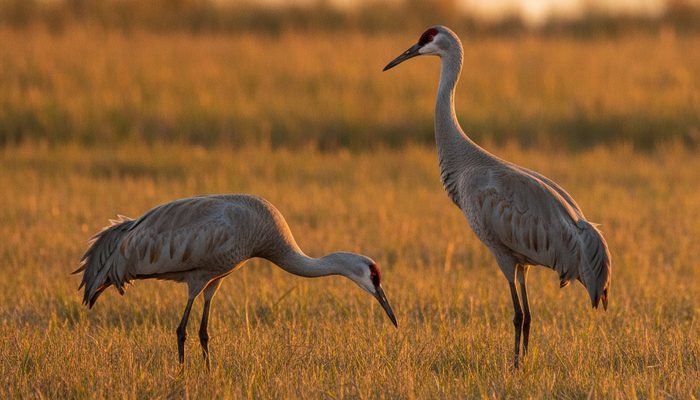
Sandhill Cranes are tall, gray birds with a red patch on the forehead and a loud, rolling bugle call you can hear from a long distance. They’re often seen in open fields and wetlands.
Sandhill Cranes are known for mating for life and performing an elaborate dance, including jumps, wing flaps, and bows, as part of their bonding display. Pairs work together to defend territory and raise their chicks, called colts.
If you live along a major migration route, you may spot pairs moving together in large flocks during spring and fall, often staying close even in a crowd of hundreds of birds.
10. Atlantic Puffin
Atlantic Puffins are small seabirds with a black and white body and a colorful orange and gray beak during breeding season. They nest in burrows on coastal cliffs and islands.
Atlantic Puffins often reunite with the same mate at the same burrow year after year, even though the pair spends the winter apart out on the open ocean. Reuniting at a shared nest site each spring is one of the clearest signs of a lasting pair bond in seabirds.
Puffins won’t show up at a backyard feeder, but coastal birders in the northeast and eastern Canada often watch for the same banded pairs returning each nesting season.
Why Do Some Birds Mate for Life?
Birds that mate for life usually share one thing in common: raising young is hard work that goes better with two parents. Species with long chick-rearing periods, tricky nest sites, or migrations to coordinate benefit from sticking with a partner who already knows the drill.
It’s less about romance and more about efficiency. A pair that already trusts each other doesn’t waste a whole season figuring out how to work together. That’s a good trade-off in the wild, where time and energy are always tight.
If you want to watch pair behavior yourself, backyard species like Northern Cardinals and Black-capped Chickadees are your best bet. Setting up feeders that keep pairs coming back is a good start. Check out our guide on where to place a bird feeder if you want more birds, including pairs, to settle into your yard.
How to Spot a Mated Pair at Your Feeder
Mated pairs often show up together, feed close to each other, and take turns rather than fighting over the same spot. Watch for a male offering food directly to a female, which is common in cardinals during early spring.
You might also notice one bird standing guard nearby while the other eats. That’s a pair bond in action, not just two birds who happen to be hungry at the same time.
If you’re trying to attract more pairs of specific species, our articles on attracting Blue Jays to your yard and tips for attracting hummingbirds cover feeder setups and food choices that help.
Wrapping Up
Watching bird pairs is one of the simple joys of feeding birds. Once you know what to look for, you’ll start noticing pair behavior everywhere, from cardinals sharing seeds to doves sitting shoulder to shoulder. Keep your feeders stocked and your birdbath clean, and you’ll have a front row seat to some pretty devoted backyard relationships.
Frequently Asked Questions
Do birds really mate for life?
Some species do stay with one partner for years or even a lifetime, but it’s not as simple as human marriage. Cornell Lab of Ornithology notes that many so-called lifelong pairs will accept a new mate if their partner dies or if breeding fails repeatedly. Loyalty is common, but it’s practical, not romantic.
What happens if one bird in a mated pair dies?
Most species that pair for life will find a new mate rather than staying single. This is true even for swans and geese, which have strong pair bonds. Finding a new partner helps the surviving bird keep breeding and raising young, which is the main point of the bond in the first place.
Which backyard birds mate for life?
Northern Cardinals often keep the same mate for one or more breeding seasons, and Black-capped Chickadees form pairs that can last through several nesting seasons. Neither is guaranteed for life, but both show more loyalty than many people expect from small songbirds.
Why do some birds mate for life while others don’t?
Species that need two parents to raise young successfully tend to form longer pair bonds. Birds like geese and albatrosses have long childhoods for their chicks or complicated nesting needs, so sticking with a partner that already knows the routine saves time and energy each season.