The 7 Types of Bird Feeders Explained
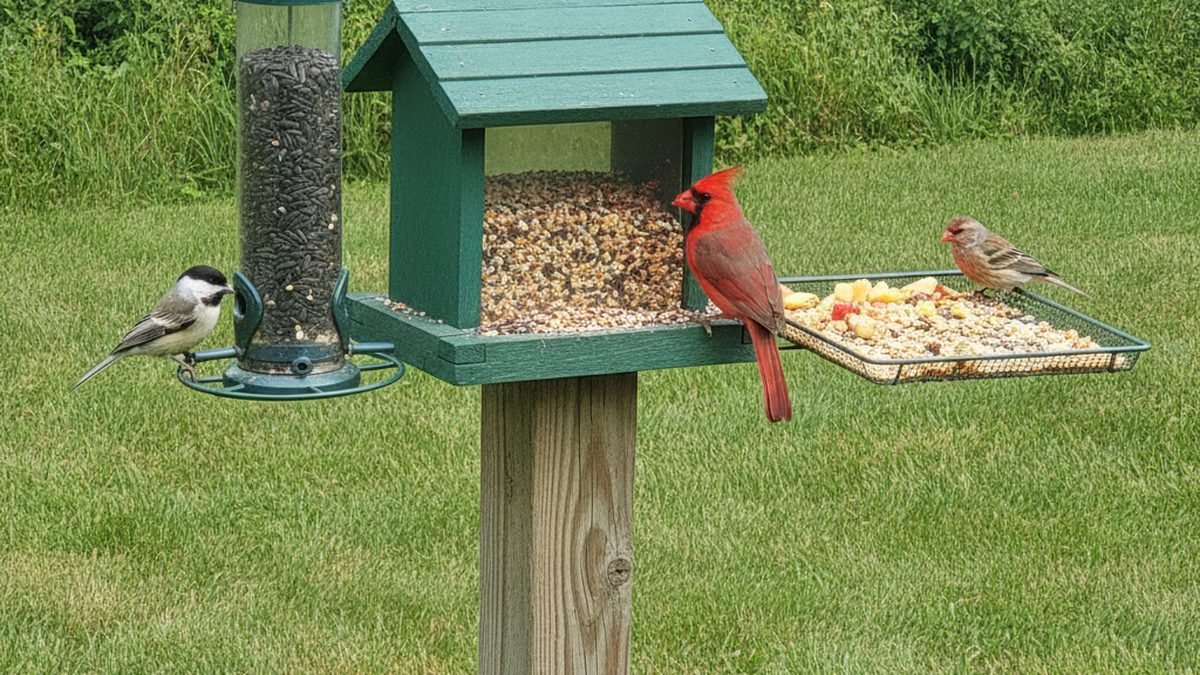
There are seven main types of bird feeders: tube, hopper, platform, suet, nyjer/finch, window, and specialty feeders like ground trays and window boxes. Each one attracts a different mix of birds depending on the seed it holds and how birds are built to feed.
I run four feeders in my own yard near a mature maple tree: a hopper, a tube, a suet cage, and a platform. Every single one pulls in different birds, which is honestly the fun part. Once you know what each style does best, picking the right one for your yard gets a lot easier.
This guide breaks down all seven types so you can stop guessing and start matching feeders to the birds you actually want to see.
1. Tube Feeders
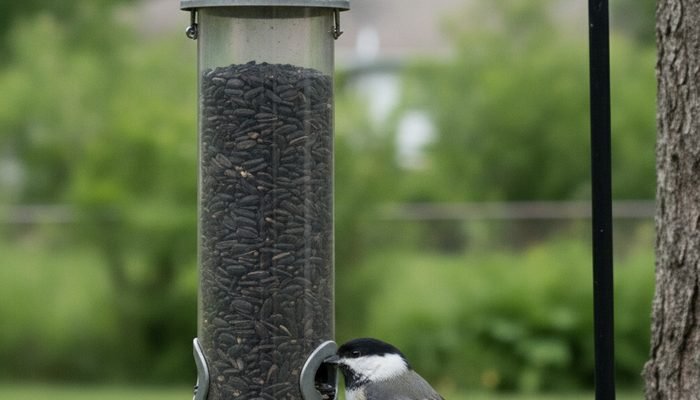
A tube feeder is a hollow cylinder, usually plastic or metal mesh, with small perches and feeding ports along the sides. They hold seed well and keep it dry better than most open designs.
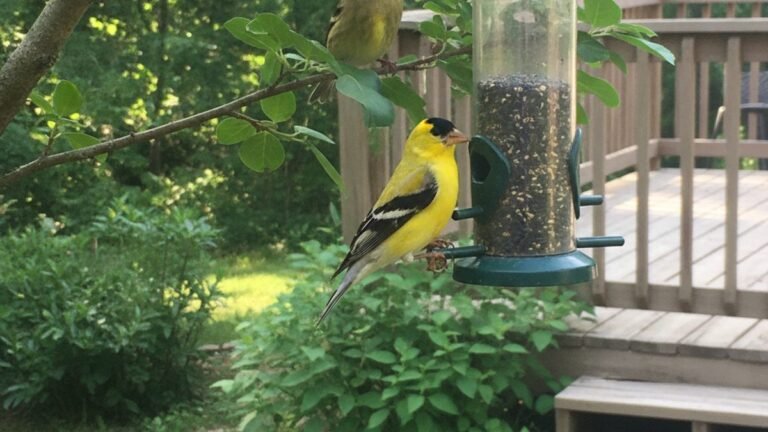
My tube feeder is filled with nyjer seed and it’s the busiest spot in the yard for American Goldfinches. Nyjer tubes usually have tiny slotted ports made just for small finch bills, so bigger birds mostly leave them alone.
Standard tube feeders with bigger ports work for black-oil sunflower seed too, and they bring in chickadees, House Finches, and nuthatches. If you want tips on choosing seed for these, check out this bird seed guide.
Best For
Goldfinches, chickadees, House Finches, nuthatches, and other small perching birds.
2. Hopper Feeders
A hopper feeder looks like a little house with walls that hold seed and a tray at the bottom where birds land to eat. Gravity feeds seed down as birds empty the tray.
My hopper is one of my most reliable feeders. It holds a good amount of seed, so I’m not refilling it every day, and it handles rain decently well because of the roof.
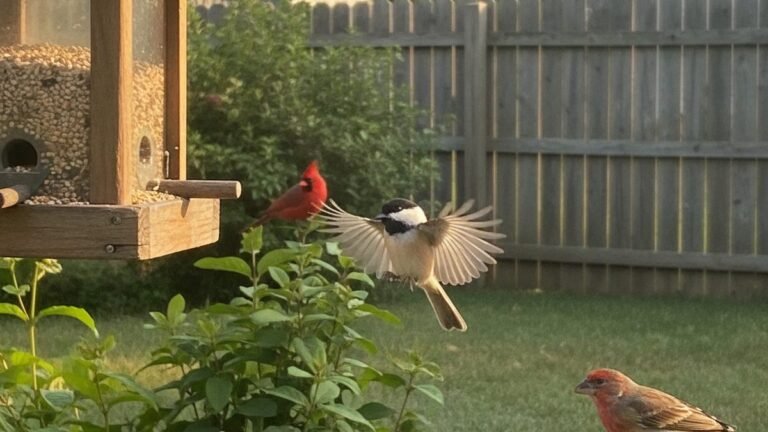
Hoppers work great for a mixed crowd. Cardinals, jays, and finches all use mine without much fuss. The wide tray also means several birds can eat at once, which cuts down on squabbling compared to a narrow tube.
Best For
Northern Cardinals, Blue Jays, House Finches, and mixed flocks that need landing room.
3. Platform (Tray) Feeders
A platform feeder is just a flat tray, sometimes with a screened bottom for drainage. No walls, no roof, just open space.
This is the feeder in my yard that brings in birds nothing else will. Mourning Doves and Dark-eyed Juncos, who both prefer feeding low and in the open, stick to the platform almost exclusively.
The downside is exposure. Seed on a platform feeder gets rained on and can spoil faster, and it’s an easy target for squirrels since there’s no barrier at all. If squirrels are already a problem in your yard, this piece on keeping squirrels away from bird feeders is worth a read before you set one up.
Best For
Mourning Doves, Dark-eyed Juncos, Blue Jays, and ground-feeding species in general.
4. Suet Feeders
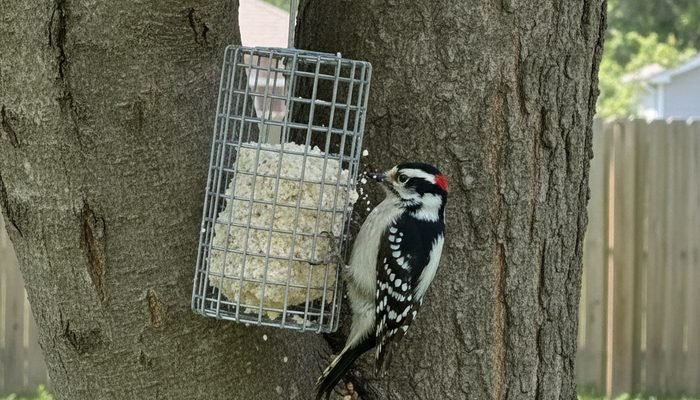
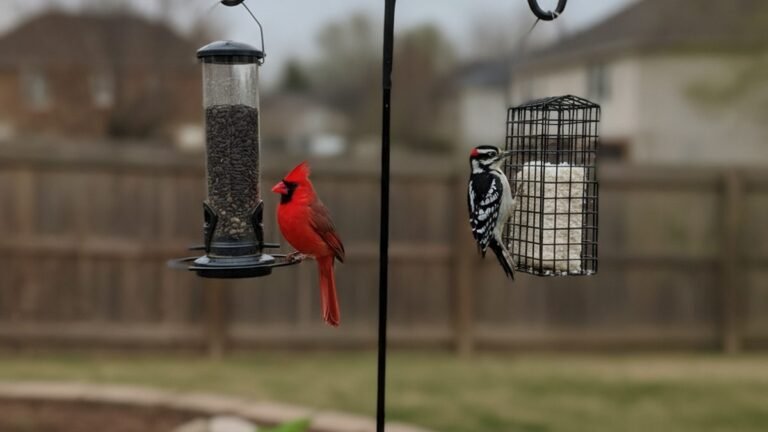
A suet feeder is usually a wire cage that holds a block of suet, a hard fat mixed with seeds, fruit, or insects. Birds cling to the cage and peck at the block.
My suet cage hangs near the maple and it’s a Downy Woodpecker magnet. I also get regular visits from nuthatches and chickadees, since suet gives them a fast source of fat and protein, especially useful in cold months according to Cornell Lab of Ornithology.
Suet feeders come in a few shapes: cages, tail-prop styles for woodpeckers, and even suet plugs for feeders with drilled holes. All of them serve the same basic job.
Best For
Downy Woodpeckers, nuthatches, chickadees, and other birds that need extra fat, especially in winter.
5. Nyjer (Finch) Feeders
I mentioned nyjer tubes above, but nyjer feeders also come in a mesh sock style. These are soft bags made of fine netting that let finches cling anywhere on the surface, not just at set ports.
Mesh socks are cheap and disposable, which makes them a nice low-commitment option if you’re just trying to see whether goldfinches are around. For more detail on getting finches to stick around, see this guide on how to attract goldfinches.
Best For
American Goldfinches, House Finches, and Pine Siskins where they occur.
6. Window Feeders
A window feeder attaches to glass with suction cups or clings, putting the seed tray right up against the window. It’s built for close-up viewing.
I watch my own feeders from the kitchen window, but they’re set up more than 30 feet away across the yard, well outside the danger zone for window strikes. Window feeders work differently since the feeder itself sits directly on the glass. Following the Audubon Society’s guidance, a feeder attached right to the window (within 3 feet) is actually safer for birds than one placed at a middle distance, because birds don’t build up enough speed to get hurt if they do bump the glass. If you deal with birds hitting windows elsewhere in the yard, this article on stopping birds from flying into windows covers it well.
Best For
Chickadees, House Finches, and other small birds comfortable feeding close to people.
7. Specialty Feeders (Ground Trays, Hummingbird, and More)
This last category covers feeders built for a specific job. Ground trays are simple mesh trays set right on the soil for quail, doves, and juncos that rarely use hanging feeders at all.
Hummingbird feeders hold sugar water instead of seed and use small red ports to draw hummingbirds in. If you want to attract them, start with this guide to how to attract hummingbirds and this one on making hummingbird food at home.
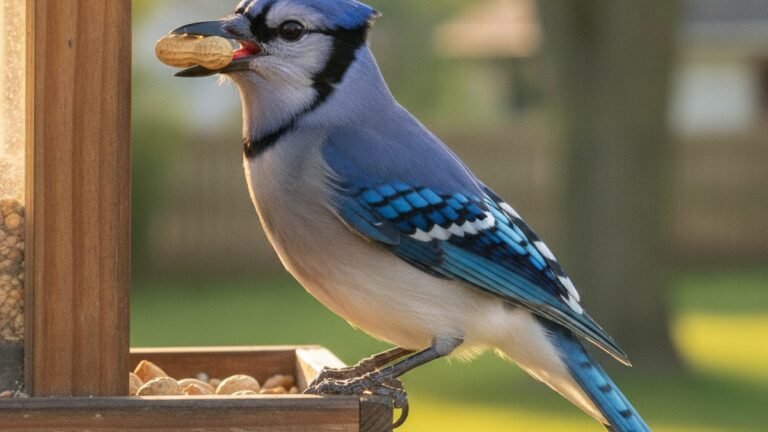
There are also peanut feeders (wire mesh cylinders for jays and woodpeckers) and fruit/jelly feeders for orioles. None of these replace a good all-purpose feeder, but they fill in gaps a standard setup can’t.
Best For
Hummingbirds, orioles, quail, and other birds with specialized diets.
Which Type Should You Start With?
If I had to recommend a starting point, I’d say a hopper feeder for general variety and a tube feeder with nyjer if finches are your goal. That combination alone covers most backyard birds in the Upper Midwest and beyond.
From there, add a suet feeder once cold weather hits. Woodpeckers and chickadees will thank you for it. A platform feeder is a nice fourth addition once you want to bring in doves and juncos too.
Placement matters as much as feeder type. Check out this guide on where to place a bird feeder before you hang anything, since a good feeder in the wrong spot won’t get much traffic.
Wrapping Up
Picking a feeder type doesn’t have to be complicated. Start with one or two styles that match the birds you already see in your yard, then add more as you learn what works. My own setup grew one feeder at a time over the years, and it’s still my favorite part of the morning to check from the kitchen window.
Frequently Asked Questions
What is the best type of bird feeder for beginners?
A hopper feeder is a solid choice for beginners. It holds a lot of seed, handles weather reasonably well, and attracts a wide mix of birds like cardinals, jays, and finches. It’s low maintenance compared to open trays.
Do different birds prefer different feeder types?
Yes. Goldfinches favor nyjer tube feeders, woodpeckers and chickadees go for suet, and doves and juncos usually feed on platforms or the ground. Matching feeder type to bird species is the fastest way to attract more variety.
How many bird feeders should I have in my yard?
There’s no fixed number, but two to four feeders covering different food types (seed, suet, nyjer) usually brings the most variety. I run four feeders myself and each one draws a different set of birds.
Are tube feeders better than hopper feeders?
Neither is strictly better, they serve different purposes. Tube feeders are great for small finches and keeping seed dry. Hopper feeders hold more seed and welcome a wider range of birds, including larger ones like jays and cardinals.

3 Comments