Cracked Corn for Birds: What Eats It and Should You Use It?
Cracked corn for birds is cheap, easy to find, and it does attract a real list of backyard species. But it’s not a food you should just dump in every feeder without thinking it through.
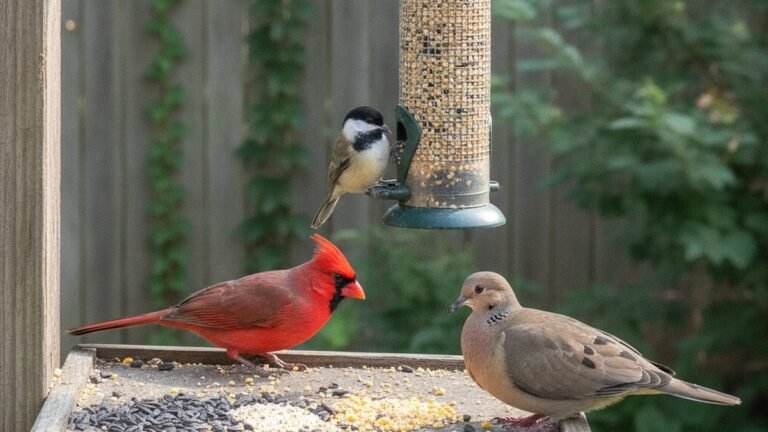
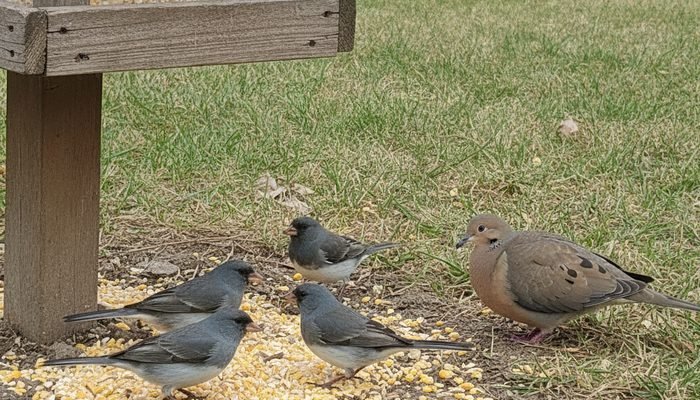
I keep a bag of it on hand for my platform feeder, mostly because it pulls in Mourning Doves and Dark-eyed Juncos during the winter months when I want extra ground activity in the yard. It also has a couple of real downsides you need to know before you buy a big bag.
In this article I’ll walk through what actually eats cracked corn, what birds skip right past it, how to offer it the right way, and whether I think it’s worth buying at all.
What Is Cracked Corn?
Cracked corn is just dried field corn (dent corn, the kind grown for feed and industrial use, not sweet corn) that’s been ground or crushed into smaller pieces. You’ll find it sold in coarse and fine grinds at farm stores and some bird seed sections.
It’s often mixed into cheap ‘wild bird seed’ blends as filler. That’s actually one of the biggest complaints about bargain seed mixes. The Cornell Lab of Ornithology and Audubon Society both note that lower-cost mixes lean heavily on corn and milo (a type of grain sorghum) to cut cost, and a lot of that filler ends up kicked to the ground uneaten.
On its own, cracked corn is a decent energy source. It’s high in carbohydrates, low in fat compared to sunflower or nyjer, and it’s one of the least expensive bird foods you can buy by the pound.
Which Birds Eat Cracked Corn?
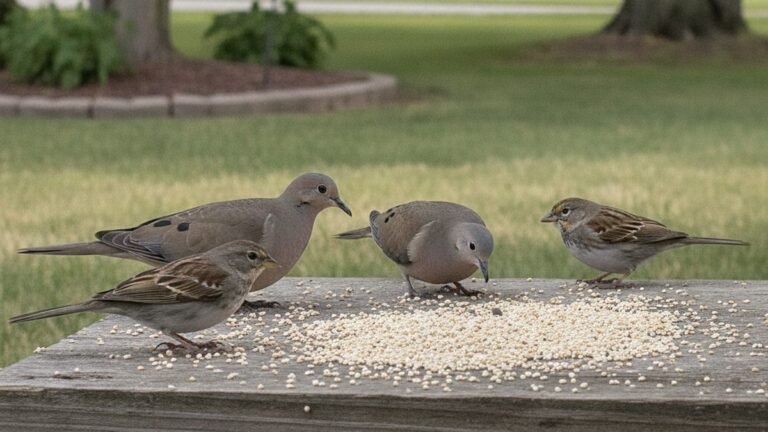
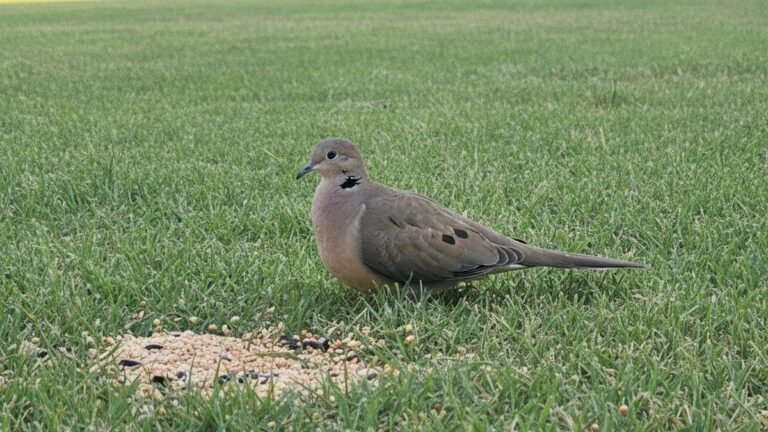
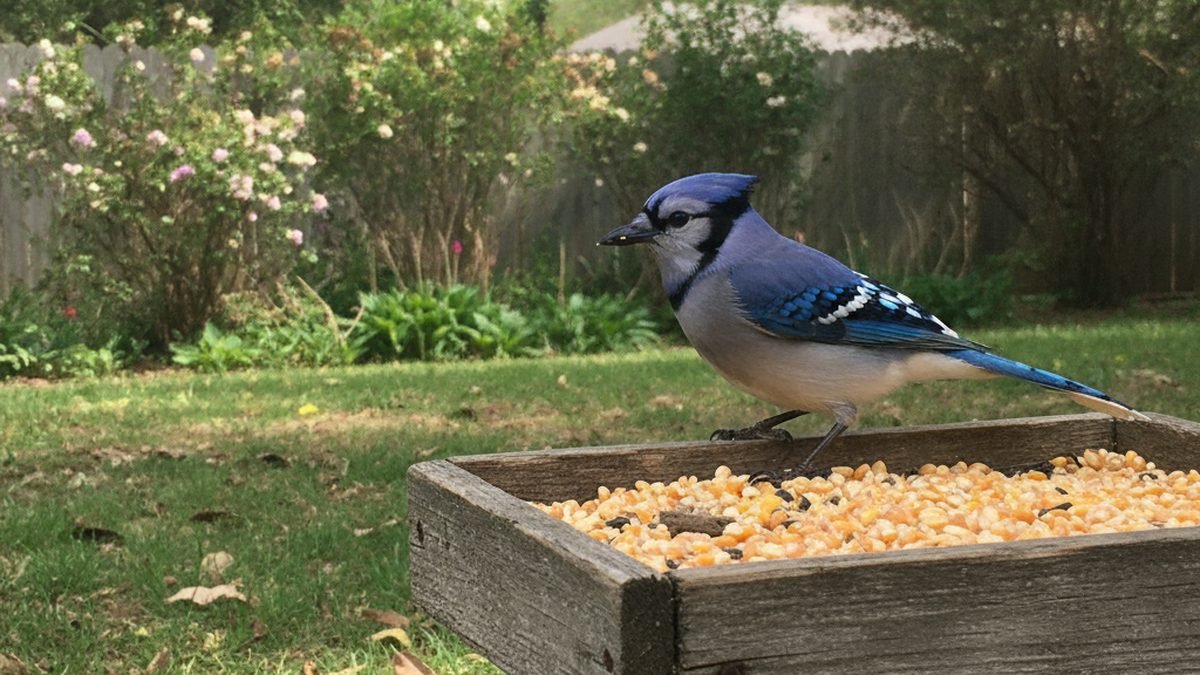
Ground-feeding birds are the main fans. In my own yard, Dark-eyed Juncos show up for it every winter, scratching around under the platform feeder alongside the Mourning Doves. Blue Jays will eat cracked corn too, and so will House Sparrows, if you have them around.
Beyond my yard, cracked corn is a known favorite with wild turkeys, pheasants, quail, and other game birds where those species are present. Ducks and geese at parks eat it eagerly, though wildlife agencies generally discourage feeding waterfowl bread or corn in large amounts because it can crowd out their natural diet.
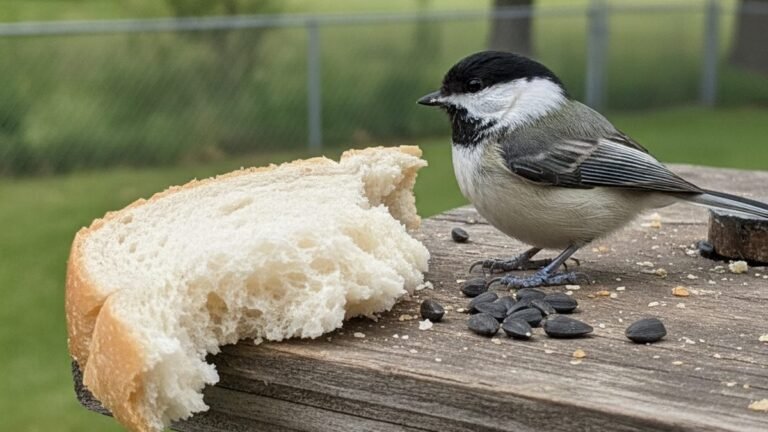
Woodpeckers, chickadees, and nuthatches, the birds that stick to suet and sunflower at my feeders, mostly ignore cracked corn. It’s just not the kind of food their beaks and feeding habits are built around.
Which Birds Ignore It?
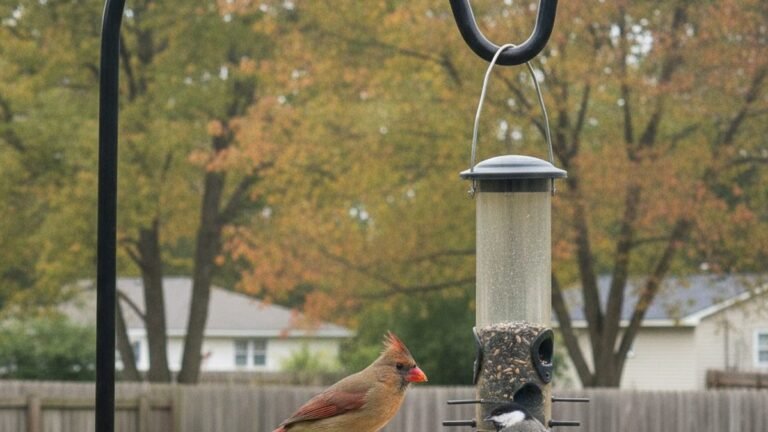
American Goldfinches want nyjer and fine sunflower chips, not corn. My tube feeder is strictly nyjer for exactly that reason, and the goldfinches never look twice at the platform feeder’s corn.
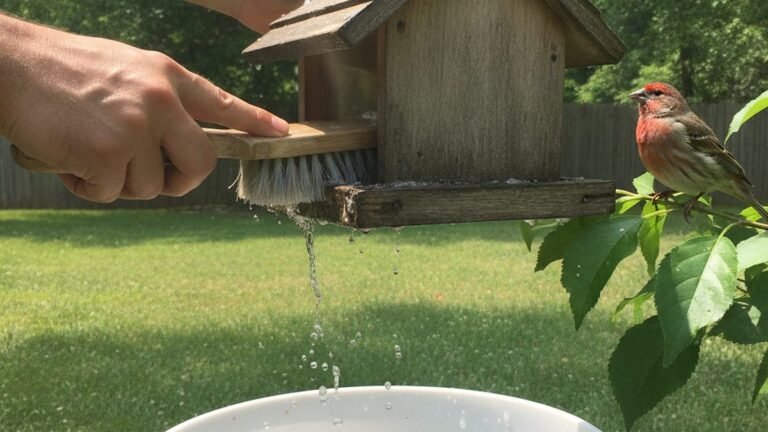
Cardinals prefer sunflower seed and safflower. Chickadees and nuthatches go for suet, peanuts, and black-oil sunflower. House Finches lean toward sunflower and millet over corn as well.
If your goal is attracting the classic backyard songbirds, cracked corn alone won’t get you there. It works best as a supplement for ground feeders, not a main course for the birds most people are trying to attract. For a broader picture of what draws different species in, my seed guide breaks down which food attracts which bird.
How to Offer Cracked Corn Safely
Use a platform feeder or scatter it directly on the ground, since that’s where corn-eating species naturally forage. A hopper or tube feeder isn’t the right setup for it.
Only put out small amounts at a time. Corn left sitting in wet weather molds fast, and moldy corn can carry aflatoxin, a toxin that’s genuinely dangerous to birds. I’ve learned this the hard way with other seed left out too long during a rainy stretch, and it’s not worth the risk with corn specifically.
Skip whole kernel corn for smaller birds. It’s too big for them to manage, and it breaks down slower than the cracked version, which sits around longer and increases the mold problem. Cracked is genuinely the better choice if you’re going to use corn at all.
Also know that cracked corn is a squirrel and raccoon magnet. If you’re already fighting critters at your feeders, corn on the ground will not help. My guide on keeping squirrels out of your feeders covers some workarounds if that’s a concern.
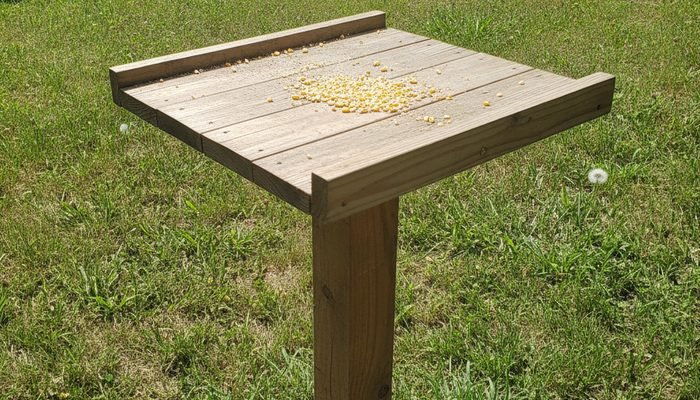
Is Cracked Corn Worth Buying? Sam’s Verdict
My honest take: cracked corn is worth having on hand if you specifically want to feed doves, juncos, or jays on the ground, especially in winter. It’s cheap and those birds do genuinely go for it.
I would not recommend it as a primary food, and I’d be cautious buying any seed mix where corn is the first or second ingredient listed. That usually signals a bargain filler blend rather than something built for songbirds. Black-oil sunflower and suet do far more work per dollar if your goal is a busy, varied feeder station.
If you want one bag for occasional ground scattering in small amounts, go for it. If you’re trying to fill your feeders for the season, spend your money on sunflower and nyjer instead.
Wrapping Up
Cracked corn has its place, but it’s a supporting player, not a headliner. I keep a small bag around for the doves and juncos on cold days, and I never let it sit out long enough to get wet. If you’re building out your feeder lineup from scratch, put your budget into sunflower and suet first, then add corn later if you want extra ground activity.
Frequently Asked Questions
Is cracked corn good for birds?
In small, fresh amounts it’s fine for ground-feeding species like doves, juncos, and jays. It’s high in carbs but lower in the fats and protein that songbirds like chickadees and cardinals need, so it works better as a supplement than a main food source.
Do squirrels eat cracked corn?
Yes, squirrels love it, along with raccoons and sometimes deer. If you’re dealing with squirrel problems already, scattering cracked corn on the ground will likely make things worse, not better.
Can I feed cracked corn to birds in winter?
Yes, and it’s actually one of the better times to offer it, since ground-feeding birds like Dark-eyed Juncos and Mourning Doves are more active at feeders in cold months. Just put out small amounts so it doesn’t sit and get wet or moldy.
What’s the difference between cracked corn and whole corn for birds?
Cracked corn is crushed into smaller pieces that most ground-feeding birds can handle easily. Whole kernel corn is too large for smaller birds and breaks down more slowly, which raises the risk of mold if it sits out in wet weather.