Hopper vs Tube vs Platform Feeders: Which Is Right for You?
If you’re trying to decide between a hopper vs tube feeder, here’s the short answer: hoppers hold more seed and attract bigger birds, while tubes keep seed drier and suit smaller finches best. Platform feeders are the third option, and they attract the widest variety of birds but offer the least weather protection.
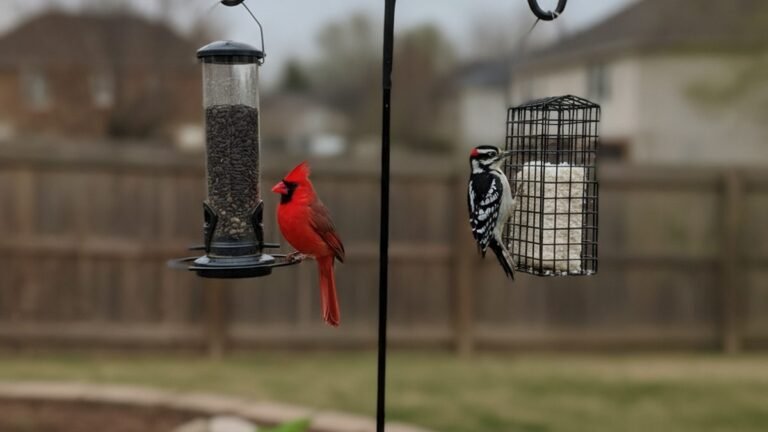
I’ve got all three hanging near the maple tree in my backyard, plus a suet cage. Watching which birds pick which feeder has taught me more about feeder design than any spec sheet ever did.
This guide breaks down how each type works, who they attract, and which one makes sense for your yard.
What a Hopper Feeder Does Best
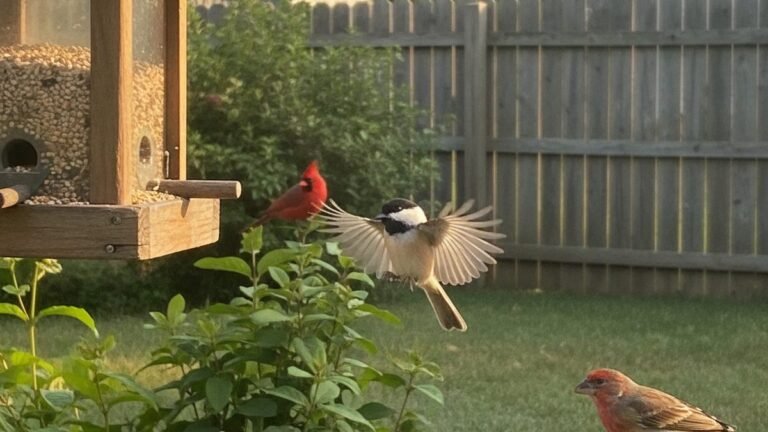
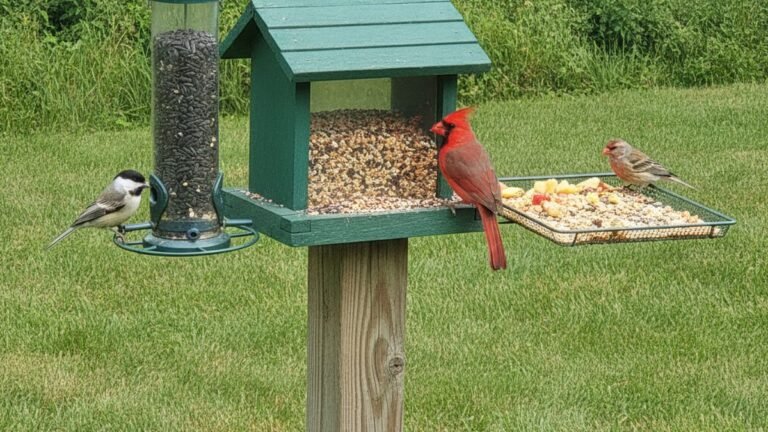
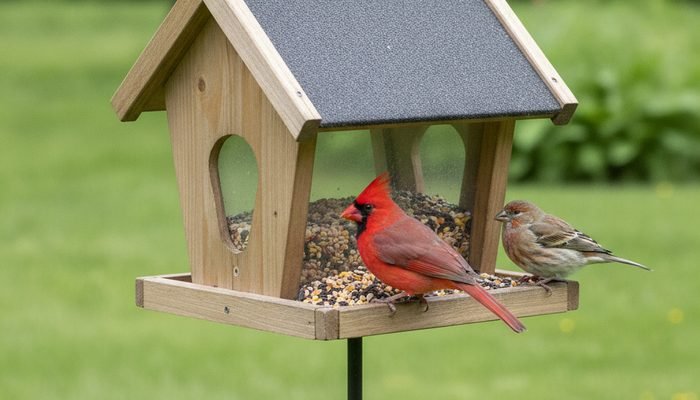
A hopper feeder looks like a little house with walls that hold seed and let it slide down as birds eat. Mine holds enough seed to last a few days, even with a busy crowd of Cardinals and House Finches working through it.
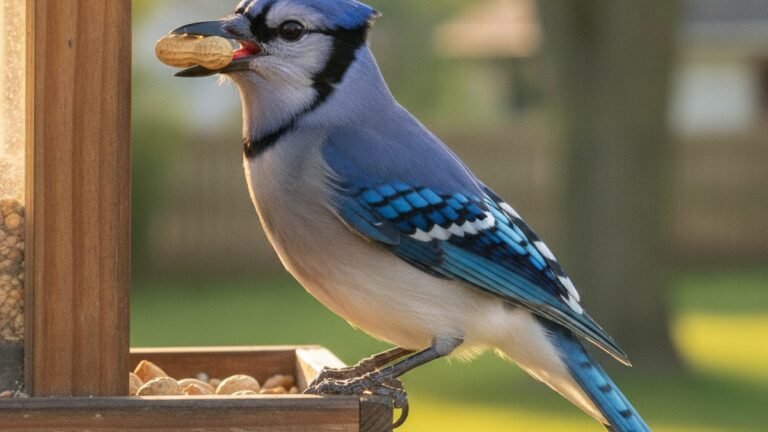
The open tray at the bottom means bigger birds can perch comfortably. I regularly see Blue Jays, Mourning Doves, and Northern Cardinals crowd around mine, birds that would struggle to grip a tube feeder’s small perches.
The downside is weather. Hopper feeders expose seed to rain and snow more than tube feeders do. If seed sits wet for a few days, it can clump or grow mold, so I check mine after heavy rain.
What a Tube Feeder Does Best
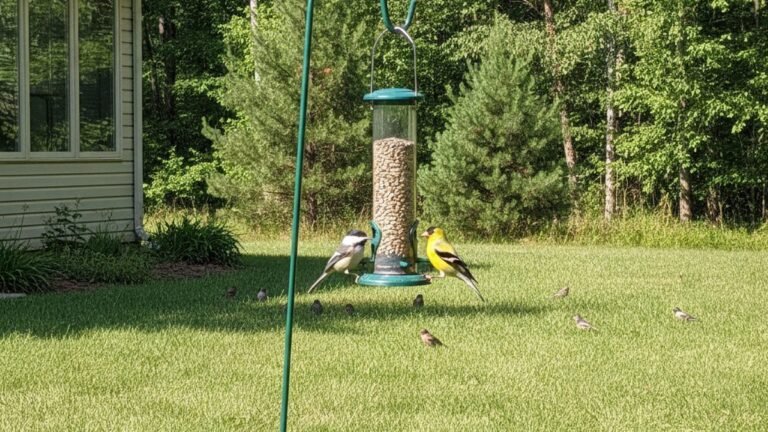
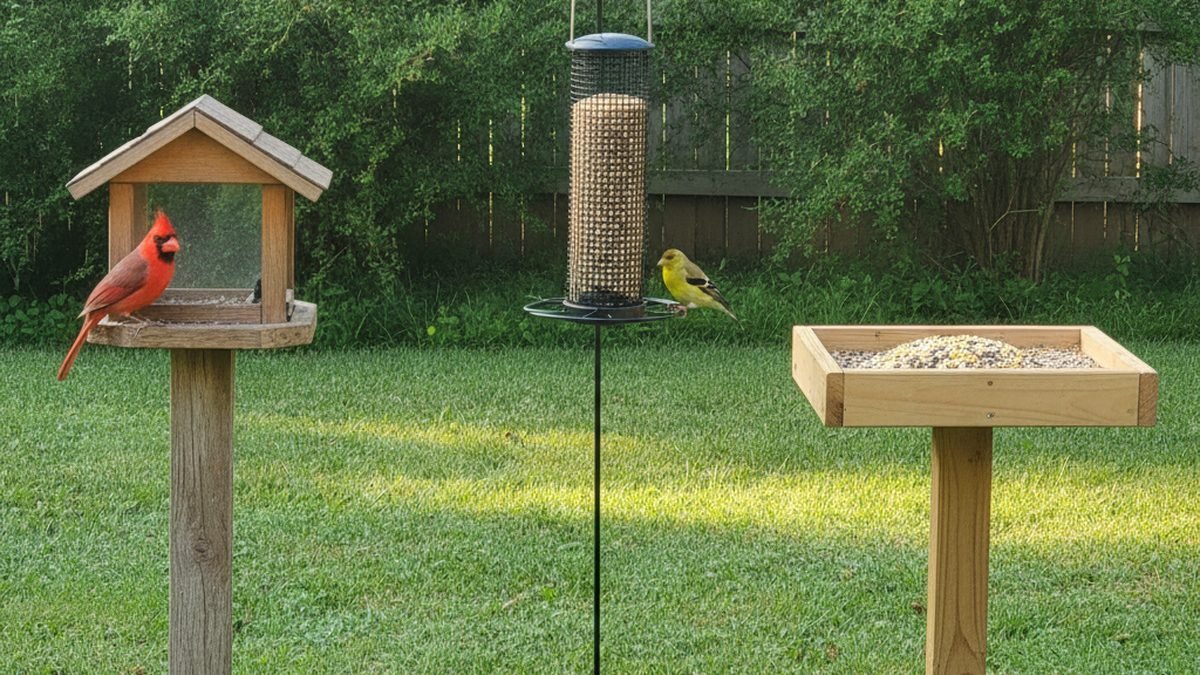
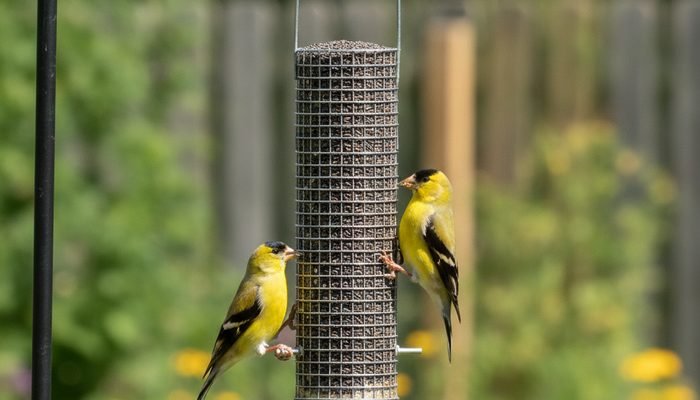
A tube feeder is a long cylinder with multiple feeding ports and small perches. My tube feeder holds nyjer seed and it’s a magnet for American Goldfinches almost every day.
Tube feeders keep seed drier than hoppers because less of it is exposed to the air at once. That matters a lot if you live somewhere humid or rainy, since wet seed spoils fast.
Small ports and short perches favor smaller birds like chickadees, finches, and nuthatches. Bigger birds like jays usually skip tube feeders because there’s nowhere comfortable to perch. If squirrels are an issue, look for a tube feeder with a metal cage around it. I cover more on that in keeping squirrels off your feeders.
What a Platform Feeder Does Best
A platform feeder is just a flat tray, sometimes with a screened bottom for drainage. It’s the simplest design and, in my experience, the one that attracts the widest range of birds.
My platform feeder gets visits from Downy Woodpeckers, Dark-eyed Juncos in winter, and Mourning Doves that prefer feeding on flat ground-like surfaces. Cornell Lab of Ornithology notes that platform feeders can attract nearly any feeder bird species since there’s no size restriction.
The tradeoff is exposure. Seed sits open to rain, snow, and every squirrel in the neighborhood. I clean mine more often than my other feeders because wet seed builds up fast on an open tray.
Hopper vs Tube Feeder: Side-by-Side Comparison
Here’s how I’d sum up the tradeoffs after years of watching all three styles in my own yard.
Seed capacity: Hopper feeders hold the most seed. Tube feeders hold a moderate amount. Platform feeders hold the least, since seed is spread thin.
Weather protection: Tube feeders protect seed best. Hopper feeders offer partial protection. Platform feeders offer almost none.
Bird variety: Platform feeders attract the widest range of birds. Hopper feeders come close. Tube feeders lean toward smaller songbirds.
Squirrel resistance: Tube feeders with cages resist squirrels best. Hoppers can be squirrel-proofed with a baffle. Platform feeders are the easiest for squirrels to raid.
Cost: Platform feeders are usually the cheapest. Hopper and tube feeders vary widely depending on size and materials.
How to Choose Based on Your Yard
If you get a lot of rain or snow, lean toward a tube feeder to keep seed dry. If you want to attract Cardinals, Blue Jays, and doves, a hopper or platform feeder gives them room to perch and feed comfortably.
If squirrels are a constant problem, a caged tube feeder or a baffled hopper feeder will save you seed and frustration. Platform feeders are the easiest target, so I’d skip one if squirrels already run your yard.
Placement matters just as much as feeder type. I go into more detail in where to place your feeder, but the short version is: keep feeders within 3 feet of a window or more than 30 feet away, so birds don’t collide with the glass.
For a look at every style available, including suet feeders and nyjer feeders, check out my full breakdown of bird feeder types.
Is It Worth Having More Than One?
My honest verdict: if your budget allows it, running two or three feeder styles gets you the best mix of birds. A hopper and a tube feeder together cover both big and small birds. Add a platform feeder and you’ll pick up ground feeders like Mourning Doves and juncos too.
If you can only afford one feeder to start, a hopper feeder is my pick for most beginners. It holds a good amount of seed, welcomes a wide range of birds, and doesn’t need daily refilling.
Whatever you choose, pair it with a good seed mix. My birds that eat sunflower seeds guide covers the seed most feeder birds go for first.
Wrapping Up
There’s no single right answer in the hopper vs tube feeder debate. I run all three styles in my own yard because each one pulls in different birds and solves different problems. Start with one feeder that matches your budget and your most common backyard visitors, then add a second style once you see who’s showing up.
Frequently Asked Questions
Is a hopper feeder better than a tube feeder?
Neither is really “better.” A hopper feeder holds more seed and welcomes bigger birds like Blue Jays and Cardinals. A tube feeder keeps seed drier and works well for finches and chickadees. I’d say pick based on which birds you want to see and how much rain or snow your area gets.
What is the best feeder for beginners?
A hopper feeder is a solid starting point. It’s easy to fill, holds a good amount of seed, and attracts a wide mix of birds right away. Cornell Lab of Ornithology notes that platform feeders are also great starter options since almost every backyard bird will use one.
Do platform feeders attract more squirrels?
Yes, platform feeders are the easiest for squirrels to raid because there’s no cage or tube blocking access. If squirrels are a problem in your yard, a tube feeder with a metal cage or a hopper feeder with a baffle underneath will cut down on unwanted visitors.
Can I use more than one type of feeder at once?
You can, and honestly it’s the best way to see the widest variety of birds. Running a hopper, a tube, and a platform feeder together covers different feeding styles and seed types, so you’re not limited to whichever birds prefer just one setup.