What Is Suet? A Beginner’s Guide to Feeding Suet to Birds
Suet for birds is rendered beef fat mixed with ingredients like seeds, nuts, or dried fruit, pressed into a cake. Birds love it because it’s packed with calories they can burn fast, especially in cold weather. If you’ve seen a block of tan-colored stuff hanging in a wire cage at the store and wondered what it does, this guide covers it.
I’ve had a suet cage hanging near my maple tree for years. It’s one of the four feeders I run, right alongside my hopper feeder, tube feeder, and platform feeder. Suet gets more action in January than almost anything else out there, and I’ll explain why below.
What Is Suet
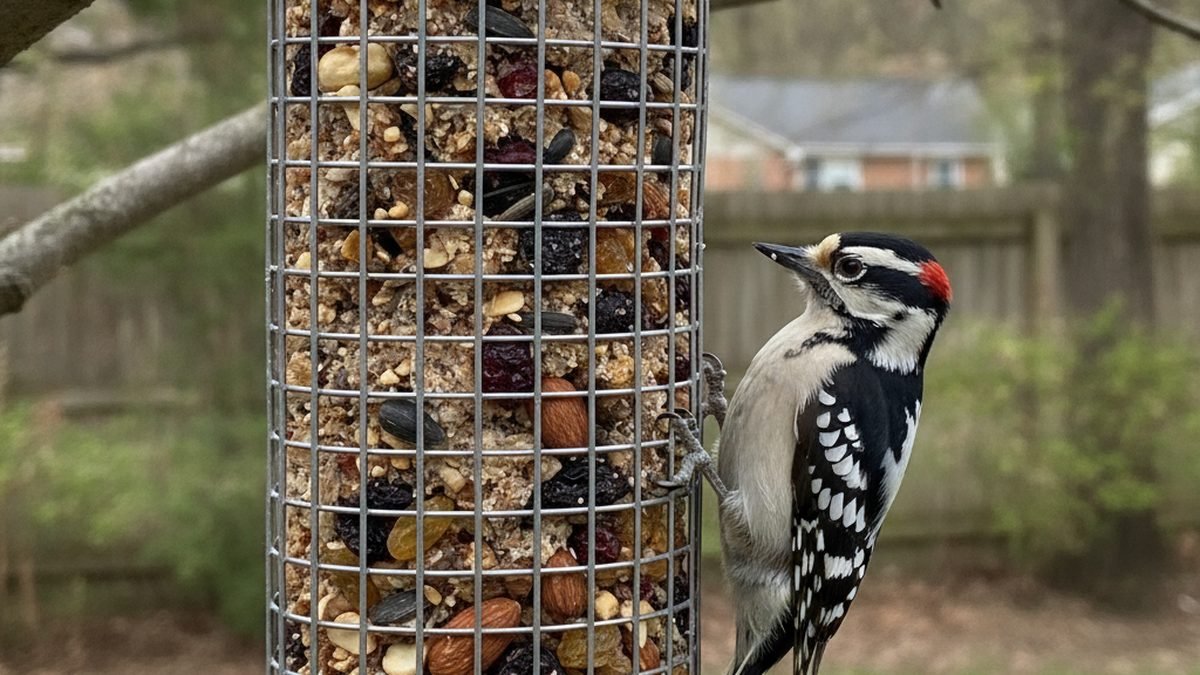
Suet starts as raw beef fat, the hard fat found around a cow’s kidneys and loins. Bird food companies render it (melt it down and strain it) so it won’t spoil as fast, then mix in seeds, cracked corn, peanuts, or berries. The mix gets poured into molds and cooled into firm cakes.
The result is a dense, high-energy food. Cornell Lab of Ornithology notes that suet is especially valuable in winter because birds need extra fat to generate body heat and survive cold nights. It’s basically backyard bird fuel.
Plain suet cakes are the most common form, but you’ll also find suet plugs (cylinders for plug-style feeders), suet balls, and no-melt suet blends made for warm climates. Those no-melt versions swap some of the animal fat for plant-based fat so they hold up better in summer heat.
Which Birds Eat Suet
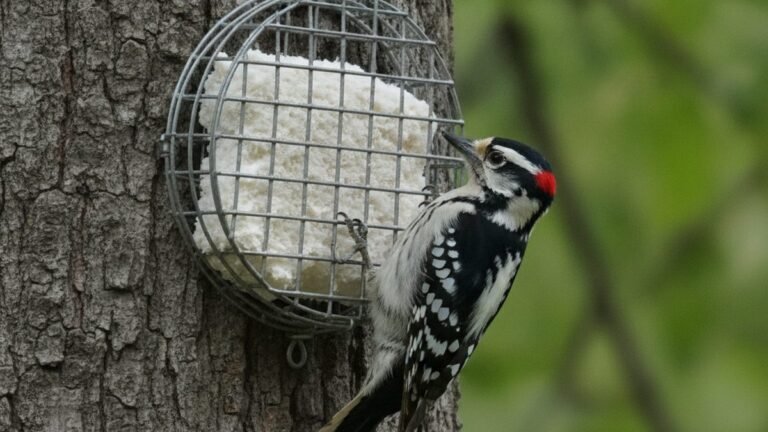
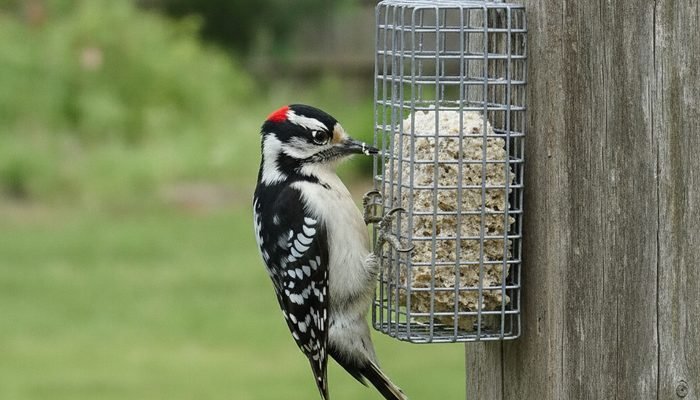
Woodpeckers are the suet superstars. Downy Woodpeckers show up at my suet cage almost every single day, clinging to the wire and pecking off little chunks. In my yard, I also get regular visits from Black-capped Chickadees and White-breasted Nuthatches, both of which treat the suet cage like a quick snack bar between trips to the other feeders.
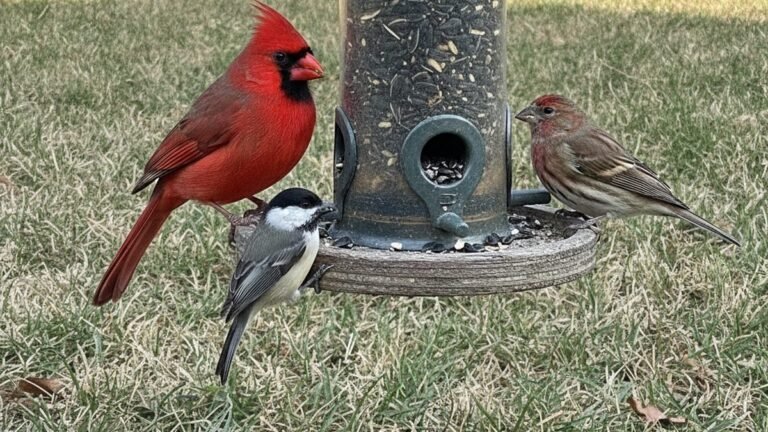
Other birds that commonly eat suet include Blue Jays, Carolina Wrens, Brown Creepers, and both Red-bellied and Red-headed Woodpeckers depending on your region. Even Northern Cardinals will sample it, though they’re not regulars at mine. Suet with added nuts or fruit tends to pull in a wider range of visitors than plain fat alone.
If you want a broader rundown on what draws different species to your yard in the first place, my guide to bird seed and what attracts birds covers that in more detail.
Which Birds Ignore It
Seed specialists mostly skip suet. American Goldfinches, which stick to nyjer and thin seeds, rarely touch my suet cage. I’ve never seen one land on it in all the years it’s hung near the maple.
Mourning Doves and House Finches are ground and platform feeders by habit, and suet cages usually ask birds to cling or perch at an angle, which doesn’t suit them. Doves in particular almost never use a hanging cage feeder. If a bird’s beak and feet are built for cracking seeds rather than pecking bark, suet just isn’t their thing.
How to Offer Suet
Suet cakes are made to fit inside a wire suet cage feeder, which you can hang from a branch or a shepherd’s hook. Some cages have a tail prop below them, which helps woodpeckers brace themselves the way they would on a tree trunk.
Placement matters. I keep my suet cage near the maple tree, about 10 feet from the trunk, so woodpeckers and nuthatches have a natural landing spot close by. That mimics the tree bark feeding they’d do in the wild anyway.
In summer heat, plain suet can turn greasy and drip, which is messy and can matt feathers. Switch to a no-melt formula once temperatures climb past the 80s, or move the cage into shade. In winter, suet is one of the easiest ways to help birds keep their energy up during short, cold days. For more on setting up your feeding station overall, check my guide to types of bird feeders.
Squirrels and raccoons like suet just as much as birds do, so a cage with a tighter wire grid or a weight-guarded pole helps keep it for the birds it’s meant for. My tips for keeping squirrels off your feeders has more on that battle.
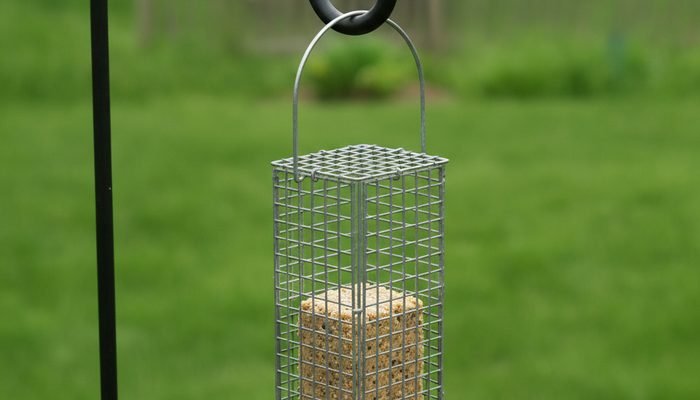
Is Suet Worth Buying? Sam’s Verdict
Yes, I think suet earns its spot in any backyard setup. It’s not expensive, a single cake usually lasts one to two weeks depending on how busy your yard is, and it brings in woodpeckers and nuthatches that don’t always visit seed feeders as often.
The one downside is mess in warm weather. Regular suet can soften, drip grease onto your deck or siding, and turn rancid faster than seed does. If you live somewhere with hot summers, budget for the no-melt version even though it costs a bit more.
Overall, for the price of a cage and a few dollars a cake, suet gives you some of the most reliable winter bird activity you’ll get from any single feeder.
Wrapping Up
Suet is one of the simplest ways to give backyard birds a real energy boost, especially once the temperature drops. Start with a basic wire cage and a plain suet cake, then watch who shows up. If woodpeckers and nuthatches start visiting daily like they do in my yard, you’ll know you found a good spot for it.
Frequently Asked Questions
Can I make homemade suet for birds?
Yes. Many people melt beef fat or lard, mix in peanut butter, cornmeal, and birdseed, then pour it into molds to cool. Homemade suet is cheaper but melts faster than store-bought, so it works best in cool weather and should be checked often.
Is suet bad for birds in summer?
Plain suet can soften and go rancid in heat, which isn’t great for birds or your feeder area. Switch to a no-melt suet blend in warm months, or offer smaller amounts more often so it doesn’t sit out too long.
How long does a suet cake last?
In my experience, a standard suet cake lasts one to two weeks depending on how many birds visit and the weather. Cold weather slows spoilage and keeps birds coming back more often for the extra calories.
Do I need a special feeder for suet?
A wire suet cage feeder works best since it holds the cake’s shape and lets birds cling and peck through the grid. Some feeders also have a tail prop, which helps woodpeckers brace themselves like they would on a tree.